Choosing the right home reverse osmosis system for well water can make a major difference in taste, odor, and overall water quality. The best systems balance contaminant reduction, flow rate, and long-term maintenance so you get clean water without constant hassle.
Below, we’ve focused on systems that are well suited to home use, including models with booster pumps, remineralization, UV support, and tankless designs for faster delivery and better day-to-day convenience.
Best 10 Home Reverse Osmosis System for Well Water Picks for 2026
Well Water Protection Pick
6 Stage Well Water RO with Permeate Pump

- 6 stages plus permeate pump, UV, and scale reduction
- Iron prefilter helps target common well-water issues
- Can cut waste by up to 80% and boost output by up to 50%
Best For: well water homes needing iron reduction and UV support
Premium Well Water Upgrade

- 9 stages with UV sterilization and 2-pass remineralization
- KDF85 iron pre-filter and 99% rejection DOW membrane
- Includes faucet, tank, fridge kit, and drain adapter
Best For: buyers wanting a premium, feature-packed RO system
Reliable Value Pick

- NSF certified and rated to reduce up to 99.99% of impurities
- Simple DIY installation with quick-connect fittings
- Includes faucet, tank, and installation kit
Best For: buyers who want a proven, easy-to-install RO system
High-Output Comfort Pick

- 7 stages with UV, alkaline remineralization, and booster pump
- Reduces up to 99% of 1,000+ contaminants
- Top-mounted faucet design helps simplify installation
Best For: families wanting boosted performance and UV protection
High-Flow Tankless Pick
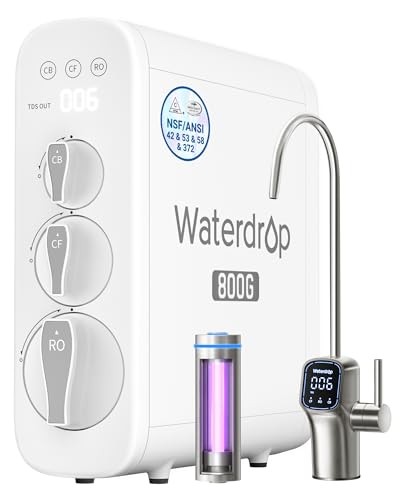
- 800 GPD fast-flow output
- 10-stage filtration for broad contaminant reduction
- Tankless design with smart faucet readout
Best For: Large households wanting quick, space-saving purified water
Mineral-Boost Value Pick

- NSF/ANSI 58 certified whole system
- Alkaline stage adds minerals and balanced pH
- DIY-friendly top-mounted faucet design
Best For: Buyers wanting a traditional RO system with remineralization
Fast Remineralizing Option
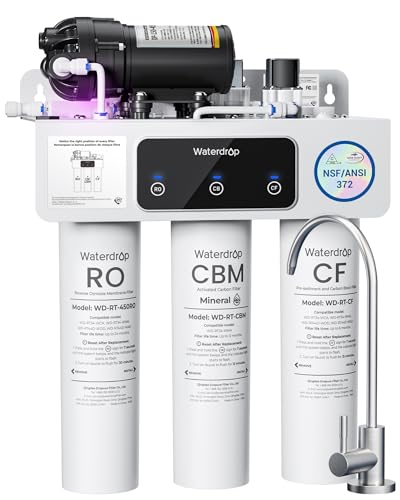
- 9-stage tankless filtration
- Adds calcium and magnesium for taste
- 2:1 pure-to-drain water efficiency
Best For: Homes wanting mineral-rich water from a compact RO system
Fast Tanked Upgrade
Waterdrop T3-T 220 GPD Remineralizing RO

- 220 GPD output for faster daily use
- 7-stage filtration with added minerals
- 2:1 pure-to-drain ratio cuts wastewater
Best For: Families wanting faster flow and remineralized water in a compact under-sink RO
Tankless High-Capacity Pick
Waterdrop G3P600 8-Stage Tankless RO

- 600 GPD tankless system with fast flow
- 8-stage filtration and smart LED faucet
- Saves up to 70% under-sink space
Best For: Users who want a premium tankless RO with fast output and smart monitoring
Well Water Protection Pick – 6 Stage Well Water RO with Permeate Pump
If you need a home reverse osmosis system for well water, this 6-stage model is built around the problems well owners actually face, including iron, scaling, and the need for extra purification. It pairs RO filtration with an iron prefilter, UV treatment, and a permeate pump to improve performance while cutting water waste.
Best For: Homes on well water that want iron reduction, UV protection, and better efficiency from an under-sink RO system.
Pros:
- Removes up to 99.99% of iron, chemicals, metals, and other contaminants.
- Includes an iron prefilter plus UV treatment for better well-water protection.
- Permeate pump can reduce wastewater by up to 80% and increase production by up to 50%.
- Under-sink design with no power required for operation.
Cons:
- Does not change taste, odor, pH, conductivity, or general chemistry of the water.
- Capacity is listed at 2.8 gallons, so it may not suit very high-demand households.
This is a strong fit if your priority is treating the tougher side of well water without adding complexity. The UV stage and permeate pump make it especially practical for users who want cleaner water and better efficiency from a single system.
Premium Well Water Upgrade – HydroPerfection 9-Stage RO
This home reverse osmosis system for well water is a premium under-sink option with nine stages of filtration, UV sterilization, and patented remineralization. It is designed to tackle common RO drawbacks while delivering high-purity water with a faster fill rate and a low 1:1 waste ratio.
Best For: Buyers who want a feature-rich RO system with UV, remineralization, and a strong setup for high-hardness water.
Pros:
- 9-stage filtration removes up to 99% of chlorine, chloramines, lead, fluoride, microplastics, and more.
- Includes EPA-registered LED UV sterilizer and a KDF85 iron pre-filter.
- Patented 2-pass remineralization adds calcium and magnesium for better-tasting water.
- Loaded package includes faucet, fridge kit, tank, and drain adapter.
Cons:
- Requires corded electric power for the UV system.
- More complex and feature-heavy than basic RO systems.
For households that want a more advanced solution, this model stands out for combining purification, remineralization, and convenience features in one package. It is especially appealing if you want filtered water that still tastes mineral-balanced and fresh.
Reliable Value Pick – APEC ROES-50 5-Stage RO
If you want a straightforward home reverse osmosis system for well water, the APEC ROES-50 is a practical five-stage option that focuses on dependable impurity reduction. It is built for under-sink installation, comes with the basics you need, and is designed for DIY-friendly setup and maintenance.
Best For: Households that want a simple, proven RO system with easy installation and broad contaminant reduction.
Pros:
- Reduces up to 99.99% of impurities and filters 1,000+ contaminants.
- NSF certified to standards 372 and 58.
- DIY-friendly setup with quick connection fittings and colored tubing.
- Includes faucet, tank, installation kit, and filter set.
Cons:
- No UV stage or remineralization feature.
- Listed capacity is 50 gallons, so it is less advanced than higher-output systems.
This is a solid pick if you want reliable RO performance without extra complexity. It keeps the focus on filtration basics, which makes it appealing for buyers who value simplicity, certification, and easy upkeep.
High-Output Comfort Pick – iSpring 7-Stage RO with Pump
This home reverse osmosis system for well water combines a 7-stage design with a booster pump, UV filtration, and alkaline remineralization to balance performance and convenience. It is aimed at users who want stronger RO operation, cleaner water, and a more complete under-sink setup with fewer installation hassles.
Best For: Families that want boosted RO performance, UV protection, and a remineralized finish from an under-sink system.
Pros:
- 7-stage filtration reduces up to 99% of 1,000+ contaminants, including PFAS, chlorine, fluoride, and lead.
- Booster pump helps maintain consistent performance and can reduce wastewater compared with pumpless models.
- UV filter uses a smart flow sensor and automatic delay to save power and extend bulb life.
- Includes alkaline filter and top-mounted faucet design for easier installation.
Cons:
- Requires corded electric power.
- Maximum supported TDS is listed at 750 PPM, which may be limiting for very challenging water.
For buyers who want more than basic RO filtration, this model offers a useful mix of protection, water pressure support, and mineral restoration. It is a practical choice when you want cleaner water without sacrificing convenience or flow stability.
High-Flow Tankless Pick – Waterdrop G3P800 800 GPD RO
If you want a home reverse osmosis system for well water that can keep up with a busy household, the Waterdrop G3P800 is built for speed and space savings. Its 10-stage filtration is tested to reduce PFAS, fluoride, heavy metals, nitrate, chloride, and more, while the tankless design helps free up under-sink room.
Best For: Large families that want fast-flow purified water and a compact under-sink setup.
Pros:
- 800 GPD capacity delivers very fast dispensing, with a cup of water in about 5 seconds.
- 10-stage filtration reduces a wide range of contaminants, including PFAS, fluoride, lead, and chromium.
- 3:1 pure-to-drain ratio is more efficient than many traditional RO systems.
- Smart faucet shows TDS and water quality at a glance.
Cons:
- Installation requires drilling 2 holes, including one for the drain connection.
- Needs corded electric power, so it is not a passive system.
- Best fit is under-sink use rather than portable or countertop placement.
This model stands out when capacity and convenience matter most. If you need strong output for family use and want a tankless system with advanced certification and monitoring features, it is one of the more feature-rich options here.
Mineral-Boost Value Pick – iSpring RCC7AK-BN Alkaline RO
The iSpring RCC7AK-BN is a practical home reverse osmosis system for well water users who want a classic under-sink setup with added remineralization. It combines 6-stage filtration with an alkaline mineral boost stage, and the system is NSF/ANSI 58 certified for the full unit.
Best For: Buyers who want an easy-to-install under-sink RO system with alkaline remineralization.
Pros:
- NSF/ANSI 58 certified for the entire filtration system.
- AK mineral stage adds natural minerals and balanced pH.
- Transparent first-stage housing makes filter buildup easy to monitor.
- Top-mounted faucet design helps simplify countertop installation.
Cons:
- 75 GPD output is much slower than high-capacity tankless systems.
- Uses a storage tank, so it takes more space under the sink.
- Does not need power, but it also lacks smart or electronic features.
For households that care more about proven filtration, mineral balance, and straightforward DIY setup than raw speed, this iSpring model is a solid traditional choice. It is especially appealing if you want a well-established RO system with long-term support.
Fast Remineralizing Option – Waterdrop T3-M 450 GPD RO
The Waterdrop T3-M is a tankless home reverse osmosis system for well water shoppers who want faster flow and mineral-enhanced output. Its 9-stage filtration reduces heavy metals, chlorine, PFOA, and PFOS, while the remineralization design adds calcium, magnesium, and other minerals for improved taste.
Best For: Households that want a tankless RO system with remineralization and moderate-fast output.
Pros:
- 450 GPD flow gives steady dispensing without the footprint of a storage tank.
- 9-stage filtration and 0.0001μm RO membrane target a broad range of contaminants.
- Mineral infusion adds calcium and magnesium for better taste.
- 2:1 pure-to-drain ratio is highly water-efficient.
Cons:
- Requires plug-in power to run.
- Faucet installation requires drilling holes in the countertop.
- Not as high-capacity as the brand’s 800 GPD model.
This model hits a good middle ground between speed, efficiency, and added minerals. If you want a modern tankless system that is easier to live with day to day, it offers a strong mix of performance and convenience.
Deluxe Under-Sink Choice – Express Water RO5DX 5-Stage Under Sink RO System
If you want a straightforward home reverse osmosis system for well water, the Express Water RO5DX focuses on strong contaminant reduction and easy under-sink installation. Its 5-stage design is built to reduce up to 99.99% of lead, chlorine, fluoride, PFAs/PFOs, calcium, arsenic, and other impurities, while the included tank and non-electric setup keep operation simple.
Best For: Households that want an easy-to-install RO system with broad impurity reduction and a traditional tank setup.
Pros:
- Reduces up to 99.99% of many common contaminants, including lead, chlorine, fluoride, and arsenic.
- No power needed, with automatic tank filling for convenient daily use.
- Includes an emergency leak stop detector for added under-sink protection.
- Quick, user-friendly design aimed at DIY installation.
Cons:
- Tank-based design takes up under-sink space.
- 50 GPD output is modest compared with higher-capacity systems.
- Supported maximum TDS level is listed at 300 PPM.
This is a solid pick if you value proven filtration and simple operation over cutting-edge speed or a tankless footprint. It should fit well in a well water setup where the goal is dependable drinking water quality and manageable installation.
Fast Tanked Upgrade – Waterdrop T3-T 220 GPD Remineralizing RO
The Waterdrop T3-T is a strong home reverse osmosis system for well water if you want faster output and a more modern under-sink design. It combines 7-stage filtration with remineralization, a 2:1 pure-to-drain ratio, and a compact tank-based setup that aims to save space while keeping purified water readily available.
Best For: Families that want faster RO output, added minerals, and easier maintenance in a compact under-sink system.
Pros:
- Produces up to 220 gallons per day, which is much higher than many standard 75 GPD systems.
- 7-stage filtration plus remineralization with potassium, calcium, sodium, and magnesium.
- Compact footprint saves up to 40% more under-sink space than traditional tank-based RO systems.
- 2:1 pure-to-drain ratio helps reduce wastewater compared with conventional RO setups.
Cons:
- Faucet installation requires drilling a hole in the countertop.
- Still uses a tank, so it is not as space-saving as a tankless model.
- Best results depend on regular filter replacement and NFC reminders.
For a well water household that wants quicker fill times without giving up a non-electric setup, this model offers a balanced mix of speed, filtration, and convenience. The remineralization feature is a nice bonus if you prefer water with a fuller taste.
Tankless High-Capacity Pick – Waterdrop G3P600 8-Stage Tankless RO
If you want a high-output home reverse osmosis system for well water, the Waterdrop G3P600 stands out for its tankless design, 600 GPD capacity, and fast flow. Its 8-stage filtration is built to reduce TDS, PFAS, fluoride, arsenic, chlorine, and other unwanted substances, while the smart faucet adds useful monitoring at the sink.
Best For: Buyers who want fast purified water, a tankless footprint, and smart filter tracking.
Pros:
- 600 GPD capacity with a fast 8-second fill for an 8 oz cup.
- Tankless design saves up to 70% under-sink space.
- Smart LED faucet shows TDS readings and filter life status.
- 2:1 low drain ratio improves water efficiency compared with traditional RO systems.
Cons:
- Requires under-sink electricity, unlike non-powered RO systems.
- Cabinet space must fit the larger system dimensions.
- Higher-capacity, feature-rich design may be more than some simple point-of-use setups need.
This is the most advanced option in the group for households that want speed, space savings, and real-time filter feedback. For well water users who are comfortable with powered equipment, it offers a premium under-sink experience.
How We Picked the Best Home Reverse Osmosis System for Well Water
We compared systems based on filtration stages, membrane performance, flow rate, certifications, and features that matter for well water use, such as booster pumps, anti-scaling protection, UV treatment, and remineralization. We also looked at installation style, maintenance needs, and how well each unit fits different household sizes.
Quick Comparison
For buyers who want a simple filter with proven basics, standard 5-stage under-sink systems remain a dependable value. If your well water has low pressure, heavier mineral content, or more variable quality, a higher-capacity or pump-assisted system is usually the better fit. Tankless models tend to offer faster delivery and save cabinet space, while remineralization systems can improve taste after filtration.
Key Buying Factors for a Home Reverse Osmosis System for Well Water
Water Quality and Pre-Treatment
Well water can vary widely, so start with a water test. High sediment, iron, hardness, sulfur, or bacteria may require pre-filtration, softening, or UV support before or alongside RO.
Flow Rate and Daily Use
Match the system to your household’s water demand. Larger families and heavy users may prefer higher-GPD or tankless models, while smaller households can save money with a simpler under-sink unit.
Pressure and Recovery
Low well pressure can reduce performance, so booster or permeate pumps are valuable. Pay attention to pure-to-drain ratio if you want to limit wastewater over time.
Remineralization and Taste
RO water can taste flat to some users. Remineralization stages help restore a cleaner, more natural taste and may improve overall drinking experience.
Certifications and Maintenance
Look for NSF/ANSI certifications where available, plus easy-to-source replacement filters and membranes. A system is only practical if maintenance fits your schedule and budget.
Who Should Buy Which Home Reverse Osmosis System for Well Water?
If you want the most straightforward option, choose a proven 5-stage model. If your well water pressure is inconsistent, prioritize systems with a booster or permeate pump. If you want the best balance of speed and space savings, a tankless system may be ideal. Households that care most about taste should consider remineralization, while homes with more variable well water conditions may benefit from UV or anti-scaling features.
In short, the best Home Reverse Osmosis System for Well Water is the one that matches your test results, household demand, and maintenance comfort level—not just the highest stage count.