The right citrus juicer can improve prep speed, reduce waste, and deliver more consistent juice during busy restaurant service. This roundup compares 10 manual and electric options for different volumes, budgets, and workflows.
From heavy-duty cast-iron presses to compact electric models, these picks cover fresh orange, lemon, lime, and grapefruit juice needs in bars, cafés, kitchens, and food-service counters.
Best 10 Citrus Juicer for Restaurant Picks for 2026
Heavy-Duty Manual Pick

- Cast-iron construction with stainless fruit-contact parts
- Long lever and stable suction base
- Dishwasher-safe removable components
Best For: Manual juice service in restaurants, bars, and cafes
Compact Electric Pick

- Up to 120 oranges per hour
- Compact footprint for small counters
- Universal reamer and stable die-cast base
Best For: Small commercial beverage stations needing electric output
Simple Manual Workhorse

- Heavy-duty cast-iron lever design
- 5-inch bowl for varied citrus sizes
- Rubberized feet and stainless-steel components
Best For: Bars, juice stands, and restaurants using manual pressing
High-Output Electric Pick
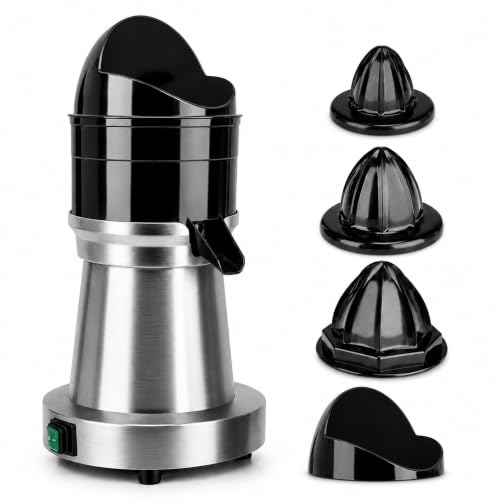
- Three interchangeable reamers for different fruit sizes
- Stainless-steel body with metal gears
- Splash guard and dishwasher-safe removable parts
Best For: Busy restaurants, cafes, and juice bars
Versatile Electric Pick
Cuisinart Pulp Control Citrus Juicer

- Handles limes through grapefruits
- Three pulp-control settings
- Dishwasher-safe parts and three-year warranty
Best For: Small restaurants, bars, and drink stations
Best for Everyday Use
Stainless Steel Citrus Juice Press

- Long lever helps reduce pressing effort
- 4.3-inch bowl fits most commercial oranges
- Dishwasher-safe parts and portable design
Best For: Cafés, bars, food trucks, and manual batch squeezing
High-Capacity Budget Pick
BLACK+DECKER 32-Ounce Citrus Juicer

- 32-ounce clear juice container
- Auto-reversing cone and pulp control
- Measurement markings and drip-free pour spout
Best For: Lower-volume kitchens and measured beverage prep
Best with Extra Features
Stainless Steel Lemon Squeezer

- Heavy-duty 18/8 stainless steel construction
- Seed-free juice from lemons, limes, and small oranges
- Dishwasher-friendly manual design
Best For: Bars and restaurant kitchens needing compact manual citrus pressing
Best Heavy-Duty Pick
Elite Gourmet 24 oz Citrus Juicer

- 40W motor with auto-reversing reamer
- 24-ounce capacity for small batches
- Pulp and seed filter with easy-pour spout
Best For: Small prep areas and cafés serving limited juice quantities
Best Powerful Electric Pick
Eurolux Stainless Steel Citrus Juicer

- 120W motor with automatic one-touch operation
- Integrated filter for seed-controlled juice
- Universal cone and stainless steel construction
Best For: Restaurant beverage stations needing powerful repeated extraction
Heavy-Duty Manual Pick – CO-Z Commercial Citrus Press
For a citrus juicer for restaurant use that does not depend on electricity, the CO-Z manual press combines a long lever, cast-iron construction, and stainless-steel fruit-contact parts. Its 5-inch funnel accommodates various citrus sizes, while the removable strainer helps keep seeds and pulp out of finished juice.
Best For: Restaurants, cafes, bars, and kitchens needing a sturdy manual press for citrus and pomegranates.
Pros:
- Heavy-duty cast-iron body and 304 food-grade stainless-steel contact parts.
- Long rubber-grip lever and nonslip suction base make pressing easier and steadier.
- Detachable, dishwasher-safe components simplify cleanup.
- Handles oranges, lemons, limes, grapefruits, and pomegranates.
Cons:
- Manual operation requires staff effort for every serving.
- Its 15.3-inch height may need dedicated counter space.
The CO-Z is a practical choice when durability and control matter more than automated throughput. It is especially useful for made-to-order juice or cocktail service where a compact manual workflow is acceptable.
Compact Electric Pick – Waring BJ120C Citrus Juicer
The Waring BJ120C is a compact citrus juicer for restaurant counters with a stated capacity of up to 120 oranges per hour. Its universal reamer handles different citrus fruits, while the die-cast base and vibration-dampening feet help keep operation stable and quiet.
Best For: Small restaurants, bars, and beverage stations that need electric citrus juicing in a limited footprint.
Pros:
- Rated to juice up to 120 oranges per hour.
- Compact 7.25-inch by 7.25-inch footprint suits smaller workspaces.
- Universal reamer is designed for a range of citrus fruits.
- Heavy-duty die-cast base and vibration-dampening feet support stable operation.
Cons:
- Its 1-quart capacity may require frequent emptying during busy service.
- Requires a 120-volt electrical outlet.
Choose the Waring when counter space is tight but manual pressing would slow service. Its stated hourly capacity makes it a stronger fit for steady beverage production than occasional, single-glass juicing.
Simple Manual Workhorse – Zulay Cast Iron Citrus Press
The Zulay cast-iron press is a straightforward citrus juicer for restaurant tasks such as cocktail preparation, lemonade service, and made-to-order juice. Its 5-inch bowl accommodates small limes through large grapefruits, and the lever mechanism is designed to extract juice with minimal effort.
Best For: Bars, juice stands, and restaurant kitchens that prefer a durable manual press without electrical operation.
Pros:
- Heavy-duty cast-iron construction is designed for continuous, high-pressure use.
- 5-inch bowl handles lemons, limes, oranges, and grapefruits.
- Rubberized feet help reduce slipping and tipping during pressing.
- Stainless-steel components help keep seeds out of the glass.
Cons:
- Hand-wash-only care is less convenient than dishwasher-safe designs.
- Manual pressing may be slower for high-volume service.
The Zulay is best suited to operations that value mechanical simplicity and a solid countertop presence. It offers useful leverage for fresh citrus service, but teams handling large continuous orders may prefer an electric model.
High-Output Electric Pick – YUANHAO Commercial Juicer
The YUANHAO is a commercial electric citrus juicer for restaurant and cafe workflows that need repeatable, hands-off pressing. Its stainless-steel body, 1400 RPM motor, three interchangeable reamers, splash guard, and pulp filter are designed to support efficient citrus preparation with easier cleanup.
Best For: Busy restaurants, juice bars, and cafes processing multiple citrus sizes throughout the day.
Pros:
- Three reamers accommodate different fruit sizes, approximately 2.5, 3.5, and 4.5 inches.
- Stainless-steel body and reinforced metal gears are built for commercial use.
- Splash guard and pulp filter help contain spray and separate pulp and seeds.
- Removable parts and drip tray are dishwasher safe.
Cons:
- Requires a 120-volt electrical connection.
- Its 16.93-inch height may be limiting beneath low cabinets.
- Electric motor operation adds more components than a manual press.
The YUANHAO stands out for teams that want adjustable fruit handling and a more contained electric workflow. Its removable dishwasher-safe parts are useful where cleanup speed is important after repeated service.
Versatile Electric Pick – Cuisinart Pulp Control Citrus Juicer
For a restaurant seeking a compact citrus juicer for restaurant prep, the Cuisinart CCJ-500P1 offers electric operation, adjustable pulp control, and compatibility with limes through grapefruits. Its auto-reversing cone and final-spin feature are useful when you want consistent extraction with less manual effort.
Best For: Small restaurants, bars, and drink stations needing versatile electric citrus juicing.
Pros:
- Accommodates small limes and large grapefruits.
- Three pulp-control settings help tailor juice texture.
- Auto-reversing cone and final-spin feature support efficient extraction.
- Dishwasher-safe parts and a long snap-up spout simplify cleanup and pouring.
Cons:
- The 12-ounce capacity may require frequent emptying during high-volume service.
- Its 25-watt maximum-power specification may be less suited to heavy continuous use than a commercial press.
This is a practical choice when counter space and pulp customization matter more than large-batch capacity. The three-year limited warranty is also useful for a restaurant adding an electric juicer to everyday prep.
Best for Everyday Use – Stainless Steel Citrus Juice Press
This manual citrus juicer for restaurant use is built for hands-on batch squeezing without electricity. Its extended lever, 4.3-inch bowl, and stainless steel fruit-contact parts make it a strong fit for fresh orange, lemon, lime, grapefruit, and pomegranate service.
Best For: Cafés, bars, food trucks, and restaurants wanting portable manual extraction.
Pros:
- Extended ergonomic handle helps reduce hand strain during pressing.
- Wide bowl fits most commercial oranges and supports several citrus fruits.
- Built-in cone strains seeds and excess pulp while extracting juice efficiently.
- Dishwasher-safe fruit-contact parts and an included brush support cleanup.
Cons:
- Manual operation requires physical effort for sustained high-volume service.
- The supplied details do not specify a juice-container capacity.
Choose this press when durability, portability, and electricity-free operation are priorities. Its sturdy metal construction and broad fruit compatibility make it more restaurant-oriented than a basic handheld squeezer, though an electric model may be faster for continuous demand.
High-Capacity Budget Pick – BLACK+DECKER 32-Ounce Citrus Juicer
For a restaurant that wants an affordable electric citrus juicer for restaurant recipes and drink prep, the BLACK+DECKER CJ625 provides a 32-ounce clear container with measurement markings. Its pressure-activated operation, auto-reversing cone, and adjustable pulp basket keep the workflow straightforward.
Best For: Lower-volume kitchens and beverage stations that value measured juice collection.
Pros:
- 32-ounce container offers more collection capacity than small countertop juicers.
- Auto-reversing cone is designed to maximize juice extraction.
- Adjustable pulp control lets users retain or remove pulp.
- Clear measurements, a handle, and a drip-free pour spout support recipe prep and serving.
Cons:
- The plastic construction may be less rugged than a metal commercial press.
- The one-year warranty is shorter than the coverage supplied with some alternatives.
- Its listed recommended use focuses on oranges, so broader fruit versatility is less clearly established.
This model makes sense when a larger integrated pitcher and easy measurement are more important than heavy-duty construction. It is a convenient fit for occasional or moderate juice production, especially where dishwasher-safe cleanup is valuable.
Best with Extra Features – Stainless Steel Lemon Squeezer
For restaurants needing a compact citrus juicer for restaurant prep or cocktail service, this Zulay Kitchen manual press emphasizes durability, control, and easy cleanup. Its food-grade 18/8 stainless steel construction handles lemons, limes, and small oranges without requiring electricity.
Best For: Bars, kitchens, and restaurants that want a sturdy manual press for small-to-medium citrus batches.
Pros:
- Heavy-duty stainless steel construction is designed to resist corrosion and rust.
- Extracts juice without seeds, including from lemons, limes, and small oranges.
- Dishwasher-friendly and compact compared with larger electric juicers.
- Manual operation avoids cords, motors, and electrical controls.
Cons:
- Manual pressing requires repeated hand operation for larger volumes.
- The bowl is sized for individual fruit rather than continuous batch juicing.
This is the most straightforward choice for fresh lemon or lime service, especially when durability and simple maintenance matter more than automated throughput. Its lifetime warranty is an additional advantage for frequent use.
Best Heavy-Duty Pick – Elite Gourmet 24 oz Citrus Juicer
The Elite Gourmet is a practical citrus juicer for restaurant stations that need modest electric output in a small footprint. Its 40W motor, auto-reversing reamer, and 24-ounce capacity suit quick batches of orange, lemon, lime, or grapefruit juice.
Best For: Small restaurant prep areas, cafés, and service stations handling roughly two to three servings at a time.
Pros:
- 40W motor and auto-reversing action support efficient extraction.
- 24-ounce, three-cup capacity is convenient for small batches.
- Integrated pulp and seed filter helps produce smoother juice.
- Compact BPA-free design includes a pour spout and top-rack dishwasher-safe removable parts.
Cons:
- Its 24-ounce capacity may require frequent refilling during busy service.
- It is a 120V corded appliance, so placement depends on access to an outlet.
This model offers a useful middle ground between hand pressing and larger commercial equipment. It is best when counter space is limited and the restaurant needs convenient small-batch extraction rather than continuous high-volume production.
Best Powerful Electric Pick – Eurolux Stainless Steel Citrus Juicer
For restaurants wanting a more powerful citrus juicer for restaurant beverage service, the Eurolux combines a 120W motor with one-touch handle operation. Its stainless steel build, pulp control, and automatic start-and-stop action are suited to repeated orange and lemon juicing.
Best For: Restaurant counters and beverage stations that need hands-off electric extraction with stronger motor performance.
Pros:
- 120W motor provides powerful extraction while the design is intended to operate quietly.
- Soft-grip handle starts and stops juicing automatically with light pressure.
- Integrated filter helps remove seeds and unwanted residue.
- One-size-fits-all cone accommodates most fruit shapes and sizes without cone changes.
Cons:
- Larger 13-by-7-by-10-inch dimensions require more counter space.
- Its corded design limits placement to areas with a suitable outlet.
- The supplied notes primarily identify lemon and orange use, so it may be less specialized for smaller limes.
The Eurolux is the strongest electric option in this group for operators who value speed, reduced hand effort, and a polished stainless steel appearance. Its larger footprint makes it better for a dedicated beverage station than a crowded prep counter.
How We Picked the Best Citrus Juicer for Restaurant Use
We focused on the practical demands of commercial prep: pressing speed, expected daily volume, durability, ease of cleaning, juice consistency, and counter-space requirements. The selection includes manual presses for controlled, quiet operation and electric juicers for faster recurring service. We also considered useful features such as removable strainers, pulp adjustment, pressure activation, dishwasher-safe parts, and stainless-steel or cast-iron construction.
Because restaurant needs vary widely, no single machine is ideal for every operation. A café serving occasional fresh juice may value a compact footprint, while a breakfast restaurant, cocktail bar, or juice station may need faster output and sturdier components.
Quick Comparison
| Best For | Recommended Type | Why It Makes Sense |
|---|---|---|
| High-volume orange juice | Commercial electric juicer | Faster processing with less manual effort |
| Bars and cocktail stations | Manual citrus press | Quiet, controlled, and easy to use on demand |
| Small cafés | Compact electric juicer | Convenient performance without a large footprint |
| Mixed citrus service | Adjustable electric or manual press | Handles different fruit sizes and pulp preferences |
| Low-maintenance prep | Model with removable or dishwasher-safe parts | Speeds cleanup between shifts |
Key Buying Factors for a Citrus Juicer for Restaurant Service
Capacity and Workflow
Estimate how many oranges, lemons, or limes you press during a typical rush rather than relying only on advertised maximum capacity. Electric models are generally better for repeated batches, while manual presses work well for made-to-order drinks and moderate volumes.
Construction and Stability
Look for a heavy base, strong handle, and corrosion-resistant components. Cast iron can provide excellent stability for manual pressing, while stainless steel is useful where frequent cleaning and moisture exposure are concerns. A nonslip base or secure mounting position is especially important on busy counters.
Juice Quality and Control
Strainer design and pulp settings affect the finished drink. Adjustable pulp control is useful when one station serves multiple recipes. A removable strainer can also make it easier to remove seeds and rinse residue quickly.
Cleaning and Maintenance
Choose removable food-contact parts whenever possible. Dishwasher-safe components can save labor, but confirm the manufacturer’s care instructions. Electric models should also have protected controls and a design that limits juice buildup around the motor housing.
Who Should Buy Which Citrus Juicer for Restaurant?
Choose a heavy-duty manual press if you prioritize durability, quiet operation, and precise control for lemons, limes, or occasional orange juice. Select a commercial electric model if your restaurant serves fresh juice continuously and staff efficiency is the priority. A compact electric juicer is a practical fit for cafés, breakfast counters, and smaller kitchens with limited space. For bars, a sturdy manual press can be the simplest choice for fresh cocktail ingredients, while adjustable pulp control is valuable for restaurants serving juice by the glass.
Before buying, verify the machine’s fruit-size range, electrical requirements, replacement-part availability, warranty, and cleaning process. Matching the juicer to your actual service volume will usually matter more than choosing the most powerful-looking model.