Fresh pasta does not require a restaurant-sized kitchen or complicated equipment. The best compact pasta machines make rolling, cutting, and shaping homemade noodles more manageable while taking up less counter space.
We compared 10 manual and electric models across capacity, pasta options, controls, cleanup, and storage-friendly design to help you choose the right machine for your cooking style.
Best 10 Compact Pasta Machines Picks for 2026
Best Automatic Compact Pasta Machine
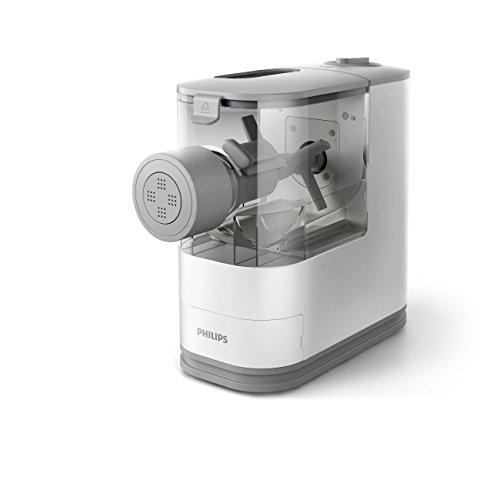
- Automatic kneading and extrusion in about 18 minutes
- Three discs for spaghetti, penne, and fettuccini
- Compact design with built-in disc storage
Best For: Small households wanting convenient automatic pasta making
Best Manual Compact Pasta Machine

- Nine adjustable thickness settings from 0.5 to 3 mm
- Two cutting widths for varied pasta styles
- Lightweight rust-resistant stainless steel construction
Best For: Hands-on cooks seeking adjustable pasta thickness and widths
Best Italian Compact Pasta Machine
MARCATO Atlas150 Manual Pasta Maker

- Made in Italy with 10 thickness settings
- Makes lasagna, fettuccine, and tagliolini
- Compact 8-by-8-by-7-inch footprint
Best For: Traditionalists wanting precise manual pasta preparation
Best Large-Batch Compact Pasta Machine
Philips 7000 Series Pasta Maker

- Makes up to eight portions in under 10 minutes
- Includes eight shaping discs and 150W power
- Dishwasher-safe parts and HomeID recipe guidance
Best For: Families and hosts preparing larger batches automatically
Best Manual Pick
Nuvantee Adjustable Pasta Maker

- Seven thickness settings from 0.5 to 3 mm
- Two cutters for 2 mm and 6 mm noodles
- Stainless-steel manual construction
Best For: Hands-on pasta making and adjustable dough thickness
Best Compact Electric Roller

- 700W motor with two speeds and reverse
- Eight settings from 0.4 to 2 mm
- Lightweight 5.2-pound design for storage
Best For: Space-conscious cooks who want electric rolling and cutting
Best Automatic Shape Variety
Deco Chef Automatic Pasta Maker

- Automatically mixes, kneads, and extrudes
- Includes eight interchangeable shaping discs
- Makes up to 12.3 ounces of flour per batch
Best For: Convenient, varied extruded pasta at home
Compact Electric Sheeter
135W Stainless Steel Pasta Roller
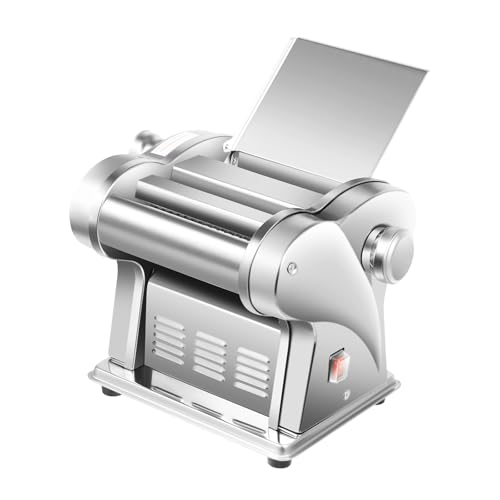
- Automatic 135W dough and noodle sheeting
- Six thickness levels from 0.02 to 0.14 inches
- Compact countertop design with stainless steel build
Best For: Effort-saving pasta and noodle sheets in space-conscious kitchens
All-in-One Automatic Maker

- Four automatic modes for beginner-friendly operation
- Eight pasta discs and 500g flour capacity
- Includes measuring tools and cleaning accessories
Best For: Families wanting varied fresh noodles with minimal manual work
Hands-On Classic
Sur La Table Va Bene Manual Pasta Maker

- Nine adjustable dough-thickness settings
- Cuts spaghetti and fettuccine with a detachable shaper
- Clamp and handle support stable manual rolling
Best For: Hands-on cooks making sheets, ribbons, lasagna, or dumpling skins
Best Automatic Compact Pasta Machine – Philips Viva HR2370/05
For shoppers seeking compact pasta machines that can handle the mixing and shaping automatically, the Philips Viva Collection is designed for convenient everyday use. It makes 2–3 servings in about 18 minutes and includes shaping discs for spaghetti, penne, and fettuccini.
Best For: Small households wanting fresh pasta with minimal hands-on work and a machine that can stay on the counter.
Pros:
- Automatically kneads and extrudes fresh pasta in approximately 18 minutes.
- Includes three shaping discs for spaghetti, penne, and fettuccini.
- Space-saving design includes storage for the shaping discs.
- Supports flavored pasta made with ingredients such as herbs, spinach, or carrot juice.
Cons:
- Its included discs offer fewer shape options than models with larger disc collections.
- Its 2–3-serving capacity may be limiting for larger families.
The Philips Viva is a practical choice when automation and counter-friendly storage matter more than maximum capacity or extensive shaping options.
Best Manual Compact Pasta Machine – Sailnovo 3-in-1 Pasta Maker
The Sailnovo is one of the more flexible compact pasta machines for cooks who prefer manual control. Its nine roller thickness settings and two cutting widths accommodate pasta sheets, spaghetti, fettuccine, lasagna, and dumpling skins.
Best For: Hands-on cooks who want adjustable dough thickness and a lightweight stainless steel machine for varied pasta styles.
Pros:
- Offers nine thickness settings from 0.5 to 3 millimeters.
- Two cutting widths support different pasta shapes and sizes.
- Stainless steel and aluminum construction is described as rust-resistant and lightweight.
- Includes a clamp and English manual.
Cons:
- Manual operation requires more effort than an automatic pasta maker.
- The blade attachment should not be washed in water or placed in a dishwasher.
- Cleaning requires a brush, wooden stick, or toothpick to remove residual dough.
Choose the Sailnovo if versatility and manual control are priorities, provided you are comfortable with hands-on rolling and careful blade maintenance.
Best Italian Compact Pasta Machine – MARCATO Atlas150 Manual Pasta Maker
MARCATO Atlas150 Manual Pasta Maker Machine-LASAGNA, FETTUCCINE & TAGLIOLINI. Made in Italy
Check Price On AmazonThe MARCATO Atlas150 is a compact manual pasta machine for traditional sheet-and-cut pasta preparation. Its 10 settings cover dough thicknesses from 0.8 to 4.8 millimeters, while the included setup is suited to lasagna, fettuccine, and tagliolini.
Best For: Traditionalists who want a compact, Italian-made manual machine for classic rolled pasta.
Pros:
- Made in Italy for a traditional pasta-making experience.
- Provides 10 thickness settings from 0.8 to 4.8 millimeters.
- Designed for lasagna, fettuccine, and tagliolini.
- Compact 8-by-8-by-7-inch dimensions suit smaller work areas.
Cons:
- Manual operation requires rolling and cutting the dough by hand.
- The supplied configuration focuses on three pasta types rather than automatic extrusion.
- At 2.6 kilograms, it is not the lightest option in the group.
The Atlas150 stands out for buyers who value traditional construction, precise thickness adjustment, and a compact footprint over automated convenience.
Best Large-Batch Compact Pasta Machine – Philips 7000 Series Pasta Maker
The Philips 7000 Series brings high capacity to the compact pasta machines category, preparing up to eight portions in one batch. Its 150W ProExtrude technology, eight discs, and automatic operation are aimed at fast, low-effort pasta making for families and gatherings.
Best For: Families and hosts who want automatic pasta production, multiple shapes, and app-guided recipes.
Pros:
- Prepares fresh pasta in under 10 minutes according to the supplied notes.
- Large capacity makes up to eight portions at once.
- Includes eight shaping discs for added variety.
- Dishwasher-safe non-stick parts simplify cleanup, and the HomeID app offers recipe guidance.
Cons:
- Its 20-pound weight makes it less convenient to move than lighter machines.
- Its footprint is larger than some smaller-capacity compact models.
- Maximum listed sheet thickness is 1.5 millimeters, limiting thickness range.
The Philips 7000 Series is a strong fit when batch size and automation are more important than portability or a broad manual thickness range.
Best Manual Pick – Nuvantee Adjustable Pasta Maker
If you want compact pasta machines with hands-on control, the Nuvantee is a practical manual option. Its stainless-steel construction, seven thickness settings, and two cutter widths support everything from thin pasta sheets to spaghetti and fettuccine.
Best For: Home cooks who prefer manual operation and adjustable control for pasta, lasagna sheets, and dumpling wrappers.
Pros:
- Seven settings adjust dough from 0.5 mm to 3 mm.
- Includes 2 mm and 6 mm cutters for different noodle widths.
- Stainless-steel construction and a manual design.
Cons:
- Manual rolling and cutting require more effort than an automatic machine.
- It offers fewer pasta shapes than an extruding machine.
The Nuvantee is a straightforward choice when durability and thickness control matter more than automation. Its compact footprint and versatile rollers make it suitable for regular homemade pasta sessions.
Best Compact Electric Roller – GVODE Electric Pasta Maker
Among compact pasta machines, the GVODE stands out for combining electric operation with a relatively lightweight 5.2-pound design. Its 700W motor, eight thickness settings, two speeds, and reverse function make rolling and cutting fresh pasta less labor-intensive.
Best For: Cooks who want an electric roller and cutter that is easy to lift, store, and use in a space-conscious kitchen.
Pros:
- Eight settings roll sheets from 0.4 mm to 2 mm.
- Two speeds and reverse help manage dough during operation.
- Lightweight housing, metal drive gears, and a wipe-clean exterior.
- Supports spaghetti, fettuccine, and lasagna sheets.
Cons:
- Requires 15-minute operating periods followed by a five-minute cool-down.
- The plastic housing may feel less substantial than an all-metal machine.
The GVODE is a useful middle ground between manual effort and full automation. Follow its recommended operating pauses and dough-preparation guidance to get smoother performance and cleaner cuts.
Best Automatic Shape Variety – Deco Chef Automatic Pasta Maker
For shoppers seeking compact pasta machines that handle more of the process, the Deco Chef automatically mixes, kneads, and extrudes fresh pasta. It offers eight interchangeable shaping discs, a 12.3-ounce flour capacity, and a finished batch in about 10 minutes.
Best For: Families and busy home cooks who want automated pasta making with multiple shapes and simple controls.
Pros:
- Automatic mode handles mixing, kneading, and extrusion.
- Eight interchangeable discs provide varied pasta shapes.
- Accepts up to 12.3 ounces of flour per batch.
- Includes measuring cups and an accessory tool.
Cons:
- At 8.2 pounds, it is heavier than the GVODE roller.
- Its 13.19-inch length may require more storage space.
- It makes extruded shapes rather than rolled pasta sheets.
The Deco Chef is the strongest fit when convenience and shape variety are priorities. Its transparent chamber and dedicated controls also make it easier to monitor and customize the automatic cycle.
Compact Electric Sheeter – 135W Stainless Steel Pasta Roller
For shoppers comparing compact pasta machines, this electric dough roller focuses on quick, consistent sheet rolling rather than pasta extrusion. Its 135W motor, six thickness levels, and small countertop footprint suit kitchens where space and hands-on effort are limited.
Best For: Home cooks and small commercial kitchens that want an automatic pasta and noodle sheeter with adjustable thickness.
Pros:
- Automatic 135W operation helps reduce rolling effort.
- Six thickness settings cover 0.02 to 0.14 inches.
- Compact 8.46-by-6.88-inch footprint saves countertop space.
- 410 stainless steel construction is food-safe and resistant to rust and deformation.
Cons:
- It is a roller sheeter, so it does not provide the eight extrusion shapes included with some pasta makers.
- At 13.5 pounds, it is compact in footprint but not especially lightweight.
This is a practical choice when consistent sheets and countertop efficiency matter most. The adjustable settings add flexibility, while the simple structure should make routine cleanup straightforward.
All-in-One Automatic Maker – VEVOR 8-Shape Pasta Machine
Among compact pasta machines, the VEVOR stands out as an automatic extruder with multiple molds and a 500g flour capacity. It is designed for straightforward batch preparation, making fresh noodles for about four people in roughly 14 minutes when the flour-to-water ratio is followed correctly.
Best For: Beginners and families who want automatic pasta extrusion with several noodle shapes and included measuring accessories.
Pros:
- Four automatic modes simplify operation.
- Eight pasta discs provide shape variety.
- 500g flour capacity can produce enough noodles for about four people.
- Includes measuring cups, spatula, cleaning brush, and dishwasher-safe parts.
Cons:
- Incorrect water amounts can cause sticking or prevent dough from passing through.
- At 13.4 inches long, it takes more counter space than the smaller roller-style option.
- Its 11-pound weight may make frequent storage and setup less convenient.
The VEVOR offers the broadest shape selection of these options and minimizes manual work. Its main learning point is accurate measuring, but the included accessories and automatic modes make it approachable for new users.
Hands-On Classic – Sur La Table Va Bene Manual Pasta Maker
For buyers seeking compact pasta machines without a motor, this manual Sur La Table model uses a hand crank, rollers, and cutters to prepare fresh sheets and noodles. Its clamp stabilizes the machine on the counter, while nine adjustable settings support different dough thicknesses.
Best For: Cooks who prefer hands-on pasta making and need one machine for spaghetti, fettuccine, lasagna, or dumpling skins.
Pros:
- Nine adjustable settings provide fine control over dough thickness.
- Detachable cutter produces spaghetti and fettuccine.
- Can roll dough for lasagna and dumpling skins.
- Removable handle and clamp support controlled, stable operation.
Cons:
- Manual cranking requires more physical effort than electric models.
- Hand-wash-only care is less convenient than dishwasher-safe components.
- The supplied notes list a single operation setting despite nine thickness positions.
This model suits shoppers who value control and the ritual of making pasta by hand. It offers useful roller-and-cutter versatility, though it is better for cooks comfortable with manual cranking and hand washing.
How We Picked the Best Compact Pasta Machines
We evaluated these Compact Pasta Machines against the features that matter most in a home kitchen: footprint, operating method, roller adjustment, cutter and shaping options, batch capacity, construction, cleanup, and overall versatility. Manual machines are typically easier to store and give you direct control over dough thickness, while electric models can reduce the effort required for mixing, extruding, or cutting.
We also considered whether each machine is best suited to occasional pasta nights, frequent homemade meals, or larger batches. Product claims such as the number of discs, settings, and included accessories should be checked against the current listing before purchase, since bundles can change.
Quick Comparison
| Type | Best For | Main Advantage | Potential Trade-Off |
|---|---|---|---|
| Manual roller and cutter | Hands-on pasta making | Simple operation and precise thickness control | Requires a clamp or steady work surface and manual effort |
| Automatic extruder | Convenient shaped pasta | Mixing and forming can be largely automated | More parts to clean and greater countertop storage needs |
| Electric roller and cutter | Faster sheeted pasta | Reduces repetitive cranking | Motor noise and added mechanical complexity |
Key Buying Factors for Compact Pasta Machines
Size, Storage, and Stability
Measure both the machine and the space needed to operate it. A compact footprint is helpful, but a model that needs a clamp, open countertop area, or a nearby outlet may require more usable space than its dimensions suggest. Removable parts can make cabinet storage easier.
Manual or Electric Operation
Choose a manual machine if you enjoy controlling the process, make smaller batches, or want a straightforward tool with fewer electrical components. Electric machines are more convenient for frequent use and may handle mixing or extrusion, but they often require more careful cleaning.
Thickness Settings and Pasta Shapes
Multiple roller settings are useful for lasagna sheets, fettuccine, tagliolini, and other noodles. Extruder-style models may offer more shape discs, but the number of included shapes matters less than how easily you can change and clean them.
Capacity and Cleanup
Check flour or dough capacity against the portions you usually prepare. Larger capacity can save time for families, while smaller batches may be easier to manage. Look for accessible components and follow the manufacturer’s cleaning instructions; many pasta parts should be brushed or wiped rather than immersed.
Who Should Buy Which Compact Pasta Machines?
Buy a manual roller-and-cutter machine if you want classic pasta sheets, dependable thickness control, and a compact setup for occasional cooking. Consider an automatic extruder if convenience, multiple pasta shapes, and reduced hands-on work are your priorities. An electric roller model is a useful middle ground for cooks who want traditional sheeted pasta without constant cranking.
For small kitchens, prioritize storage dimensions and removable accessories before choosing the model with the most settings. For larger households, compare batch capacity and motor performance. Whichever style you choose, confirm included cutters, discs, clamps, warranty coverage, and power requirements before ordering.