Making bread, pizza, buns, and sourdough at home is easier when a machine handles the repetitive mixing and kneading. The best dough kneading machines under $300 combine useful capacity with steady performance, simple controls, and features that suit your baking routine.
These 10 options include compact household mixers and larger machines with fermentation functions, stainless steel bowls, timers, and touch controls. Use the guide below to narrow your choice by batch size, countertop space, and the types of dough you make most often.
Best 10 Dough Kneading Machines Under 300 Picks for 2026
Best Budget-Friendly Option
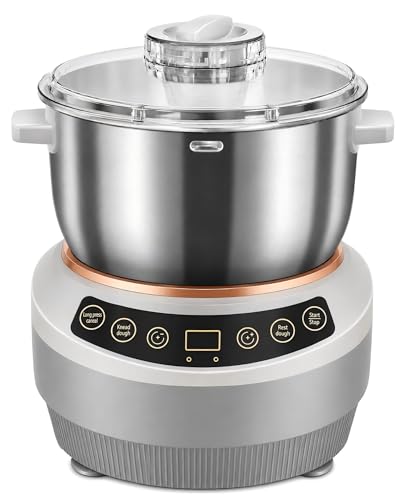
- 7L stainless steel bowl
- 1–120-minute timer with auto shutoff
- Ingredient chute and fermentation support
Best For: Simple, timed home dough preparation on a budget
Best for Large Family Batches

- 7.4-quart bowl for large batches
- Constant 100°F fermentation
- 250W motor with touch controls
Best For: Family baking, meal prep, and automatic proofing
Best Compact Dough Specialist

- Up to 1.4kg dough capacity
- 100°F fermentation heating
- Removable S-shaped kneading blade
Best For: Beginners and smaller households making dough regularly
Best All-in-One Pick

- Kneads and ferments dough in one machine
- 6.5L bowl handles up to 1600g of flour
- Ingredient chute and digital time controls
Best For: Families making larger batches of bread, pizza, and dumpling dough
Best for Stable Kneading
7.4-Quart Fermentation Dough Maker

- Intermittent kneading helps manage heat buildup
- Kneads and ferments in one stainless steel bowl
- Suction feet improve stability during mixing
Best For: Home bakers making large bread, pizza, sourdough, or dumpling batches
Best Commercial-Size Pick

- Handles up to 14.88 lb of dough
- Automatic 100–108°F fermentation
- Quiet 500W motor under 60 dB
Best For: High-volume home or small commercial baking
Best Compact Home Pick

- Three mix and fermentation modes
- Maintains 77–100°F fermentation
- Compact, dishwasher-safe design
Best For: Everyday baking in smaller kitchens
Best All-Around Pick – AIZIYO DoughChief 7.4QT
For shoppers comparing dough kneading machines under 300, the AIZIYO DoughChief stands out for combining a family-size 7.4-quart bowl with mixing and proofing functions. Its mix-pause-mix program is designed to simulate hand kneading, while the temperature-controlled ferment mode supports bread, pizza, pasta, and sourdough projects.
Best For: Home bakers who want one machine for larger dough batches and controlled proofing.
Pros:
- 7.4-quart 304 stainless steel bowl suits family-size batches.
- Mix-pause-mix cycle is designed to support gluten development without continuous mixing.
- Ferment mode maintains a stated 77–100°F range.
- Removable parts are dishwasher-safe for easier cleanup.
Cons:
- At 75 dB, it may not be the quietest option in the group.
- It has one listed speed rather than multiple speed settings.
The DoughChief is a feature-rich choice if fermentation control matters as much as kneading. Its larger capacity and stainless-steel construction make it particularly practical for frequent family baking.
Best Budget-Friendly Option – 7L Electric Dough Maker
Among dough kneading machines under 300, this 7L electric dough maker focuses on essential hands-free kneading and fermentation support. Its 200W motor, adjustable 1–120-minute timer, and auto shutoff provide straightforward controls for pizza, bread, buns, roti, and other yeast doughs.
Best For: Budget-conscious home bakers who prefer simple push-button operation and timed cycles.
Pros:
- 7L 304 stainless steel bowl provides room for family baking.
- Timer can be set from 1 to 120 minutes with automatic shutoff.
- Ingredient chute allows flour or water to be added during mixing.
- Listed 50 dB noise level is lower than the other supplied models.
Cons:
- The 200W motor is less powerful than the 250W models in this roundup.
- The motor base must be wiped clean rather than immersed in water.
This model keeps the feature set practical without adding complicated controls. It is a sensible option for routine dough preparation when a timer, fermentation support, and generous bowl are the main priorities.
Best for Large Family Batches – Saker 7.4Qt Dough Maker
If you are comparing dough kneading machines under 300 for larger baking sessions, the Saker offers a 7.4-quart stainless steel bowl and a stated 300g–2100g flour range. Its 250W motor handles several dough types, while one-touch fermentation maintains a constant 100°F after kneading.
Best For: Families and meal-prep bakers who want large batches and simple automatic fermentation.
Pros:
- 7.4-quart bowl accommodates up to 2100g of flour according to the supplied notes.
- Constant 100°F fermentation supports repeatable proofing.
- 250W motor is designed for bread, pizza, noodles, cookies, cakes, and sourdough.
- Transparent lid and top feeding window make monitoring and adding ingredients easier.
Cons:
- Its 14-by-14-by-13.5-inch footprint is larger than the other listed models.
- The 65 dB noise rating is not the lowest in this roundup.
The Saker is a strong capacity-focused pick with useful touch controls and automatic proofing. Choose it when batch size and a fixed fermentation temperature matter more than compact dimensions.
Best Compact Dough Specialist – 5.3QT Dough Kneader
For shoppers seeking dough kneading machines under 300 in a more compact format, this 5.3-quart kneader is built specifically around dough preparation rather than general-purpose mixing. It uses a removable S-shaped stainless-steel blade, a timer, and fermentation heating up to a stated 100°F for bread, pizza, pasta, and sourdough.
Best For: Beginners and smaller households wanting hands-free kneading with fermentation support.
Pros:
- Designed specifically for kneading dough across several common recipes.
- Handles up to 1.4kg of dough for substantial home batches.
- 100°F fermentation setting may help shorten rising time compared with room-temperature proofing.
- Low-speed, high-torque motor is intended for stable, quieter operation.
Cons:
- The 5.3-quart bowl is smaller than the 7L and 7.4-quart alternatives.
- Its 150W motor has the lowest listed wattage in this group.
- Controls are knob-based rather than digital.
This kneader is a focused choice for hands-free dough work without moving up to the largest bowl sizes. Its fermentation function adds versatility, while the smaller capacity may be easier to match to everyday household baking.
Best All-in-One Pick – VEVOR 6.9-Quart Dough Mixer
For shoppers comparing dough kneading machines under 300, the VEVOR Dough Mixer stands out as a home-focused option that combines mixing and constant-temperature fermentation. Its 250W motor, 6.9-quart capacity, and digital controls are suited to routine family baking.
Best For: Families making bread, pizza, sourdough, buns, or dumpling wrappers in larger batches.
Pros:
- Combines dough kneading and fermentation in one machine.
- 6.5L stainless steel bowl handles up to 1600g of flour.
- Detachable ingredient chute allows additions without stopping.
- Digital control panel supports convenient time settings.
Cons:
- The 250W motor is designed for household use rather than commercial production.
- The larger bowl may be more capacity than occasional bakers need.
With its generous bowl and integrated proofing function, this VEVOR model is a practical choice when you want to reduce hands-on kneading and avoid transferring dough between containers.
Best for Stable Kneading – 7.4-Quart Fermentation Dough Maker
Among dough kneading machines under 300, this 7.4-quart electric dough maker offers a family-size bowl and an intermittent kneading design. The rest periods are intended to help control heat buildup while the machine mixes and proofs dough.
Best For: Home bakers preparing sizable batches of bread, pizza, sourdough, rolls, or dumplings.
Pros:
- Combines mixing, kneading, and fermentation in one stainless steel bowl.
- Intermittent kneading allows the dough to rest between cycles.
- 304 stainless steel bowl is designed for easier cleanup.
- Suction feet help keep the machine steady during heavier mixing.
Cons:
- Its 250W motor and single listed unit are intended for home use.
- The large 7.4-quart capacity may not suit very small batches.
This model is appealing if stability and reduced cleanup matter as much as capacity. The integrated fermentation function also helps streamline the process from mixing through proofing.
Best for Convenient Ingredient Adding – 7.4-Quart Dough Mixer
This 7.4-quart dough mixer is a useful option to consider among dough kneading machines under 300, especially if you want large-batch capacity and the ability to add ingredients through a top window. Its constant-temperature fermentation and timed controls support a more hands-off workflow.
Best For: Large families and frequent home bakers making multiple batches of bread, pizza, or pastries.
Pros:
- Large 7-liter capacity suits family meals and gatherings.
- Constant-temperature fermentation supports consistent proofing conditions.
- Top window allows water or seasoning to be added while mixing continues.
- Includes digital display, time setting, and automatic shutoff features.
Cons:
- Only one speed is listed in the supplied specifications.
- The 250W motor is specified for household use rather than commercial workloads.
The top ingredient window and fermentation function make this a convenient choice for bakers who want fewer interruptions. Its large stainless steel bowl is particularly useful when preparing dough for groups.
Best Commercial-Size Pick – 13.8QT Dough Mixer
For shoppers comparing dough kneading machines under 300, this 13.8-quart commercial-style mixer stands out for high-volume batches. Its 500W motor, stainless steel spiral hook, fermentation function, and 5-to-120-minute timer make it suited to frequent bread, pizza, and general dough preparation.
Best For: Large households, serious home bakers, and small commercial kitchens that need generous capacity.
Pros:
- Large bowl handles up to 14.88 pounds of dough or 9.92 pounds of flour per batch.
- Built-in fermentation maintains an automatic 100–108°F environment for proofing.
- Quiet 500W motor operates below 60 dB and includes a cooling system.
- Removable bowl and hook simplify cleanup and storage.
Cons:
- Its 19.7-inch width and 17.3-inch height require substantial counter space.
- The large capacity may be excessive for small everyday batches.
This is the strongest choice when batch size matters most. The timer, proofing mode, and commercial-style construction add convenience, while the larger footprint makes it less practical for compact kitchens.
Best Family-Batch Value – 7.4Qt Fermenting Dough Maker
Among dough kneading machines under 300, this 7.4-quart model offers a practical middle ground between capacity and countertop usability. It mixes bread, pizza, dumpling, cookie, and cake dough, then can automatically ferment the dough at a controlled temperature.
Best For: Families and home bakers preparing medium-to-large batches without moving up to a commercial-size machine.
Pros:
- Accommodates 300 to 2,100 grams of flour in one batch.
- Automatic fermentation operates between 77 and 100°F.
- Detachable stainless steel bowl is dishwasher safe.
- Transparent lid and top feeding window make monitoring and adding ingredients easier.
Cons:
- The 250W motor is less powerful than the larger commercial-style option.
- Its 7.4-quart capacity may still be more than needed for occasional small batches.
This model balances useful capacity with a more home-oriented design. Its fermentation feature and dishwasher-safe bowl are especially appealing for regular family baking, while the lower wattage favors routine rather than especially demanding workloads.
Best Compact Home Pick – 5.3QT Fermenting Dough Mixer
For everyday home use, this 5.3-quart machine is a compact option among dough kneading machines under 300. It combines mix, ferment, and mix-and-ferment modes with a hand-kneading-style S-shaped blade for pizza, bread, pasta, pastry, buns, and dumplings.
Best For: Home bakers who want guided kneading and proofing without a large commercial footprint.
Pros:
- Three operating modes support mixing, fermentation, or both in sequence.
- Constant-temperature fermentation maintains 77–100°F.
- Compact 9.4-by-11-by-12-inch design suits smaller counters.
- Removable stainless steel bowl and blade are dishwasher safe.
Cons:
- Its 5.3-quart capacity is the smallest of these three models.
- The 200W motor is intended more for household baking than high-volume production.
This is the most approachable choice for routine family baking and limited counter space. It gives you useful automation and fermentation control, but shoppers making very large batches should choose a higher-capacity model.
How We Picked the Best Dough Kneading Machines Under 300
We focused on machines priced below $300 that are designed specifically for bread, pizza, pasta, buns, or sourdough dough. The products were compared by bowl capacity, stated dough-handling capability, kneading and fermentation functions, timer controls, bowl construction, ease of use, and suitability for everyday home baking.
Capacity claims can refer to the bowl rather than the maximum flour or dough load, so buyers should check the manufacturer’s limits before making heavy doughs. Larger capacity is useful, but it does not automatically mean better kneading performance.
Quick Comparison
| What to Compare | Best For | What to Look For |
|---|---|---|
| 5.3-quart class | Small households and occasional baking | Compact footprint, timer, manageable dough limits |
| 6.9- to 7.4-quart class | Regular bread and pizza batches | Stable base, stainless bowl, fermentation function |
| 13.8-quart class | Large families or frequent batch baking | Counter space, motor capability, and realistic load limits |
| Touch-panel models | Convenient preset operation | Readable controls and easy-to-clean surfaces |
Key Buying Factors for Dough Kneading Machines Under 300
Capacity and Dough Limits
Choose a bowl size based on your normal batch, not the largest occasional recipe. A 5.3-quart machine may be easier to store and sufficient for one or two loaves. Models around 7 quarts offer more flexibility for pizza, sandwich bread, and family-size batches. Oversized commercial-style units need more counter space and may be unnecessary for light use.
Kneading Performance and Stability
Look for a sturdy base, useful torque, and a dough hook designed for yeast dough. Dense whole-wheat or low-hydration dough places more strain on a motor than soft enriched dough. Suction feet, a heavier housing, and gradual speed control can help reduce movement during kneading.
Fermentation, Timer, and Controls
A built-in ferment function can provide a warmer, more consistent environment for proofing, but it is not essential if your kitchen already has a suitable warm spot. Timers are helpful for repeatable recipes, while face-up touch panels and clear displays improve convenience. Confirm whether settings control kneading time, fermentation time, or both.
Cleaning and Construction
A 304 stainless steel bowl is durable and generally straightforward to clean. Removable lids and detachable accessories make maintenance easier, but check whether parts are dishwasher-safe. Keep flour and moisture away from electronic controls, and verify that replacement accessories are available.
Who Should Buy Which Dough Kneading Machines Under 300?
Choose a 5.3-quart model if you bake modest batches, have limited storage, or want a more compact countertop appliance. Choose a 6.9- or 7.4-quart machine if bread and pizza are regular parts of your routine and you want room to scale recipes. Choose the 13.8-quart option only if you frequently make large batches and have adequate counter space.
For sourdough and other long-rise recipes, prioritize a dependable fermentation function and timer. For varied baking, prioritize bowl capacity, kneading stability, and easy cleanup over extra presets. Before ordering, compare the stated maximum dough weight, dimensions, warranty, and return policy so the machine fits both your recipes and your kitchen.