Electric dough sheeters can turn repetitive rolling into a faster, more consistent process. The right machine helps bakeries, pizzerias, and serious home cooks control dough thickness while reducing manual effort.
This roundup compares 10 models across commercial, countertop, pizza-focused, and small-batch applications. Use the guide below to match machine size, adjustment range, power, and workflow to your kitchen.
Best 10 Electric Dough Sheeters Picks for 2026
Best Heavy-Duty Pick
VEVOR 15.7-Inch Reversible Dough Sheeter

- 15.7-inch conveyor for broad dough sheets
- Reversible operation reduces manual handling
- Folding design aids storage
Best For: Commercial bakeries and high-volume pastry prep
Best Foldable Commercial Value
48-Inch Electric Dough Sheeter

- 2-30mm thickness adjustment
- Foldable countertop design
- 304 stainless steel construction
Best For: Space-conscious bakeries and pizza shops
Best Small-Batch Option
Compact 15.7-Inch Electric Dough Sheeter

- 250W motor reduces hand rolling
- 0.4-4mm thickness control
- Compact countertop footprint
Best For: Home bakers and light pastry preparation
Best for Pizza Production
VEVOR Semi-Automatic Pizza Dough Roller

- Presses about 240-260 pieces per hour
- Handles 3-16-inch pizza dough
- Adjusts thickness from 1-5.5mm
Best For: Pizzerias and high-throughput pizza prep
Best Foldable Commercial Pick
Adjustable Electric Dough Sheeter
- 2–30mm thickness adjustment
- Foldable countertop design
- 304 stainless steel construction
Best For: Multi-purpose baking in commercial or home kitchens
Best Compact Wide-Roller Pick
400mm Countertop Dough Sheeter

- 400mm-wide pressing rollers
- 250W motor with dual rollers
- 0.2–4mm thickness adjustment
Best For: Thin dough, pastries, pasta, and flatbread
Best High-Volume Pizza Pick
Foot-Switch Commercial Pizza Dough Roller
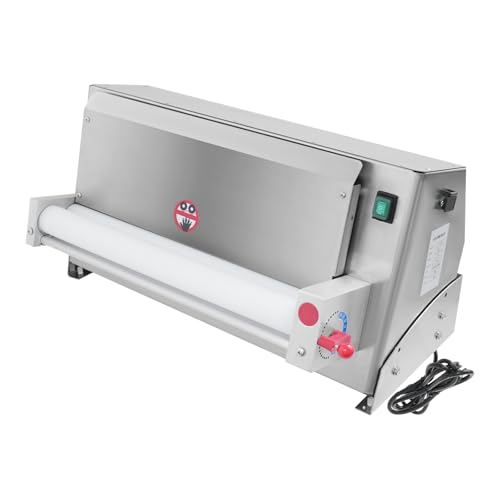
- 450W motor with stated 240–260 bases/hour
- 1–5.5mm adjustable thickness
- Foot switch and dual installation options
Best For: Busy pizzerias, restaurants, and food trucks
Heavy-Duty Commercial Pick
48-Inch Precision Electric Dough Sheeter
- 2–30mm adjustable thickness range
- Stainless steel body with food-grade PE board
- Detachable, electric design for commercial use
Best For: Commercial bakeries and pastry shops needing a large, versatile work surface
Most Versatile Automatic Model
Folding Electric Dough Sheeter

- Automatic and reversible operation
- Adjustable thickness for varied recipes
- Washable, non-stick plates and folding design
Best For: Home bakers and small commercial kitchens prioritizing versatility and storage
Precision Thin-Sheet Pick

- Five-gear 0.5–5mm thickness adjustment
- High-torque copper motor with forward/reverse control
- 304 stainless steel body and non-slip base
Best For: Pasta makers and bakers focused on thin, uniform sheets
Best Heavy-Duty Pick – VEVOR 15.7-Inch Reversible Dough Sheeter
For bakeries and pastry kitchens that need serious capacity, this electric dough sheeter combines a wide conveyor, reversible operation, and a stainless steel frame. Its adjustable 0-1.4-inch thickness range suits dough preparation for puff pastry, cakes, fondant, and other baked goods.
Best For: Commercial bakeries, patisseries, and hotel kitchens handling larger dough batches.
Pros:
- 15.7-inch conveyor provides a broad working surface.
- Reversible operation lets you press dough back and forth without lifting it.
- Folding conveyor design helps reduce storage space.
- Protective mesh cover and rubber feet support stable operation.
Cons:
- At 253.5 pounds, it is difficult to move.
- Its 63.39-inch length requires substantial floor space.
- The thickest setting is more than many home bakers need.
This is a substantial commercial machine rather than a compact countertop appliance. Choose it when durability, wide working space, and reversible handling matter more than portability.
Best Foldable Commercial Value – 48-Inch Electric Dough Sheeter
This electric dough sheeter is designed for bakeries, pizza shops, restaurants, and serious home kitchens that need even rolling without a permanently bulky setup. Its 2-30mm adjustment range supports pizza dough, croissants, puff pastry, pasta, and empanadas.
Best For: Countertop users who want commercial-style rolling with a foldable, space-saving format.
Pros:
- Adjustable 2-30mm thickness accommodates multiple dough styles.
- Foldable design helps reduce countertop and storage clutter.
- 304 stainless steel construction is food-safe, rust-resistant, and easy to clean.
- At 52 pounds, it is substantially lighter than many floor-standing models.
Cons:
- The nearly 48-inch width still requires a long countertop or work surface.
- The supplied notes do not specify a production capacity.
- It may be more equipment than occasional home bakers need.
With broad thickness control and a foldable build, this model balances versatility and storage efficiency. Confirm your available counter length before buying, since its width remains considerable even when folded.
Best Small-Batch Option – Compact 15.7-Inch Electric Dough Sheeter
For home bakers and light-duty pastry work, this compact electric dough sheeter uses a 250W motor to reduce repetitive hand rolling. The 0.4-4mm roller gap and 15.7-inch working width cover thinner pastry sheets as well as dough for pizza, pie crust, croissants, and Danish pastry.
Best For: Small-batch baking with individual dough portions from 50 to 500 grams.
Pros:
- Compact countertop dimensions suit smaller kitchens and prep areas.
- 0.4-4mm thickness control supports different pastry and dough recipes.
- 304 stainless steel rollers and feeding tray are easy to wipe clean.
- Non-slip feet and a 5.9-foot power cord support convenient placement.
Cons:
- Recommended for small portions rather than high-volume production.
- Continuous operation is limited to 30 minutes before cooling.
- Its maximum 4mm setting is narrower than some commercial sheeters.
This is a practical entry point for electric dough sheeting when space and batch size are limited. Its cooling requirement makes it better suited to intermittent preparation than nonstop bakery production.
Best for Pizza Production – VEVOR Semi-Automatic Pizza Dough Roller
Pizza-focused operations may prefer this semi-automatic electric dough roller over a general-purpose electric dough sheeter. It handles dough pieces from 3-16 inches, adjusts thickness from 1-5.5mm, and is rated for pressing approximately 240-260 pieces per hour.
Best For: Pizzerias, cafes, bakeries, and fast-food restaurants producing round pizza bases.
Pros:
- High stated throughput supports busy commercial service.
- 3-16-inch size range covers a variety of pizza bases.
- Stainless steel construction is rust-resistant and easy to clean.
- Transparent safety cover, waterproof switch, and non-slip feet add practical safeguards.
Cons:
- The semi-automatic process requires manually flipping dough into the lower roller.
- It is not suitable for puff pastry or Haitian-style cream-layer dough.
- At 90.4 pounds, it is not especially portable.
This machine is specialized for fast, uniform pizza dough pressing rather than laminated pastry. Select it when round pizza production and throughput are the priorities, and avoid it for puff pastry applications.
Best Foldable Commercial Pick – Adjustable Electric Dough Sheeter
This electric dough sheeter is a versatile choice for bakeries, pizza shops, restaurants, and home kitchens that need consistent dough preparation without extensive manual effort. Its foldable countertop design, 2–30mm thickness range, and stainless steel construction support a wide range of baking tasks.
Best For: Bakers who need a space-saving machine for pizza dough, laminated pastries, pasta, croissants, and empanadas.
Pros:
- Adjustable 2–30mm thickness accommodates varied recipes.
- Foldable countertop design helps simplify storage.
- 304 stainless steel construction is food-safe, rust-resistant, and easy to clean.
- Electric operation reduces manual effort and supports consistent sheets.
Cons:
- The broad range of applications may be more than needed for users focused only on pizza.
- Its commercial-oriented design may require dedicated countertop storage.
Choose this model when flexibility and storage efficiency matter as much as rolling consistency. It is particularly appealing for kitchens preparing several types of dough.
Best Compact Wide-Roller Pick – 400mm Countertop Dough Sheeter
This countertop electric dough sheeter combines a 400mm-wide rolling surface with a 250W motor for steady everyday preparation. Its dual stainless steel rollers are designed to produce smoother, more even sheets for pizza, pasta, pastries, and flatbread.
Best For: Home kitchens, bakeries, and pastry shops wanting a straightforward countertop machine with a generous working width.
Pros:
- 400mm-wide rollers handle a substantial sheet in one pass.
- 0.2–4mm adjustment suits thin dough and pastry applications.
- Non-slip feet help keep the machine stable during use.
- Simple power and adjustment controls are easy to operate.
Cons:
- The 0.2–4mm range is narrower than models designed for thicker dough.
- At 13kg, it is not especially lightweight for frequent repositioning.
This is a practical option for users who value a wide rolling path and uncomplicated controls. Consider it for regular pastry and thin-dough work where smooth, uniform sheets are the priority.
Best High-Volume Pizza Pick – Foot-Switch Commercial Pizza Dough Roller
Designed for pizza-focused production, this electric dough sheeter pairs a 450W motor with a foot switch and adjustable 1–5.5mm thickness. It handles 3–18-inch dough diameters and is built for restaurants, pizzerias, food trucks, and other kitchens that need an efficient workflow.
Best For: High-volume pizza preparation requiring adjustable crust thickness, hands-free controls, and flexible tabletop or wall-mounted installation.
Pros:
- Reference output of 240–260 dough bases per hour supports busy operations.
- 1–5.5mm adjustment accommodates thin and thicker pizza crusts.
- Foot pedal allows start/stop control while keeping hands on the dough.
- Handles 3–18-inch bases and supports tabletop or wall-mounted installation.
Cons:
- Its 77.2-pound weight makes relocation difficult.
- The 1–5.5mm range is less suited to very thick dough applications.
- It is more specialized for pizza than for broad pastry work.
For pizzerias and high-throughput kitchens, the foot control and larger capacity make this the most workflow-oriented option here. Its heavy construction favors a dedicated installation rather than frequent movement.
Heavy-Duty Commercial Pick – 48-Inch Precision Electric Dough Sheeter
For bakeries that need a broad work surface and flexible thickness control, this commercial electric dough sheeter combines a stainless steel body with a food-grade PE rolling board. Its 2–30mm adjustment range handles everything from laminated pastries to pizza dough, pasta, fondant, and gum paste.
Best For: Commercial bakeries, pastry shops, cafes, and dessert businesses needing a large rolling area and versatile thickness settings.
Pros:
- Wide 2–30mm thickness range for varied dough and pastry applications.
- Heavy-duty stainless steel construction supports frequent commercial use.
- Integrated non-stick PE board simplifies dough release and cleanup.
- Detachable design supports tool-free assembly, disassembly, and storage.
Cons:
- Its 48-inch depth requires substantial counter or storage space.
- The listed 30-pound capacity and commercial build may be more than occasional home bakers need.
This is the strongest fit when workspace and versatility matter most. The large format, wide adjustment range, and hands-free electric operation make it a practical choice for businesses producing different types of dough regularly.
Most Versatile Automatic Model – Folding Electric Dough Sheeter
This electric dough sheeter is designed for flexible preparation, with automatic operation, reversible rolling, and adjustable thickness control. Its stainless steel body and washable non-stick plates make it suitable for laminating pastries, preparing pasta and fondant, and handling both home and commercial baking tasks.
Best For: Home bakers, cafes, and small bakeries wanting automatic operation, folding storage, and broad recipe versatility.
Pros:
- Automatic operation reduces manual rolling effort and preparation time.
- Reversible design supports flexible dough handling.
- Adjustable thickness control accommodates thin tart shells through thicker croissant dough.
- Disassembles easily, with smooth washable surfaces for quicker maintenance.
Cons:
- Product information lists both a 0–25mm title range and a 2–30mm bullet-point range, so the exact usable range should be confirmed.
- At about 25 pounds, it may still require a dedicated setup area despite its folding design.
With automatic operation and a design intended for both home and commercial settings, this model offers a balanced feature set. It is especially appealing if easy cleaning and storage flexibility are priorities.
Precision Thin-Sheet Pick – Compact 0.5–5mm Dough Sheeter
Among electric dough sheeters, this model stands out for precise thin-sheet production. Its five-gear adjustment system covers approximately 0.5–5mm, while the high-torque copper motor, forward-and-reverse controls, and 304 stainless steel construction support pasta, croissants, pizza dough, and other baking tasks.
Best For: Pasta makers, home bakers, and smaller bakeries that need very thin, uniform sheets and stable countertop operation.
Pros:
- Fine 0.5–5mm adjustment range is suited to thin pastry and pasta sheets.
- High-torque copper motor is designed to handle delicate and stiff dough.
- 304 stainless steel body and removable front guard support hygiene and cleanup.
- Non-slip suction cups help keep the machine stable during operation.
Cons:
- Its maximum 5mm thickness is less suitable for recipes requiring substantially thicker sheets.
- The listed dimensions and 17.8-inch roller length still require dedicated counter space.
- At 47.9 pounds, it is not especially portable.
This is the most targeted choice for users who value thin, consistent sheets rather than a very wide thickness range. The stable base and powerful motor add confidence for repeated use, while the compact format suits smaller work areas better than larger commercial sheeters.
How We Picked the Best Electric Dough Sheeters
We evaluated these machines by focusing on the factors that affect everyday dough preparation: roller width, thickness adjustment, reversible operation, construction, controls, portability, and intended workload. Commercial models generally offer wider working surfaces and sturdier frames, while countertop options prioritize a smaller footprint and easier storage.
We also considered whether each sheeter is better suited to pizza dough, pastry, pasta, fondant, or general bakery production. Features such as foot switches, non-stick boards, food-grade stainless steel, and adjustable roller gaps can make a meaningful difference during repeated use.
Quick Comparison
| Best For | What to Prioritize | Typical Advantage |
|---|---|---|
| Busy bakeries | Wide rollers, durable frame, high output | Faster batch processing |
| Pizzerias | Pizza-size compatibility and simple controls | Consistent crust preparation |
| Pastry work | Fine thickness adjustment and reversible rollers | More even laminated dough |
| Home kitchens | Compact design, manageable power, easy cleaning | Smaller footprint |
| Mixed applications | Broad adjustment range and adaptable roller width | Greater versatility |
Key Buying Factors for Electric Dough Sheeters
Roller Width and Capacity
Roller width determines the largest sheet you can produce in one pass. Wider machines are useful for commercial pastry and pizza preparation but require more counter or floor space. A compact model may be the better choice for occasional batches or limited kitchens.
Thickness Range and Adjustment
Check the stated minimum and maximum thickness before buying. A broad range is valuable if you work with pizza, pasta, puff pastry, fondant, or laminated dough. Precise adjustment helps produce repeatable results across batches.
Power, Speed, and Controls
Higher-wattage motors can be helpful for frequent or heavier production, but power alone does not determine performance. Look for forward and reverse operation, accessible controls, and—especially for pizza work—a foot switch that keeps both hands available.
Construction and Cleaning
Stainless steel bodies are generally easier to wipe down and better suited to demanding food-preparation environments. Also check the design of the rollers, belts, guards, trays, and any non-stick surfaces. Fewer difficult-to-reach areas can simplify daily cleanup.
Space, Safety, and Electrical Requirements
Measure the available work area, including room for dough entry and exit. Confirm voltage and plug requirements, and look for stable feet, protective guards, emergency controls, and clear operating instructions. A heavier machine may be steadier, while a foldable or countertop model may be easier to store.
Who Should Buy Which Electric Dough Sheeters?
Choose a Wide Commercial Sheeter for High Output
Choose a wider, stainless steel commercial unit if you prepare large dough sheets regularly or need to reduce production time in a bakery or restaurant.
Choose a Pizza Roller for Pizzeria Work
Pizza-focused models make sense when your main goal is shaping multiple pizza bases. Prioritize compatible pizza sizes, simple thickness controls, and a foot pedal if your workflow benefits from hands-free operation.
Choose a Compact Model for Home or Small-Batch Use
A countertop electric dough sheeter is usually the practical option for home kitchens, cooking schools, and small bakeries. It saves space while still providing more consistent results than hand rolling.
Choose a Versatile Sheeter for Mixed Doughs
If you make pasta, pastry, pizza, and fondant, look for reversible operation and a broad adjustment range. Versatility is more valuable than maximum width when the machine must support several recipes.