The best dough sheeters for small kitchens make rolling pastry, pizza dough, fondant, and laminated dough faster and more consistent without demanding a full commercial workspace.
This roundup compares 10 compact manual and electric models, focusing on footprint, thickness control, folding designs, materials, and the workloads each machine can realistically handle.
Best 10 Dough Sheeters for Small Kitchens Picks for 2026
Best Electric Pick
Compact Electric Dough Sheeter

- 250W motor reduces manual rolling
- 15.7-inch stainless steel rolling area
- 0.4–4 mm thickness adjustment
Best For: Small-batch pastry prep and home kitchens with outlet access
Best Foldable Hand-Crank Model
Foldable Stainless Dough Roller
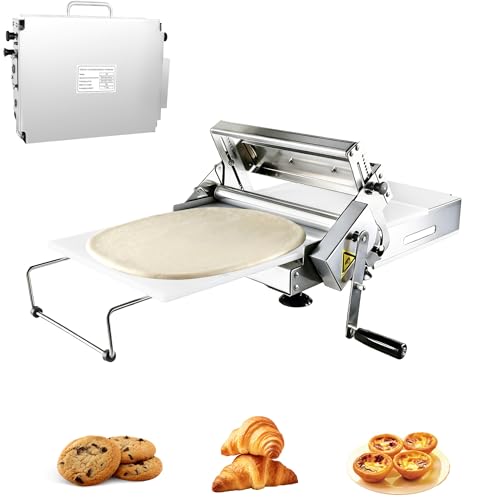
- Folds for compact storage
- 304 stainless steel construction
- Wide adjustable thickness range
Best For: Home bakers needing a no-electricity, storable roller
Best Portable Manual Pick
Compact Countertop Dough Sheeter

- Folds smaller than a baking tray
- 0.5–25 mm range with 10 settings
- Works without electricity
Best For: Portable baking, RVs, camping, and compact storage
Best Space-Saving 12-Inch Model
Folding Stainless Dough Roller

- 12-inch roller handles varied dough sizes
- Folds for cabinet or drawer storage
- 0.2–27 mm thickness adjustment
Best For: Small kitchens needing wider manual rolling capacity
Best Space-Saving Pick
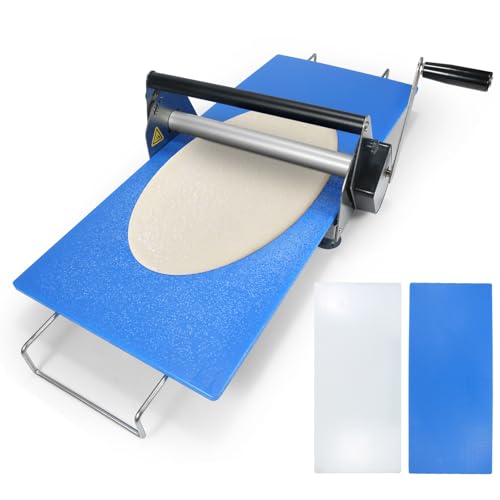
- Folds for easier storage in small kitchens.
- Adjusts from 0 to 17.5 mm.
- Includes two textured PE rolling boards.
Best For: Home bakers and small bakeries needing versatile, foldable dough rolling.
Best Everyday Manual Model

- Foldable countertop design saves storage space.
- Offers 0–17.5 mm thickness adjustment.
- Includes boards, hand crank, body, and stand.
Best For: Frequent home or small-bakery preparation of pastry, pizza, and laminated dough.
Best Decorative Dough Option

- Manual, electricity-free operation.
- Adjusts from 0 to 12 mm.
- Removable parts simplify cleaning and storage.
Best For: Pastry and fondant work in home or small commercial kitchens.
Best Overall
WantJoin 16-Inch Folding Dough Sheeter

- 55 thickness settings from 0–25mm
- Foldable stainless-steel construction
- Includes rolling board and croissant cutter
Best For: Home bakers and compact commercial kitchens needing wide capacity and precise control
Best for Pastry Detail
Sfogliafacile MINI Manual Dough Sheeter

- Handles 0–12mm ultra-thin sheets
- Useful for fondant, sugar paste, and pastry
- Compact hand-crank operation
Best For: Decorators and pastry-focused kitchens making delicate, thin sheets
Best Value
15.5-Inch Folding Stainless Steel Dough Sheeter

- 15.5-inch rolling surface for larger portions
- 0–27mm adjustable thickness range
- Folds and includes non-slip feet
Best For: Versatile home baking and small bakery use with limited storage space
Best Electric Pick – Compact Electric Dough Sheeter
For shoppers comparing dough sheeters for small kitchens, this countertop electric model offers powered rolling in a relatively compact 23.6 × 11.8 × 9.8-inch design. Its 15.7-inch working width and adjustable 0.4–4 mm roller gap suit small-batch pastry and dough preparation.
Best For: Home bakers and light pastry prep using 50–500 g portions who want to reduce repetitive hand rolling.
Pros:
- 250W motor helps streamline small-batch rolling.
- 15.7-inch effective rolling area handles wider dough sheets.
- 304 stainless steel rollers and feeding tray are easy to wipe clean.
- Non-slip feet and a 5.9-foot cord support stable, flexible countertop use.
Cons:
- Its 0.4–4 mm adjustment range is narrower than some manual models.
- Continuous operation is limited to 30 minutes before a 10–15-minute cooling period.
- Electric operation requires an available outlet and countertop space.
This is a practical choice when convenience matters more than maximum thickness range. The motor and generous roller width make it particularly suitable for recurring small-batch pastry work.
Best Foldable Hand-Crank Model – Foldable Stainless Dough Roller
Among dough sheeters for small kitchens, this foldable manual roller stands out for storage flexibility and broad thickness adjustment. The hand crank avoids electricity, while its stainless steel construction is designed for home baking and pastry preparation.
Best For: Bakers who want a manually operated sheeter that folds away and supports pizza, croissants, puff pastry, and layered desserts.
Pros:
- Foldable design helps conserve storage space.
- 304 stainless steel construction is food-grade, rust-resistant, and easy to clean.
- Adjustable 2–30 mm thickness range accommodates thin pastry and thicker dough.
- Manual operation requires no electricity and is rated at a 30 dB noise level.
Cons:
- Hand-crank operation still requires physical effort for repeated batches.
- The listed dimensions are 33 inches deep by 13.7 inches wide, so setup space may be substantial.
- The supplied notes contain inconsistent thickness references of 0.2–27 mm and 2–30 mm.
This model makes sense for a small kitchen where a foldaway appliance is more useful than an electric motor. Confirm the exact thickness markings before purchase if recipe-specific precision is important.
Best Portable Manual Pick – Compact Countertop Dough Sheeter
For dough sheeters for small kitchens that also need to travel, this lightweight manual model is designed for quick setup and compact storage. It weighs 7.5 kg, folds smaller than a baking tray, and offers 10 settings across a 0.5–25 mm thickness range.
Best For: Home bakers, RV users, campers, and small events where portability and manual operation are priorities.
Pros:
- No electricity or motor noise is required.
- Foldable design simplifies storage and transport.
- Food-grade stainless steel and PE components are designed for routine food preparation.
- Non-stick rollers, an ergonomic handle, and a non-slip base support convenient use.
Cons:
- Manual operation may be slower or more tiring for large batches.
- Its maximum stated thickness is 25 mm, below some competing models’ ranges.
- The 7.5 kg body is portable but not ultralight.
This is a versatile option for buyers who need a sheeter beyond the home countertop. Its folding format and broad application list make it especially useful when storage, transport, or off-grid use matters.
Best Space-Saving 12-Inch Model – Folding Stainless Dough Roller
This folding 12-inch roller is a strong fit for dough sheeters for small kitchens because it stores in cabinets or drawers when not in use. Its manual crank, 304 stainless steel construction, and 0.2–27 mm adjustment range cover common pastry, dumpling, and pizza tasks.
Best For: Apartment bakers and small bakeries that want a wider roller without leaving bulky equipment permanently on the counter.
Pros:
- 12-inch roller width supports dumpling wrappers, pizza crusts, croissants, and egg tarts.
- Folding structure helps free counter space between uses.
- 304 stainless steel is rust-resistant, food-grade, and easy to clean.
- Ergonomic hand crank is designed to reduce fatigue during longer preparations.
Cons:
- Manual cranking requires more effort than an electric sheeter.
- It needs a suitable surface for secure hand-crank operation.
- At 17.71 pounds packaged weight, it may not be ideal for frequent carrying.
Choose this model when a 12-inch working width and foldaway storage are more important than powered operation. It balances useful capacity with a format intended for space-constrained kitchens.
Best Space-Saving Pick – Compact Folding Dough Sheeter
For shoppers comparing dough sheeters for small kitchens, this folding manual model emphasizes stability, storage convenience, and flexible thickness control. Its stainless-steel construction and dual rolling boards make it suitable for several common baking projects.
Best For: Home bakers and small bakeries that need a foldable sheeter for pastry, pizza, pasta, and cookies.
Pros:
- Foldable design helps save counter and storage space.
- Marked thickness settings adjust from 0 to 17.5 mm.
- Includes two 27.5-by-12-inch PE boards with rough and smooth surfaces.
- Detachable stainless-steel parts and wipe-clean boards simplify cleanup.
Cons:
- At nearly 18 pounds, it is not especially lightweight to move.
- Its 32.5-inch length may still require substantial counter space when unfolded.
This is a practical choice when compact storage matters but you still want broad thickness adjustment and multiple work surfaces. The dual-board setup adds flexibility, while the manual design keeps operation straightforward.
Best Everyday Manual Model – Folding 12-Inch Dough Sheeter
This folding manual model is a straightforward option for people seeking dough sheeters for small kitchens with consistent thickness control. Its 304 stainless-steel build, countertop format, and included hand crank suit regular home or small-bakery preparation.
Best For: Daily preparation of pizza dough, croissants, puff pastry, bread, and other laminated doughs.
Pros:
- Foldable countertop design supports easier storage.
- Adjustable thickness range of 0 to 17.5 mm helps improve consistency.
- 304 stainless steel is rust-resistant, food-safe, and easy to clean.
- Includes two sheeter boards, a hand crank, machine body, and stand.
Cons:
- The 31.4-inch depth may be considerable for very limited counters.
- Manual operation requires turning the hand crank throughout the process.
With its broad adjustment range and included accessories, this model is geared toward repeat baking tasks rather than occasional decorative work. It offers a useful balance of storage flexibility and everyday dough preparation.
Best Decorative Dough Option – VEVOR Manual Pastry Sheeter
For buyers evaluating dough sheeters for small kitchens, this VEVOR manual machine combines a compact countertop footprint with fine thickness adjustment. Its removable components and 11-inch format make it especially useful for pastry, fondant, sugar paste, pasta, and pizza work.
Best For: Home kitchens, coffee shops, bakeries, and pastry users who need adjustable sheets for dough or decorative work.
Pros:
- Manual operation requires no electricity.
- Dial adjusts thickness from 0 to 12 mm for thin pastry and decorative sheets.
- Removable handle, panel, and roller support cleaning and storage.
- Fixed base and stainless-steel construction provide stability and durability.
Cons:
- Its maximum sheet thickness is 12 mm, less than some competing models.
- At 23.2 pounds, it may be cumbersome to reposition.
- The 21.65-inch length still occupies meaningful counter space.
This model stands out for users who value removable parts and precise thin-sheet control. It is a solid fit for versatile pastry and fondant work, provided its lower maximum thickness meets your recipes.
Best Overall – WantJoin 16-Inch Folding Dough Sheeter
For shoppers comparing dough sheeters for small kitchens, the WantJoin combines a broad 16-inch working surface with a foldable stainless-steel design. Its 0–25mm range and 55 thickness settings provide flexibility for everything from thin fondant to thicker pizza dough, while the folding frame helps simplify storage.
Best For: Home bakers and compact commercial kitchens that want wide capacity, detailed thickness control, and multipurpose pastry support.
Pros:
- Offers 55 settings across a 0–25mm thickness range.
- Folds for easier countertop or cabinet storage.
- Includes a 35.4-by-16-inch rolling board and croissant dough cutter.
- Stainless-steel construction, non-slip base, and smooth rollers support stable operation.
Cons:
- At 21.4 pounds, it is relatively substantial to move frequently.
- The 35.4-inch overall length may still require dedicated counter or storage space when open.
The WantJoin is a strong all-around choice when you need a wider sheeting area without giving up foldability. Its included accessories and one-year warranty add practical value for demanding home or small-bakery use.
Best for Pastry Detail – Sfogliafacile MINI Manual Dough Sheeter
The Sfogliafacile MINI is a compact hand-crank option for shoppers seeking dough sheeters for small kitchens, especially when thin pastry and decorative work matter most. Its stainless-steel rollers handle sheets from 0 to 12mm and are designed for fondant, sugar paste, modeling chocolate, pasta dough, and flaky pastry.
Best For: Home bakers, decorators, and small professional kitchens focused on ultra-thin pastry, fondant, gum paste, and confectionery details.
Pros:
- Produces ribbons from 0 to 12mm thick for delicate pastry and decorating work.
- Compact manual format avoids the need for an electric motor.
- Handles a broad range of materials, including fondant, marzipan, pasta dough, and puff pastry.
- Includes English quick-start instructions and a 30-day refund guarantee.
Cons:
- Its 11-inch roller is narrower than the wider 15.5- and 16-inch models.
- The maximum 12mm thickness range is less suitable for thicker dough applications.
- At 22 pounds, it is not especially lightweight for a compact machine.
This model stands out for precision pastry and sugar-work rather than maximum width or thickness. Choose it if ultra-thin, controlled sheets are more important to you than rolling large batches of pizza or bread dough.
Best Value – 15.5-Inch Folding Stainless Steel Dough Sheeter
This 15.5-inch model is a practical contender among dough sheeters for small kitchens, offering a broad rolling surface while folding down for storage. Its 0–27mm adjustment range, non-slip feet, and manual operation suit everyday work with pizza, croissants, puff pastry, pasta, pie crusts, cookies, and fondant.
Best For: Home bakers and small bakeries that need wide batch capacity, broad recipe versatility, and a storage-friendly frame.
Pros:
- Provides a 15.5-inch rolling surface for larger portions.
- Adjusts from 0 to 27mm for thin pastry through thicker dough.
- Folds to reduce its storage footprint.
- Four non-slip feet and a food-grade PE board help keep operation stable and dough release clean.
Cons:
- Manual cranking requires physical effort and does not provide powered operation.
- The combination of aluminum, plastic, and stainless steel may feel less uniformly heavy-duty than an all-stainless model.
- Its wider working area still needs adequate counter space during use.
With the widest thickness range in this group and a 15.5-inch surface, this sheeter offers a useful balance of capacity and flexibility. It is a sensible pick for varied home baking when easy storage is also a priority.
How We Picked the Best Dough Sheeters for Small Kitchens
We focused on machines that suit limited counter space and small-batch production rather than large bakery output. The selection includes manual and electric sheeters, folding models, and machines with different working widths and thickness ranges. We also considered stainless-steel construction, adjustment precision, setup, storage, cleaning, and the types of dough or pastry each design is intended to handle.
Because product specifications and included accessories can vary, confirm the current dimensions, roller width, thickness settings, power requirements, and cleaning instructions before ordering.
Quick Comparison
| Type | Best For | Main Advantage | Trade-Off |
|---|---|---|---|
| Electric | Frequent small-batch prep | Less hand effort and faster rolling | Higher cost and more storage needs |
| Folding manual | Compact home kitchens | Easy to store between uses | Requires steady hand operation |
| Wide manual | Pastry, fondant, and larger sheets | More working room | Uses more counter space |
| Compact manual | Occasional baking | Simple setup and lower price | Slower for repeated batches |
Key Buying Factors for Dough Sheeters for Small Kitchens
Counter Footprint and Storage
Measure both the machine and the operating area. Folding models are useful when the sheeter must return to a cabinet, while wider machines need room for dough entry, output, and handle movement.
Manual or Electric Operation
Manual sheeters are typically simpler, quieter, and easier to store. Electric models reduce repetitive cranking and may be preferable for frequent pastry or pizza preparation, but check outlet access, motor capacity, and operating noise.
Roller Width and Thickness Range
A wider roller can produce larger pastry sheets with fewer passes. A broad adjustment range is helpful if you make delicate laminated dough, pizza bases, pasta sheets, fondant, or thicker doughs. Verify that the thinnest setting is suitable for your recipes.
Construction and Cleaning
Stainless steel is generally practical for durability and wiping down. Look for accessible rollers, stable feet or clamps, removable parts where appropriate, and clear instructions about which components must stay dry.
Who Should Buy Which Dough Sheeters for Small Kitchens?
Choose a Folding Manual Model
Pick a folding sheeter if storage space is your primary concern and you make dough occasionally or in modest quantities. These models balance useful capacity with a smaller stored footprint.
Choose a Compact Manual Model
A compact countertop machine suits home bakers who want more even thickness than a rolling pin provides without adding a motor or complicated controls.
Choose a Wider Manual Model
Wider machines are better for fondant, puff pastry, larger pizza dough, and users who prefer fewer passes. Make sure your counter can support the working width and handle clearance.
Choose an Electric Model
An electric sheeter makes the most sense for frequent small-batch production, shared kitchen work, or anyone who wants to reduce repetitive effort. For occasional use, a manual model may provide better value and easier storage.