Small bakeries need bread machines that deliver repeatable results without slowing down preparation, cleanup, or production planning. The right model can simplify dough development, specialty loaves, and limited-batch baking while keeping equipment costs manageable.
This roundup compares 10 selected bread makers across capacity, automation, programming, heating design, and usability. Use the guide below to match each machine’s strengths with your bakery’s menu and daily volume.
Best 10 Bread Machines for Small Bakeries Picks for 2026
Premium Even-Bake Pick
Zojirushi Virtuoso Plus 2 Lb Breadmaker

- Dual heaters promote even browning
- Double blades knead dough thoroughly
- Specialty programs include gluten-free and vegan
Best For: Small bakeries focused on consistent specialty loaves
Most Customizable Pick

- 20 automatic programs plus two custom cycles
- Color touchscreen simplifies recipe selection
- Ceramic pan, dual heaters, and nut dispenser
Best For: Small bakeries needing flexible recipe programming
Budget-Friendly Starter
Elite Gourmet 2 Lb Programmable Bread Maker

- 19 one-touch programs cover varied recipes
- Supports 1-, 1.5-, and 2-pound loaves
- Compact design with delay timer and keep-warm mode
Best For: Compact kitchens and small-scale automated baking
Large-Capacity Value Pick

- 2.2-pound capacity supports larger small batches
- Dual heaters provide 360-degree baking
- Automatic dispenser and 15 specialty programs
Best For: Small bakeries wanting larger loaves and automated mix-ins
Compact Bakery Starter
Cuisinart 12-Program Bread Maker

- 12 programs cover bread, cakes, pizza dough, and more.
- Makes 1-, 1.5-, or 2-pound loaves with three crust colors.
- Compact design includes LCD controls and a 13-hour delay timer.
Best For: Small bakeries prioritizing counter space and simple operation.
High-Capacity Workhorse
Neretva 3.3LB Dual-Heater Bread Maker
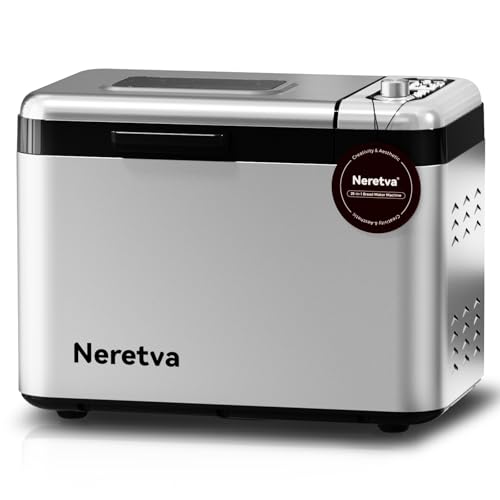
- Makes loaves up to 3.3 pounds in three size options.
- 15 programs include gluten-free, dough, cake, jam, and yogurt settings.
- Dual heaters, dual paddles, and an automatic fruit-and-nut dispenser support hands-off baking.
Best For: Small bakeries needing larger batches and extensive automation.
Recipe-Customization Specialist
KITCHENARM 29-in-1 Bread Machine
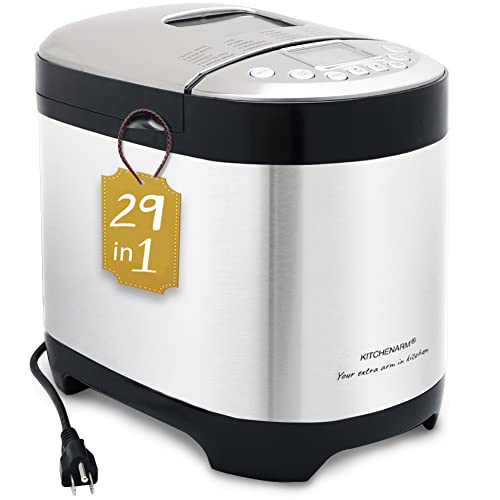
- 29 menus cover specialty breads, non-bread recipes, and more.
- Create up to four personalized menus with adjustable cycle times.
- Stores settings for one-press repeats and includes 77 recipes.
Best For: Small bakeries developing and repeating customized specialty recipes.
Flexible Loaf Sizes

- Three loaf sizes up to 3 pounds
- Dual knead blades and horizontal pan
- 12 programs with gluten-free and dough settings
Best For: Small bakeries prioritizing loaf-size flexibility and traditionally shaped bread
Quiet All-Rounder

- 20 programs for bread, dough, desserts, and more
- Dual heaters with 550-watt operation
- 2-pound capacity and low-noise motor
Best For: Small bakeries needing versatile, quieter small-batch production
Recipe-Driven Performance

- 17 programs plus a custom baking setting
- Automatic dispenser for hands-off mix-ins
- 710-watt motor and 2.2-pound maximum loaf
Best For: Small bakeries developing customized recipes with automated ingredients
Premium Even-Bake Pick – Zojirushi Virtuoso Plus 2 Lb Breadmaker
For small bakeries seeking dependable bread machines for small bakeries, the Zojirushi Virtuoso Plus emphasizes consistent results, specialty-diet programs, and even browning. Its dual heaters, double kneading blades, and 2-pound capacity make it a practical choice for regular small-batch production.
Best For: Small bakeries that prioritize even baking and gluten-free, whole-wheat, or vegan dough programs.
Pros:
- Dual heaters support even baking and browning.
- Double kneading blades thoroughly work the dough.
- Includes healthy settings such as gluten-free, salt-free, sugar-free, and vegan.
- Rapid courses can finish a white or whole-wheat loaf in 2 hours 25 minutes.
Cons:
- Its 2-pound capacity may limit larger production runs.
- The unit weighs 24 pounds and is relatively wide at 18 inches.
- Only seven programs are listed.
The Virtuoso Plus is a strong fit when baking consistency and specialty recipes matter more than maximum batch size or extensive menu variety.
Most Customizable Pick – KBS Smart 2.2LB Bread Maker
The KBS Smart Bread Maker stands out among bread machines for small bakeries that need recipe flexibility. Its color touchscreen, 20 automatic programs, two custom programs, ceramic pan, and dual-heater convection system support both repeatable presets and tailored production workflows.
Best For: Small bakeries that want custom cycle settings, specialty programs, and automated additions for nuts or fruit.
Pros:
- Two custom programs allow adjustment of kneading, rising, baking, and temperature settings.
- Twenty automatic programs include sourdough, gluten-free, whole-wheat, dough, cake, jam, and yogurt.
- Dual heaters and 360-degree convection support crust color and texture.
- Automatic nut dispenser, 15-hour delay timer, and 2.2-pound capacity add convenience.
Cons:
- The feature-rich touchscreen may be more than a basic operation requires.
- Its supplied notes do not specify the exact dimensions or wattage.
- A 2.2-pound capacity is still intended for small batches rather than high-volume baking.
With extensive programming and a two-year manufacturer warranty, this KBS model is especially appealing when a small bakery wants to standardize multiple recipes while retaining manual control.
Budget-Friendly Starter – Elite Gourmet 2 Lb Programmable Bread Maker
For small bakeries needing an accessible entry point, the Elite Gourmet offers a straightforward combination of automatic kneading, rising, and baking. Its selectable 1-, 1.5-, and 2-pound sizes and 19 presets provide useful flexibility without requiring a full-size oven.
Best For: Small bakeries or compact kitchens that need simple automated baking and multiple loaf sizes.
Pros:
- Offers 19 one-touch programs, including gluten-free, wheat, rye, dough, cake, and jam.
- Three loaf sizes accommodate different order or household needs.
- A 15-hour delay timer and 60-minute keep-warm function support scheduled production.
- Compact, energy-saving design avoids heating the entire oven.
Cons:
- Its 2-pound maximum capacity may not suit larger bakery orders.
- The 550-watt motor is lower-powered than some alternatives in this group.
- The supplied notes do not mention dual heaters or an automatic ingredient dispenser.
The Elite Gourmet is a practical starting point for small-scale baking, particularly where counter space, energy use, and ease of operation are key considerations.
Large-Capacity Value Pick – Neretva 2.2LB Bread Machine
The Neretva combines a 2.2-pound maximum loaf with 15 programs, dual heaters, and an automatic fruit-and-nut dispenser. For bread machines for small bakeries, it offers useful batch capacity and specialty settings while keeping operation relatively quiet.
Best For: Small bakeries that want larger loaves, automatic mix-ins, and specialty programs at a practical feature level.
Pros:
- Supports 1.56- and 2.2-pound loaves, with capacity listed for up to six or seven people.
- Dual heaters and 360-degree baking promote even results.
- Fifteen programs include gluten-free, sugarless, sourdough, yogurt, dough, and jam options.
- Automatic dispenser, 15-hour timer, and motor noise below 40 dB improve convenience.
Cons:
- It has fewer programs than the KBS model.
- The supplied notes do not specify a custom-program feature.
- Its wipe-with-a-damp-cloth care instruction may require more hands-on cleaning.
The Neretva is a well-rounded choice when a small bakery values a larger loaf size and automated add-ins without moving to a more complex touchscreen machine.
Compact Bakery Starter – Cuisinart 12-Program Bread Maker
For small bakeries seeking bread machines for small bakeries that fit comfortably on a worktop, the Cuisinart CBK-110P1ES offers a compact footprint, straightforward controls, and flexible loaf sizing. It handles loaves up to 2 pounds and also supports cakes, pizza dough, and other baked goods.
Best For: Small bakeries needing a compact, easy-to-use machine for modest batches and varied everyday recipes.
Pros:
- Offers 12 menu programs for bread and other baked goods.
- Supports 1-, 1.5-, and 2-pound loaves with light, medium, or dark crust settings.
- Includes an LCD display, 13-hour delay-start timer, audible reminders, and a 60-minute keep-warm cycle.
- Compact vertical design helps conserve counter space.
Cons:
- Its maximum capacity is 2 pounds, smaller than the larger Neretva model.
- The bread pan is listed for hand washing.
The Cuisinart is a practical choice when space and ease of operation matter more than maximum output. Its three loaf sizes and multiple programs give a small bakery useful flexibility without requiring a large machine.
High-Capacity Workhorse – Neretva 3.3LB Dual-Heater Bread Maker
Among bread machines for small bakeries, the Neretva stands out for its larger capacity and automatic ingredient handling. Its 15 programs, dual heaters, dual kneading paddles, and up-to-3.3-pound capacity make it suited to bakeries that want larger home-style batches with less manual intervention.
Best For: Small bakeries that need larger loaves, automated fruit-and-nut additions, and a broad range of specialty programs.
Pros:
- Offers 2.2-, 2.76-, and 3.3-pound loaf sizes, with capacity for up to seven or eight people.
- Includes 15 programs covering options such as gluten-free, whole-wheat, cake, jam, yogurt, and dough.
- Dual heaters and 850 watts are designed to promote more even baking and faster operation.
- Automatic fruit-and-nut dispenser, 15-hour delay timer, and dual kneading paddles add convenience.
Cons:
- Its 15.4-inch depth requires more counter space than the compact Cuisinart.
- The larger 3.3-pound capacity may be excessive for very small test batches.
- The supplied care instructions specify wiping with a damp cloth, so cleaning options may be less flexible.
The Neretva is the strongest capacity-focused option in this group. It combines a larger loaf range with automation that can reduce hands-on work, making it appealing when batch size and convenience are key priorities.
Recipe-Customization Specialist – KITCHENARM 29-in-1 Bread Machine
For small bakeries looking for bread machines for small bakeries with recipe-development flexibility, the KITCHENARM 29-in-1 offers an unusually broad menu and customizable cycle programming. It supports common and specialty breads, three loaf sizes, and up to four personalized Homemade menus.
Best For: Small bakeries experimenting with specialty recipes, custom fermentation and baking cycles, or repeatable production settings.
Pros:
- Provides 29 automatic menus, including sourdough, ciabatta, brioche, keto, gluten-free, salt-free, and sugar-free options.
- Allows up to four personalized menus with adjustable kneading, resting, rising, and baking cycles.
- Stores settings for one-press repeat operation and includes a 15-hour delay timer.
- Comes with 77 recipes, access to a recipe cloud, and add-nuts and remove-paddle alarms.
Cons:
- Its extensive customization may require more setup than a simpler bread maker.
- Maximum loaf capacity is 2 pounds, limiting output compared with the Neretva.
- The nonstick bread pan is listed for hand washing.
The KITCHENARM is the best fit when programmability matters more than maximum loaf size. Its Homemade menus and specialty settings can help a small bakery refine repeatable recipes while keeping frequently used configurations easy to access.
Flexible Loaf Sizes – West Bend Hi-Rise Bread Maker
For small bakeries needing straightforward automated production, the West Bend Hi-Rise is a practical choice among bread machines for small bakeries. Its horizontal pan supports three loaf sizes, while dual kneading blades and 12 settings provide flexibility for standard, specialty, and dough-based recipes.
Best For: Small bakeries that want traditionally shaped loaves, multiple batch sizes, and dedicated gluten-free and dough programs.
Pros:
- Supports 2-, 2.5-, and 3-pound loaf sizes.
- Dual knead blades are designed for thorough dough mixing.
- Includes gluten-free, dough, crust-color, and delayed-start settings.
- Comes with measuring tools, a blade-removal tool, and recipe instructions.
Cons:
- Offers fewer programs than the 20-in-1 and 17-in-1 alternatives.
- The pan and included components require hand washing.
- Its larger horizontal design may need more counter space.
The West Bend stands out when loaf shape and size flexibility matter more than an extensive automatic menu. Its 3-pound capacity and horizontal pan can suit small-batch bakery work, while the delayed-start cycle helps coordinate production around a workday.
Quiet All-Rounder – Neretva 20-in-1 Bread Maker
The Neretva is a versatile option for bread machines for small bakeries that need more than basic bread cycles. It combines 20 programs, a 2-pound capacity, dual heaters, and a ceramic nonstick pan in a compact metal body.
Best For: Small bakery operations seeking broad menu versatility, quieter operation, and automated bread, dough, dessert, yogurt, and jam preparation.
Pros:
- Provides 20 automatic programs and three crust colors.
- Dual heaters and 550 watts are designed for surrounding, even baking.
- Offers 1.65- and 2-pound loaf capacities for smaller batches.
- Includes a 15-hour delay timer, one-hour keep-warm function, and power-interruption recovery.
Cons:
- Its maximum 2-pound capacity is smaller than the West Bend’s 3-pound option.
- The extensive menu may require more setup and testing for new users.
- The controls lock during operation and require a three-second hold to unlock.
With its wide program selection and dual-heater design, the Neretva is suited to bakeries experimenting with varied products. The lower-noise motor and delayed start may also be useful when equipment runs near customer or staff areas.
Recipe-Driven Performance – KBS Pro 2.2LB Bread Maker
The KBS Pro is built for operators who want more control and hands-off convenience from bread machines for small bakeries. Its 17 automatic programs, custom setting, ceramic pan, automatic ingredient dispenser, and 710-watt motor support both repeatable staples and recipe experimentation.
Best For: Small bakeries that want larger-than-typical small-batch capacity, automatic mix-ins, and customizable baking controls.
Pros:
- Offers 1-, 1.5-, and 2.2-pound loaf sizes.
- Includes 17 programs plus a custom setting for manual time and temperature adjustments.
- Automatic stainless steel dispenser adds ingredients without manual intervention.
- Combines a 710-watt motor with convection heating and includes 53 recipes.
Cons:
- Its 2.2-pound maximum is smaller than the West Bend’s 3-pound capacity.
- The many controls and custom options may be more involved for beginners.
- It has fewer automatic programs than the Neretva.
The KBS Pro is the strongest fit here for recipe development and automated add-ins. Its multiple loaf sizes, custom cycle, and 2.2-pound capacity give a small bakery room to test specialty breads while keeping routine production hands-off.
How We Picked the Best Bread Machines for Small Bakeries
We focused on features that matter in a small commercial or serious home-bakery workflow: loaf capacity, program variety, programmable controls, heating consistency, specialty settings, ingredient dispensers, pan design, and cleanup. Models offering multiple loaf sizes or crust options can support a broader menu, while custom cycles are useful when standard presets do not match a bakery’s formulas.
Capacity was also considered carefully. A 1- or 2-pound machine may suit testing, staff meals, and low-volume orders, while larger models can reduce the number of cycles needed for regular production. Automatic nut and fruit dispensers, dual heaters, ceramic pans, and gluten-free programs were treated as workflow advantages rather than guarantees of commercial-grade performance.
Quick Comparison
| Best For | What to Look For |
|---|---|
| Consistent everyday loaves | Reliable presets, even heating, and simple controls |
| Small-batch variety | Multiple loaf sizes, crust shades, and specialty programs |
| Recipe experimentation | Custom or homemade cycles with adjustable timing |
| Hands-off production | Delayed start, ingredient dispensers, and automatic baking |
| Special-diet menus | Dedicated gluten-free and adaptable dough settings |
Key Buying Factors for Bread Machines for Small Bakeries
Capacity and Production Rhythm
Choose a machine based on your typical order size, not its maximum advertised capacity alone. Smaller units are easier to fit into crowded prep areas, but a 2.2- or 3.3-pound model may be more practical when several loaves are needed each day. Remember that bread machines generally bake one pan at a time.
Programs and Customization
Preset menus are convenient for standard white, whole-wheat, sweet, and dough recipes. A homemade or custom cycle is more valuable if you frequently adjust proofing, kneading, or bake times. Check whether the controls make those adjustments easy to save and repeat.
Heating, Pan, and Ingredient Handling
Dual heaters may help promote more even browning, while a durable ceramic or nonstick pan can simplify release and cleaning. An automatic dispenser is helpful for nuts, seeds, and dried fruit because it adds ingredients at the intended stage without requiring staff to monitor the cycle.
Counter Space and Maintenance
Measure your available counter and storage space before buying. Consider lid clearance, cord placement, pan removal, and whether the accessories can be cleaned quickly between batches. Stainless-steel exteriors may be easier to integrate into a busy prep area, though fingerprints can require more wiping.
Who Should Buy Which Bread Machines for Small Bakeries?
Choose a straightforward programmable model if your bakery mainly needs dependable sandwich loaves and dough preparation. Select a machine with multiple capacities and crust settings if your menu changes frequently. For recipe development or gluten-free production, prioritize custom cycles and dedicated specialty programs. Larger-capacity models are best for higher-demand small batches, while compact 1- or 2-pound machines make more sense for testing, supplemental production, or businesses with limited counter space.
Finally, treat these machines as batch-production tools rather than replacements for commercial mixers, ovens, or proofers. Confirm each model’s stated capacity, electrical requirements, warranty, and manufacturer guidance before making it part of a daily bakery workflow.