The best energy-efficient mini refrigerators keep drinks, snacks, and essentials cold without taking up much space or adding unnecessary energy costs. This roundup compares 10 compact models suited to dorm rooms, bedrooms, offices, and other small living areas.
We focused on useful differences such as capacity, freezer layout, noise, controls, shelving, and efficiency certifications so you can choose a refrigerator that fits both your space and daily routine.
Best 10 Energy Efficient Mini Refrigerators Picks for 2026
Best Overall Capacity

- ENERGY STAR certified with 270 kWh annual consumption
- Separate 0.92-cu.-ft. freezer and 2.16-cu.-ft. refrigerator
- Reversible door, LED light, crisper, and removable shelves
Best For: Roomy dorms, apartments, garages, and compact kitchens
Best Energy Saver
BLACK+DECKER 3.2 Cu. Ft. Compact Refrigerator

- ENERGY STAR certified with 219 kWh annual consumption
- 0.9-cu.-ft. chiller compartment
- Removable glass shelves and reversible door
Best For: Dorms, offices, RVs, and small apartments
Best Quiet Option
Upstreman 3.2 Cu. Ft. Mini Fridge

- ENERGY STAR certified with 206 kWh annual consumption
- Quiet 38 dB operation with five temperature settings
- Adjustable shelves, crisper drawer, and reversible door
Best For: Bedrooms, dorms, offices, and fresh-food storage
Best Compact Footprint
BLACK+DECKER 1.7 Cu. Ft. Mini Fridge
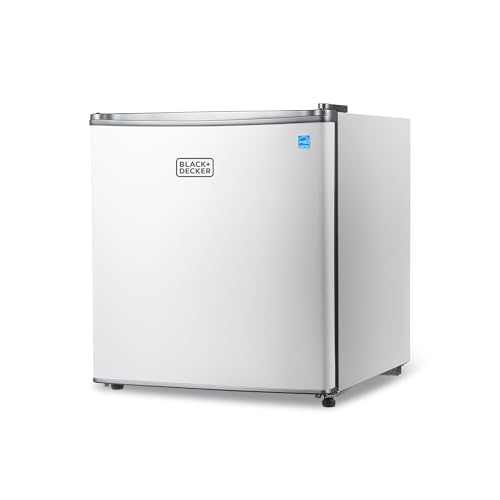
- ENERGY STAR certified with 201 kWh annual consumption
- Compact 1.7-cu.-ft. capacity and 0.2-cu.-ft. chiller
- Reversible door, leveling legs, and removable shelf
Best For: Personal storage in bedrooms, dorms, offices, and RVs
Quiet Energy Saver

- ENERGY STAR certified; 207 kWh/year reported
- Compact 1.6-cu.-ft. interior
- Reversible door and quiet operation
Best For: Bedrooms, dorms, and other small spaces
Frozen-Food Flexibility

- 3.2 cu. ft. total capacity
- Separate 0.2-cu.-ft. freezer compartment
- Two glass shelves and adjustable thermostat
Best For: Users who need compact refrigeration plus freezer space
Balanced Compact Pick
Garvee 3.2 Cu. Ft. Mini Fridge

- 3.2 cu. ft. capacity with a 0.93 cu. ft. freezer
- Seven-setting thermostat and reversible door
- Approximately 38 dB operation with energy-efficient design
Best For: Dorms, offices, bedrooms, and bar areas
Most Organized
Upstreman 3.1 Cu. Ft. Double-Door Mini Fridge

- Separate 2.22 cu. ft. refrigerator and 0.88 cu. ft. freezer
- Energy Star certified with listed $0.13-per-day operating cost
- Crisper drawer, beverage rack, adjustable shelves, and lighting
Best For: Bedrooms, dorms, and apartments needing separate compartments
Quiet Efficiency Pick

- 35 dB or less with listed 243 kWh annual energy use
- Seven temperature modes from 30.2°F to 50°F
- Reversible door and adjustable shelves in a 3.2 cu. ft. design
Best For: Bedrooms, study areas, and quiet offices
Best Overall Capacity – Midea 3.1 Cu. Ft. Mini Fridge
The Midea WHD-113FB1 is a practical choice for shoppers seeking energy efficient mini refrigerators with separate refrigerator and freezer compartments. Its 3.1-cubic-foot capacity, reversible door, interior LED light, and ENERGY STAR certification make it well suited to dorms, apartments, garages, and compact kitchens.
Best For: Shoppers who want a roomy mini fridge with a usable top freezer and flexible placement.
Pros:
- ENERGY STAR certified with listed annual energy consumption of 270 kWh.
- Separate 0.92-cubic-foot freezer and 2.16-cubic-foot refrigerator sections.
- Reversible door, removable glass shelves, crisper drawer, and interior LED lighting.
Cons:
- Manual defrost requires periodic maintenance.
- At 52.2 pounds, it is heavier than some compact alternatives.
Choose this model when storage flexibility matters more than the smallest possible footprint. Its separate freezer and adjustable interior make it especially practical for keeping both frozen and fresh food on hand.
Best Energy Saver – BLACK+DECKER 3.2 Cu. Ft. Compact Refrigerator
The BLACK+DECKER BCRK32B is a strong fit for shoppers comparing energy efficient mini refrigerators for dorm rooms, offices, RVs, or small apartments. It combines a 3.2-cubic-foot interior with an ENERGY STAR rating and listed annual energy consumption of 219 kWh.
Best For: Buyers prioritizing low listed energy use without giving up a compact freezer compartment.
Pros:
- ENERGY STAR certified with 219 kWh listed annual energy consumption.
- Includes a 0.9-cubic-foot chiller/freezer compartment.
- Two removable glass shelves, door storage, reversible door, and leveling legs.
Cons:
- Manual defrost requires periodic upkeep.
- The compact freezer and fresh-food capacities may feel limited for larger households.
With the lowest listed annual energy consumption among these larger models, this BLACK+DECKER is a sensible everyday refrigerator for spaces where operating efficiency and useful storage both matter.
Best Quiet Option – Upstreman 3.2 Cu. Ft. Mini Fridge
The Upstreman BR321 is one of the more practical energy efficient mini refrigerators for bedrooms, study areas, and offices. It combines ENERGY STAR certification with listed annual consumption of 206 kWh, five temperature settings, and a 38 dB operating level.
Best For: Sleepers, students, and office users who want quiet operation and flexible fresh-food storage.
Pros:
- ENERGY STAR certified with 206 kWh listed annual energy consumption.
- Quiet 38 dB operation and five adjustable temperature levels.
- Two adjustable glass shelves, crisper drawer, reversible door, and leveling feet.
Cons:
- The 0.3-cubic-foot freezer is not suitable for storing ice cream or ice cubes.
- Manual defrost requires occasional maintenance.
This model makes the most sense when fresh-food capacity, low noise, and efficient operation are more important than freezer space. Its compact depth and reversible door also simplify placement in tight rooms.
Best Compact Footprint – BLACK+DECKER 1.7 Cu. Ft. Mini Fridge
The BLACK+DECKER BCRK17W is a compact option for shoppers who need energy efficient mini refrigerators in a limited space. Its 1.7-cubic-foot capacity, ENERGY STAR certification, 70-watt design, and small 19.7-inch height make it suitable for bedrooms, dorms, offices, home bars, and RVs.
Best For: Personal food and beverage storage where floor space is especially limited.
Pros:
- ENERGY STAR certified with 201 kWh listed annual energy consumption.
- Compact 1.7-cubic-foot design with a 0.2-cubic-foot chiller compartment.
- Reversible door, adjustable leveling legs, removable glass shelf, and bottle storage.
Cons:
- Smaller capacity than the other refrigerators in this roundup.
- The 0.2-cubic-foot chiller is limited for frozen-food storage.
- Manual defrost requires periodic upkeep.
For a personal refrigerator under a desk, counter, or in a compact room, this model keeps the footprint and capacity modest while retaining useful features such as a reversible door and chiller compartment.
Quiet Energy Saver – Midea 1.6 Cu. Ft. Mini Fridge
If you need energy efficient mini refrigerators for a bedroom, dorm, apartment, or garage, this compact Midea model is designed to conserve space and energy. Its 1.6-cubic-foot capacity, ENERGY STAR certification, and reported 207 kWh/year consumption make it practical for everyday drinks and food storage.
Best For: Small rooms and users who prioritize quiet operation, flexible placement, and low energy consumption.
Pros:
- ENERGY STAR certified with reported energy use of 207 kWh/year.
- Compact 1.6-cubic-foot design fits dorms, bedrooms, apartments, garages, and kitchens.
- Reversible door and removable glass shelf allow flexible placement and storage.
- Operates at less than 42 dB for a quieter environment.
Cons:
- The 1.6-cubic-foot capacity may be limited for households needing substantial food storage.
- Temperature control is mechanical rather than digital.
Choose this model when compact dimensions, quiet performance, and documented energy efficiency matter more than freezer space or a larger interior.
Frozen-Food Flexibility – Igloo 3.2 Cu. Ft. Mini Fridge
For shoppers comparing energy efficient mini refrigerators with more storage, this Igloo compact refrigerator offers 3.2 cubic feet of capacity and a separate freezer compartment. Its adjustable mechanical thermostat and glass shelving make it useful for keeping both refrigerated snacks and frozen foods organized.
Best For: Dorms, offices, and homes where extra capacity and a dedicated freezer are more important than the lowest listed energy use.
Pros:
- Provides 3.2 cubic feet of total storage, including a 0.2-cubic-foot freezer.
- Cooling range is listed as 32–50°F for the refrigerator compartment.
- Two glass shelves and door storage help organize food and drinks.
- Automatic defrost system and adjustable mechanical temperature control support convenient use.
Cons:
- Reported annual energy consumption is 304 kWh, higher than the listed Midea models.
- The 32.5-inch height and 38.5-pound weight may be less suitable for very tight spaces.
- Cooling uses static compressor operation with no fan.
This is the stronger choice when you want a compact refrigerator with a freezer and more overall storage, but its listed energy consumption should be considered when comparing energy-focused options.
Organized Compact Storage – Midea 1.7 Cu. Ft. Mini Fridge
This Midea 1.7-cubic-foot refrigerator is a practical option for shoppers seeking energy efficient mini refrigerators for a bedroom, office, dorm, or apartment. It combines ENERGY STAR certification with a reversible door, adjustable shelf, and built-in 2-liter bottle storage.
Best For: Users who want a compact, freezerless refrigerator with flexible storage and certified energy efficiency.
Pros:
- ENERGY STAR certified and listed at 246 kWh/year.
- 1.7-cubic-foot capacity provides room for snacks, beverages, and fresh food.
- Door shelf accommodates a 2-liter bottle or other large beverage container.
- Reversible door and removable shelf support flexible placement and storage.
Cons:
- This freezerless design does not provide a separate frozen-food compartment.
- Manual defrosting is specified in the supplied details.
- Its listed annual consumption is higher than the 1.6-cubic-foot Midea model.
Consider this model if you want a little more refrigerator capacity than a 1.6-cubic-foot unit while keeping a compact footprint and ENERGY STAR certification.
Balanced Compact Pick – Garvee 3.2 Cu. Ft. Mini Fridge
The Garvee 3.2 cu. ft. refrigerator is a practical option among energy efficient mini refrigerators when you want a separate freezer compartment without taking up much floor space. Its adjustable thermostat, reversible door, and removable shelves suit dorms, offices, bedrooms, and bar areas.
Best For: Dorm rooms, bedrooms, offices, and compact spaces needing flexible storage and a freezer.
Pros:
- Offers 3.2 cu. ft. of storage, including a 0.93 cu. ft. freezer.
- Uses a seven-setting thermostat with a 32°F to 50°F temperature range.
- Includes a crisper drawer, removable glass shelves, LED lighting, and a reversible door.
- Runs at approximately 38 dB during typical use and is designed for energy-efficient performance.
Cons:
- Manual defrosting is required.
- The listed manufacturer warranty is limited to 30 days.
With useful organization features and a moderate noise level, this Garvee model is a well-rounded choice for everyday food and beverage storage in smaller rooms.
Most Organized – Upstreman 3.1 Cu. Ft. Double-Door Mini Fridge
The Upstreman TM31 is one of the more organized energy efficient mini refrigerators, using separate refrigerator and freezer compartments to help reduce odor transfer. Its Energy Star certification, low-noise operation, and compact double-door design make it suitable for bedrooms, dorms, and apartments.
Best For: Users who want dedicated refrigerator and freezer compartments with organized storage.
Pros:
- Provides 3.1 cu. ft. of total capacity with a 2.22 cu. ft. refrigerator and 0.88 cu. ft. freezer.
- Energy Star certified and listed at approximately $0.13 per day in energy costs.
- Includes a crisper drawer, beverage rack, adjustable glass shelves, and interior lighting.
- Operates at noise levels as low as 40 dB and has a reversible door.
Cons:
- Manual defrosting is required.
- The double-door layout may need more vertical clearance than some single-door models.
The Upstreman stands out for compartmentalized storage and documented energy credentials, making it a strong fit when freezer access and organization matter more than the smallest footprint.
Quiet Efficiency Pick – VEVOR 3.2 Cu. Ft. Mini Fridge
The VEVOR 3.2 cu. ft. compact refrigerator is a compelling choice among energy efficient mini refrigerators for quiet rooms and study areas. It combines compressor cooling, a seven-mode temperature control, a reversible door, and a listed annual energy consumption of 243 kWh.
Best For: Bedrooms, study corners, and quiet offices where low noise and efficient cooling are priorities.
Pros:
- Provides 3.2 cu. ft. of storage with an 8-liter internal freezer zone.
- Lists noise output at 35 dB or less and annual energy consumption at 243 kWh.
- Offers seven temperature modes from 30.2°F to 50°F.
- Has adjustable shelves, door storage, and a reversible door for flexible placement.
Cons:
- The internal freezer zone is smaller than the dedicated freezer compartments in the other listed models.
- Only one door shelf is listed.
Its low stated noise level and efficient operating profile make the VEVOR especially appealing for sleep and work spaces, while the compact interior still accommodates everyday food and drinks.
How We Picked the Best Energy Efficient Mini Refrigerators
We selected models based on the features that matter most in compact refrigeration: energy-efficiency certifications or efficiency-focused claims, usable storage, freezer design, exterior footprint, temperature control, noise considerations, and everyday convenience. Capacity ratings are useful for comparison, but interior layout can affect how much food and drink a refrigerator actually holds.
We also included a range of sizes, from bedroom-friendly 1.6- and 1.7-cubic-foot units to larger 3.1- and 3.2-cubic-foot refrigerators. Product specifications can vary by model and production run, so verify the current Energy Star status, dimensions, voltage requirements, and warranty before ordering.
Quick Comparison
- Smallest options: The Midea 1.6 Cu. Ft. and BLACK+DECKER 1.7 Cu. Ft. models suit bedrooms, offices, and personal drink storage.
- More versatile storage: The 3.1- and 3.2-cubic-foot models provide additional room for groceries and commonly include a freezer compartment.
- Best for separated cooling: Double-door designs, such as the Upstreman 3.1 Cu. Ft. model, can offer more dedicated freezer access.
- Best for simple setups: Single-door models generally have a straightforward footprint and are easy to place under or beside a desk.
Key Buying Factors for Energy-Efficient Mini Refrigerators
Energy Use and Certification
Look for an Energy Star certification when available, but remember that annual energy consumption matters more than a general efficiency claim. Compare the stated annual kilowatt-hour use and consider local electricity rates. A slightly more efficient model may cost less to operate over several years.
Capacity and Freezer Space
Choose 1.6 to 1.7 cubic feet for drinks, snacks, medication storage where appropriate, or limited personal use. A 3.1- or 3.2-cubic-foot refrigerator is better for meal ingredients and shared use. Compact freezers are convenient, but they reduce fresh-food storage and may not maintain the same performance as a full-size freezer.
Noise, Ventilation, and Placement
For bedrooms and study areas, prioritize low-noise operation and leave the manufacturer-recommended clearance around the unit. Do not place a mini fridge against a wall or inside a tightly enclosed cabinet unless it is specifically designed for that installation. Keep it level and away from heat sources and direct sunlight.
Organization and Controls
Adjustable shelves, door storage, a separate freezer door, and an adjustable thermostat can make a bigger difference than a small capacity increase. Check the interior dimensions if you need to fit tall bottles, meal containers, or specific items.
Who Should Buy Which Energy Efficient Mini Refrigerators?
Choose a 1.6- or 1.7-cubic-foot model if you need quiet, personal cooling in a bedroom, home office, or dorm. Choose a 3.1- or 3.2-cubic-foot model if you want room for groceries, beverages, and occasional frozen items. Choose a double-door model when freezer access and separation are priorities. For the simplest setup, a single-door refrigerator with adjustable shelving is often the easiest to place and maintain.