Preparing your own dehydrated meals can make backpacking trips more affordable, customizable, and easier to manage. The right food dehydrator helps preserve fruit, vegetables, jerky, and complete meals without taking over your kitchen or wasting energy.
We selected 10 models with different tray capacities, temperature ranges, timer features, and materials so you can match your dehydrating setup to your recipes, batch size, and available storage space.
Best 10 Food Dehydrator for Backpacking Picks for 2026
Best Compact Pick

- 95–165°F control with 1°F adjustments
- 48-hour timer and quiet operation
- Five trays, expandable to seven
Best For: Home-prepping varied backpacking meals and snacks
Best Simple Stainless Option
Elite Gourmet Adjustable Dehydrator

- 95–158°F adjustable temperature range
- Four dishwasher-safe removable trays
- Transparent trays and horizontal airflow
Best For: Beginners making small batches at home
Best Large-Batch Pick
Cosori 6-Tray Stainless Dehydrator

- 6.5 square feet of drying space
- 600W motor with horizontal airflow
- Includes mesh screen and fruit roll sheet
Best For: Large households or groups preparing trail food
Best Lightweight Capacity
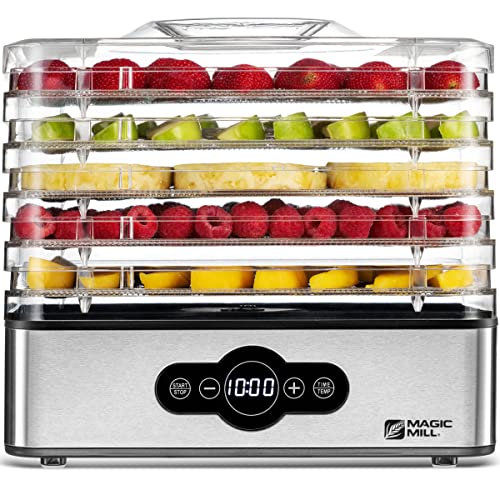
- Five stainless steel adjustable trays
- 48-hour digital timer and touch controls
- Listed weight of 2.75 kilograms
Best For: Individual hikers preparing mixed, thick-cut ingredients
Compact Precision Pick
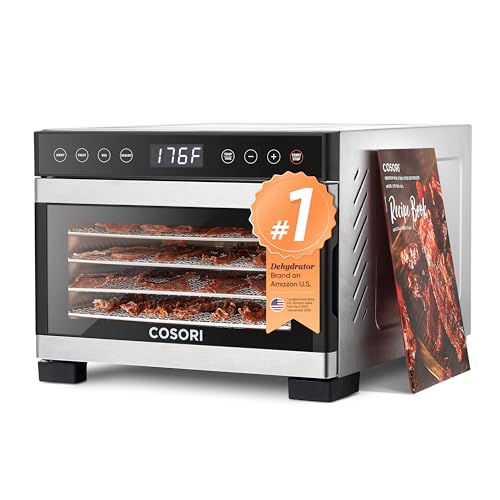
- 95°F–176°F control in 1°F increments
- 3.1 sq. ft. of drying space
- Includes mesh screen and fruit roll sheet
Best For: Smaller backpacking meal-prep batches
Large-Batch Value

- 8.2 sq. ft. of drying space
- 85°F–185°F adjustable temperature
- Dishwasher-safe trays and quiet operation
Best For: Preparing multiple backpacking meals at once
High-Capacity Organizer

- 7.4 sq. ft. of drying space
- Ten trays and ten presets
- Viewing windows, interior light, and 48-hour timer
Best For: Frequent, large-scale backpacking meal preparation
Best with Extra Features

- 4.2-pound compact design
- 95–160°F control with 48-hour timer
- Five adjustable stainless steel trays
Best For: Lightweight, small-batch backpacking meal prep
Best Premium Capacity
Magic Mill Pro 7-Tray Dehydrator

- Seven full-size stainless steel trays
- 600W rear-fan drying system
- 1-degree control from 95–176°F
Best For: Large, repeat batches prepared at home
Best User-Friendly Option
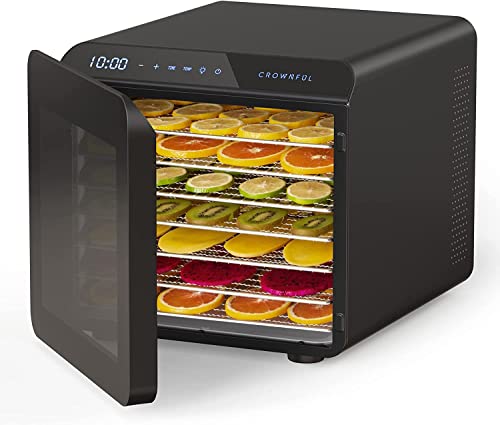
- Seven stainless steel trays
- 85–165°F digital control
- Interior lights and 24-hour auto-shutoff timer
Best For: Large-batch prep with simple monitoring features
Best Compact Pick – Cosori 5-Tray Food Dehydrator
For backpackers who want a practical food dehydrator for backpacking, the Cosori offers a compact footprint, adjustable 95–165°F temperature control, and a 48-hour timer. Its five BPA-free trays and expandable design provide useful capacity without the bulk of larger models.
Best For: Backpackers preparing jerky, fruit, herbs, vegetables, or dog treats at home before a trip.
Pros:
- Adjustable temperature from 95–165°F in 1°F increments
- 48-hour timer with 30-minute increments
- Five BPA-free trays, expandable to seven
- Quiet operation below 47 dB
Cons:
- Its 4.9-pound weight may be substantial for those seeking an ultralight setup
- Round trays may be less convenient for some food shapes
This is a versatile home-prep option for backpackers who value precise controls, quiet operation, and expandable capacity more than minimum weight.
Best Simple Stainless Option – Elite Gourmet Adjustable Dehydrator
The Elite Gourmet is a straightforward food dehydrator for backpacking meal prep, with adjustable timing and temperature controls plus stainless steel trays. Transparent trays let you monitor food as it dries, while horizontal airflow is designed to distribute heat efficiently.
Best For: Beginners who want to prepare fruit, trail mix ingredients, granola, jerky, or pet treats at home.
Pros:
- Adjustable temperature from 95–158°F and timer up to 24 hours
- Four removable, dishwasher-safe trays
- Horizontal airflow and transparent trays for monitoring
- ETL-listed 350W design for indoor home use
Cons:
- Maximum timer is 24 hours, shorter than several alternatives
- Notes specify that it should not be used outdoors
- Four trays provide less capacity than some larger models
Its simple controls and easy-clean trays make it a sensible entry-level choice, though the shorter timer and indoor-only guidance are worth considering for larger or longer drying projects.
Best Large-Batch Pick – Cosori 6-Tray Stainless Dehydrator
For serious backpacking meal preparation, this Cosori provides 6.5 square feet of drying space across six stainless steel trays. Its 600W motor, horizontal airflow, precise controls, and 48-hour timer are suited to producing larger batches of trail food at once.
Best For: Backpackers or groups preparing substantial quantities of fruit, vegetables, jerky, and other foods in advance.
Pros:
- Six stainless steel trays with 6.5 square feet of drying space
- 600W motor and upgraded airflow for even drying
- 95–165°F control and 48-hour timer
- Includes a mesh screen, fruit roll sheet, and recipe book
Cons:
- At 18.1 pounds, it is not suited to carrying on the trail
- Its 17.8-by-13.4-by-12.4-inch size requires substantial storage space
- Higher wattage may use more electricity than compact models
This is the strongest capacity-focused option in the group, but its size and weight make it better for home batch preparation than for portable use.
Best Lightweight Capacity – Magic Mill 5-Tray Dehydrator
The Magic Mill combines five adjustable stainless steel trays with a 48-hour digital timer and temperature settings from 95–167°F. For a food dehydrator for backpacking, its relatively light 2.75-kilogram listed weight and compact rectangular design make it an appealing home-prep choice for individual hikers.
Best For: Backpackers who want adjustable tray spacing and a lighter dehydrator for preparing mixed ingredients.
Pros:
- Five food-grade stainless steel trays
- Adjustable tray height from 0.6 to 1.1 inches
- Temperature range listed as 95–167°F with a 48-hour timer
- Detachable trays can be washed by hand or in a dishwasher
Cons:
- 240W power is lower than the larger 600W Cosori model
- Supplied details list the temperature range inconsistently, including 158°F in the specifications
- Its 11.8-by-8.5-by-11-inch body still requires dedicated packing or storage space
Adjustable tray clearance is particularly useful for thick-cut ingredients, while the compact construction keeps this model practical for smaller backpacking food-prep batches.
Compact Precision Pick – Cosori 5-Tray Dehydrator
If you want a manageable food dehydrator for backpacking meal prep, the Cosori 5-Tray Dehydrator offers a compact countertop design with precise temperature control. Its stainless steel trays provide 3.1 square feet of drying space for making jerky, fruit, vegetables, and other trail-friendly foods.
Best For: Backpackers who want precise controls and a relatively compact dehydrator for smaller batches.
Pros:
- Adjustable from 95°F to 176°F in 1°F increments
- Horizontal airflow helps promote even drying
- Includes five stainless steel trays, mesh screen, and fruit roll sheet
- Four presets and a 48-hour timer simplify operation
Cons:
- Only 3.1 square feet of drying space
- At 10.8 pounds, it is intended for home preparation rather than carrying on the trail
This model is a practical choice when storage space matters and you typically prepare modest batches before a trip. Its precise temperature adjustments and included accessories make it versatile for backpacking snacks and dehydrated meals.
Large-Batch Value – OLIXIS 8-Tray Dehydrator
For preparing several days of trail food at once, the OLIXIS 8-Tray Dehydrator gives a food dehydrator for backpacking meal prep a generous 8.2 square feet of drying capacity. Its adjustable temperature, horizontal airflow, and dishwasher-safe trays support repeat batches of fruit, jerky, herbs, and dog treats.
Best For: Campers and backpackers who need high capacity for preparing food in fewer batches.
Pros:
- Eight large trays provide 8.2 square feet of drying space
- Temperature adjusts from 85°F to 185°F
- Horizontal airflow is designed for even heat distribution
- Dishwasher-safe trays and operation below 45dB make it convenient to use
Cons:
- The supplied notes do not specify a recipe book or additional drying accessories
- The large eight-tray format may take more storage space than a compact model
The OLIXIS stands out for capacity and flexibility. It is well suited to households that batch-dry backpacking ingredients, though its spacious design is more appropriate for home preparation than transport.
High-Capacity Organizer – Cosori 10-Tray Dehydrator
The Cosori 10-Tray Dehydrator is designed for serious batch preparation, making it a strong food dehydrator for backpacking trips that require several meals and snacks. With 7.4 square feet of drying space, stainless steel trays, guided recipes, and monitoring features, it can reduce the number of batches needed.
Best For: Larger households or frequent backpackers preparing substantial quantities of trail food.
Pros:
- Ten stainless steel trays offer 7.4 square feet of drying space
- Horizontal airflow and 1°F adjustments support consistent results
- Ten presets, a 48-hour timer, viewing windows, and interior light improve ease of use
- Dishwasher-safe trays and included mesh and fruit roll sheets simplify cleanup and recipe variety
Cons:
- At 17 pounds, it is the heaviest option in this roundup
- Its 13-inch height and 10-tray layout require more storage space
- The temperature range tops out at 167°F
This is the strongest choice for large-scale backpacking meal prep when countertop space is available. Its capacity and monitoring features are useful for repeat batches, but the heavier, taller design is less convenient for smaller kitchens.
Best with Extra Features – OSTBA 5-Tray Dehydrator
If you want a compact food dehydrator for backpacking meal prep, the OSTBA offers a relatively light 4.2-pound design with five trays, adjustable temperature control, and a 48-hour timer. Its 400-watt motor and 360° airflow suit small batches of fruit, vegetables, herbs, or jerky before a trip.
Best For: Backpackers who prioritize a lighter, space-conscious dehydrator for modest batch sizes.
Pros:
- Compact 8.26-by-11.41-by-8.18-inch footprint and 4.2-pound weight
- Adjustable 95–160°F temperature range and 1–48-hour timer
- Five rust-resistant stainless steel trays with adjustable spacing
- Dishwasher-safe removable trays, cord storage, and non-slip feet
Cons:
- Five trays provide less capacity than the seven-tray alternatives
- Its 400-watt motor is less powerful than the 600-watt models in this roundup
The OSTBA is the most practical choice here when portability and simple operation matter more than maximum capacity. Adjustable tray spacing also helps accommodate both thin herbs and thicker food pieces.
Best Premium Capacity – Magic Mill Pro 7-Tray Dehydrator
For serious batch cooking, this Magic Mill Pro is a high-capacity food dehydrator for backpacking plans, with seven full-size stainless steel trays and a 600-watt rear-fan system. The all-stainless construction, precise controls, and long timer make it suited to preparing multiple ingredients at once.
Best For: Households and experienced backpackers who need durable construction and large batch capacity.
Pros:
- Seven full-size stainless steel trays with two mesh screens and a fruit-roll tray
- 600-watt rear fan and heat system designed for even drying without tray rotation
- 95–176°F control in 1-degree increments with a 48-hour timer
- Includes auto shutoff, overheat protection, and up to 24 hours of keep-warm mode
Cons:
- At 7.26 kg, it is substantially heavier than the OSTBA
- Its 15.5-by-11.3-by-10.8-inch size is less convenient for limited storage
The Magic Mill is the strongest option for bulk preparation and repeated use. Its weight and larger footprint make it better for home-based prep before a backpacking trip than for moving between camps.
Best User-Friendly Option – CROWNFUL 7-Tray Dehydrator
The CROWNFUL combines seven stainless steel trays with a digital touchscreen, interior lights, and a quiet rear-fan drying system. As a food dehydrator for backpacking, it is useful for preparing larger quantities of trail snacks and ingredients, although its 7.64 kg weight favors home preparation.
Best For: Users who want generous tray capacity, straightforward digital controls, and visibility during drying.
Pros:
- Seven stainless steel trays and 600 watts of drying power
- 85–165°F temperature range with a timer of up to 24 hours
- Rear-mounted fan and 360° hot-air circulation for even drying
- Interior lights, auto shutoff, overheat protection, and noise rated at 48 dB or less
Cons:
- Heavier and larger than the compact OSTBA at 7.64 kg
- Its timer is limited to 24 hours, compared with the 48-hour options
- Temperature control is less precise than the Magic Mill’s 1-degree adjustment
The CROWNFUL offers a balanced feature set for preparing jerky, fruit, herbs, and other trail foods. Choose it when seven trays and monitoring features are more important than minimizing storage space or weight.
How We Picked the Best Food Dehydrator for Backpacking
We focused on features that matter before food ever reaches your pack: usable drying area, temperature range, timer controls, airflow design, tray construction, cleanup, and overall practicality. Because these appliances are generally used at home to prepare trail food, we considered kitchen footprint and storage just as important as raw capacity.
We also included a range of sizes and power levels. Smaller five-tray machines can suit occasional hikers or solo meal prep, while larger units are better for families, hunting trips, and anyone preparing several days of food at once.
Quick Comparison
Five-tray models are typically the most manageable choice for limited counter or cabinet space. Six- and seven-tray dehydrators offer a useful middle ground, while eight- and ten-tray machines make sense for high-volume preparation. Stainless steel trays are durable and resist staining, whereas BPA-free plastic trays can keep weight and cost lower.
Temperature ranges vary across this group, with many models reaching roughly 160°F to 176°F and some extending higher. Adjustable digital timers are helpful when drying overnight or when you want the appliance to stop automatically, but a timer does not replace checking food for safe, even dryness.
Key Buying Factors for a Food Dehydrator for Backpacking
Drying Capacity and Footprint
Choose capacity based on how much food you prepare per session, not how much food you hope to carry. More trays reduce the number of batches but require more counter and storage space. Measure your available area, including clearance around the unit for ventilation.
Temperature Control and Airflow
Precise adjustment is useful because fruit, vegetables, herbs, and meat dry best under different conditions. Rear-fan designs can help distribute heat more evenly, reducing the need to rotate trays. For jerky, verify that the model’s instructions and your food-safety process support the temperatures you plan to use.
Tray Material and Cleaning
Stainless steel trays are sturdy and convenient for frequent use, though they can add weight and cost. Removable trays simplify cleaning, and dishwasher compatibility can save time. Check whether the unit includes mesh or fruit-roll sheets if you plan to dry small pieces, purées, or sticky foods.
Controls, Noise, and Energy Use
A timer and clear temperature controls make unattended drying more convenient. Higher-wattage models may shorten drying times, but they can use more electricity. Consider noise too, particularly if the dehydrator will run overnight in a living area.
Who Should Buy Which Food Dehydrator for Backpacking?
Choose a compact five-tray model if you are a solo backpacker, have limited storage, or dehydrate only occasionally. Choose a six- or seven-tray machine for a flexible everyday setup that can handle multiple ingredients without becoming oversized. Choose an eight- or ten-tray model if you prepare food for groups, make large jerky batches, or want to stock several trips at once.
Whichever model you choose, let the finished food cool before packaging, remove as much air as practical, and label portions with the contents and date. A dependable Food Dehydrator for Backpacking is only part of the system; proper drying, storage, and rehydration planning determine how well your trail meals perform.