If you want stronger whole-home coverage with lower latency and fewer dropouts, a mesh system with Ethernet backhaul is one of the smartest upgrades you can make.
Below, we’ve focused on systems that are practical for real homes, with options for different budgets, speeds, and square footage needs.
Best 10 Home Mesh Wifi System with Ethernet Backhaul Picks for 2026
Editor Pick
TP-Link Deco X55 AX3000 WiFi 6 Mesh System

- Covers up to 6,500 sq. ft.
- Supports Ethernet backhaul.
- 3 Gigabit ports per unit.
Best For: Large homes that want Wi‑Fi 6 mesh with wired backhaul and extra Ethernet ports.
Best Upgrade
TP-Link Deco 7 BE23 WiFi 7 Mesh System

- Wi‑Fi 7 with MLO and 4K-QAM.
- Two 2.5G ports per unit.
- Wired and wireless backhaul support.
Best For: Users upgrading to Wi‑Fi 7 with multi-gig Ethernet and flexible backhaul.
Value Large-Coverage Pick
WAVLINK AX3000 WiFi 6 Mesh System

- Up to 7,300 sq. ft. coverage.
- Supports 256+ devices.
- Ethernet backhaul and WPA3.
Best For: Large homes or offices needing broad coverage and high device capacity.
Budget-Friendly Pick
TP-Link Deco X15 AX1500 Mesh System
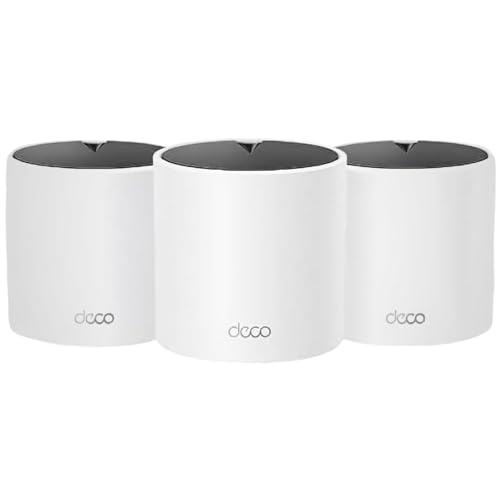
- Up to 5,600 sq. ft. coverage.
- Supports Ethernet backhaul.
- Two Gigabit ports per unit.
Best For: Budget-minded buyers who still want mesh coverage and wired backhaul.
Best Budget Pick
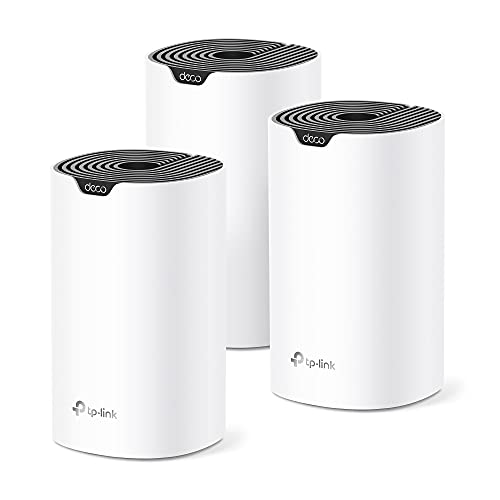
- Up to 5,500 sq. ft. coverage
- Supports wired Ethernet backhaul
- Two gigabit ports per unit
Best For: Affordable whole-home mesh coverage with wired backhaul support
Premium Wi-Fi 7 Choice
TP-Link Deco BE25 Wi-Fi 7 3-Pack

- Wi-Fi 7 dual-band mesh system
- Two 2.5G ports per unit
- Covers up to 6,600 sq. ft.
Best For: Performance-focused homes wanting Wi-Fi 7 and 2.5G wired backhaul
Best Value Wi-Fi 6 Pick
TP-Link Deco X55 AX3000 2-Pack

- Wi-Fi 6 mesh for up to 4,500 sq. ft.
- Supports wired Ethernet backhaul
- Three gigabit ports per unit
Best For: Medium homes wanting Wi-Fi 6 mesh with wired backhaul and simple setup
Editor’s Pick
TP-Link Deco X15 2-Pack AX1500 Mesh

- Wi‑Fi 6 AX1500 dual-band mesh
- Supports wired Ethernet backhaul
- Covers up to 3,900 sq. ft.
Best For: larger homes needing simple mesh coverage and wired backhaul support
Most Flexible Single Unit
TP-Link Deco X55 AX3000 Single Pack

- Wi‑Fi 6 AX3000 single-unit mesh
- 3 Gigabit ports with wired backhaul
- Covers up to 2,500 sq. ft.
Best For: a high-speed starter mesh that can expand later
Compact Starter
TP-Link Deco X15 1-Pack AX1500 Mesh

- Wi‑Fi 6 AX1500 mesh starter
- Supports wired Ethernet backhaul
- Covers up to 2,100 sq. ft.
Best For: apartments and smaller homes needing a simple mesh starter
Editor Pick – TP-Link Deco X55 AX3000 WiFi 6 Mesh System
If you’re looking for a home mesh wifi system with ethernet backhaul, the TP-Link Deco X55 is a practical Wi‑Fi 6 option for larger homes. It covers up to 6,500 sq. ft., supports up to 150 devices, and adds wired backhaul plus three Gigabit ports per unit for more flexible placement.
Best For: Households that want a reliable Wi‑Fi 6 mesh kit with wired backhaul and plenty of Ethernet ports.
Pros:
- Covers up to 6,500 sq. ft. with a 3-pack.
- Supports Ethernet backhaul for better speeds.
- Three Gigabit Ethernet ports per unit.
- Handles up to 150 connected devices.
Cons:
- Dual-band design, so it lacks Wi‑Fi 7 features.
- Modem is required for most internet providers.
The Deco X55 is a strong all-around pick if you want simple setup, broad coverage, and wired backhaul support without moving to a newer premium standard.
Best Upgrade – TP-Link Deco 7 BE23 WiFi 7 Mesh System
The TP-Link Deco 7 BE23 is a newer home mesh wifi system with ethernet backhaul support and Wi‑Fi 7 features built in. It pairs 6,500 sq. ft. of coverage with dual 2.5G ports per unit, MLO, AI-Roaming, and wired or wireless backhaul for a more flexible high-speed setup.
Best For: Buyers who want Wi‑Fi 7, multi-gig wired ports, and a mesh system ready for faster internet plans.
Pros:
- Wi‑Fi 7 with MLO and 4K-QAM support.
- Two 2.5 Gbps WAN/LAN ports per unit.
- Supports simultaneous wired and wireless backhaul.
- Covers up to 6,500 sq. ft. with a 3-pack.
Cons:
- Dual-band system, not tri-band.
- Advanced features may be more than basic users need.
For a future-facing mesh kit, the BE23 stands out with Wi‑Fi 7 enhancements and multi-gig Ethernet, making it the most performance-focused option in this group.
Value Large-Coverage Pick – WAVLINK AX3000 WiFi 6 Mesh System
The WAVLINK AX3000 is a home mesh wifi system with ethernet backhaul support that prioritizes coverage and device capacity. It offers up to 7,300 sq. ft. of coverage, 256+ device support, WPA3 security, and flexible router or AP modes for larger homes or mixed-use spaces.
Best For: Bigger households or office-like setups that want wide coverage and lots of device support at Wi‑Fi 6 speeds.
Pros:
- Up to 7,300 sq. ft. of coverage.
- Supports 256+ devices simultaneously.
- Ethernet backhaul support for better performance.
- WPA3 security plus router/AP mode options.
Cons:
- No multi-gig Ethernet ports listed.
- Mesh setup is dual-band rather than higher-band options.
If coverage is your top concern, the WAVLINK package is compelling because it stretches farther than the TP-Link options here while still offering wired backhaul support and straightforward app-based setup.
Budget-Friendly Pick – TP-Link Deco X15 AX1500 Mesh System
The TP-Link Deco X15 is a simpler home mesh wifi system with ethernet backhaul support for buyers who want dependable whole-home coverage without stepping up to premium hardware. It covers up to 5,600 sq. ft., supports up to 120 devices, and includes two Gigabit ports per unit for wired connections and backhaul.
Best For: Homes that need an affordable, easy-to-manage mesh setup with wired backhaul support.
Pros:
- Covers up to 5,600 sq. ft. with a 3-pack.
- Supports Ethernet backhaul for stronger links.
- Two Gigabit ports per unit.
- Supports up to 120 devices.
Cons:
- Lower AX1500 class than the other options here.
- Dual-band design limits peak capacity versus newer systems.
The Deco X15 keeps the core mesh experience straightforward: good coverage, wired backhaul, and easy app management, all in a more modest spec tier.
Best Budget Pick – TP-Link Deco S4 AC1900 3-Pack
If you want a home mesh wifi system with ethernet backhaul without spending for the latest Wi-Fi generation, the TP-Link Deco S4 is a practical pick. This 3-pack is built for broad coverage, simple setup, and stable roaming, with wired Ethernet backhaul support to help improve speeds between units.
Best For: Larger homes that want affordable mesh coverage, easy app setup, and the option to use wired backhaul.
Pros:
- Covers up to 5,500 sq. ft. with three units.
- Supports wired Ethernet backhaul for better speed and stability.
- Two gigabit Ethernet ports per unit give you 6 total ports in the pack.
- Seamless roaming with one network name and password.
Cons:
- Wi-Fi 5 hardware is older than newer Wi-Fi 6 or Wi-Fi 7 systems.
- 3-pack may be more than some smaller homes need.
The Deco S4 focuses on straightforward whole-home coverage and reliable basics rather than cutting-edge speed claims. It makes the most sense if you want a simple mesh upgrade with wired backhaul support and broad compatibility across common internet providers.
Premium Wi-Fi 7 Choice – TP-Link Deco BE25 Wi-Fi 7 3-Pack
The TP-Link Deco BE25 is a strong home mesh wifi system with ethernet backhaul if you want newer Wi-Fi 7 features and faster wired connections between nodes. With 2.5G ports, AI-Roaming, and support for large homes, it is aimed at users who want stable whole-home coverage and a more future-ready mesh setup.
Best For: Households that want Wi-Fi 7 mesh performance, 2.5G wired backhaul, and support for many devices.
Pros:
- Wi-Fi 7 dual-band system with up to 6,600 sq. ft. coverage.
- Two 2.5G ports per unit support wired backhaul and faster wired links.
- Supports over 150 devices and AI-Roaming for seamless movement.
- Includes HomeShield, VPN support, and easy app-based management.
Cons:
- Wi-Fi 7 features may be more than basic users need today.
- Backhaul requires at least two Deco units.
This model stands out for buyers who want performance headroom and faster wired backhaul options in a mesh system. It is a good fit when you care about stability, advanced features, and room to expand later.
Best Value Wi-Fi 6 Pick – TP-Link Deco X55 AX3000 2-Pack
The TP-Link Deco X55 is a smart middle-ground home mesh wifi system with ethernet backhaul for users who want Wi-Fi 6 speed and simple whole-home coverage. With gigabit ports on each unit, app setup, and support for up to 150 devices, it is designed to replace a router and extender with a cleaner mesh setup.
Best For: Medium-size homes that want Wi-Fi 6 mesh coverage, wired backhaul, and easy management.
Pros:
- Wi-Fi 6 AX3000 mesh covers up to 4,500 sq. ft.
- Supports wired Ethernet backhaul for better speeds.
- Three gigabit Ethernet ports per unit provide flexible wired connections.
- Includes HomeShield, parental controls, and app-based setup.
Cons:
- 2-pack may cover less area than larger multi-node systems.
- Does not offer Wi-Fi 7-level speeds or 2.5G ports.
If you want a balanced upgrade without jumping to the highest tier, the Deco X55 offers a useful mix of coverage, wired backhaul support, and straightforward controls. It is a practical choice for families that want reliable mesh performance and plenty of wired port options.
Editor’s Pick – TP-Link Deco X15 2-Pack AX1500 Mesh
If you want a home mesh wifi system with ethernet backhaul that balances coverage, wired flexibility, and simple management, the Deco X15 2-pack is a practical fit. It uses Wi‑Fi 6 AX1500 dual-band mesh to cover up to 3,900 sq. ft., supports up to 120 devices, and includes 2 Gigabit ports per unit for wired backhaul or direct Ethernet connections.
Best For: Larger homes that want a straightforward mesh upgrade with wired backhaul support and easy app-based control.
Pros:
- Supports Wired Ethernet Backhaul for better speeds.
- 2 Gigabit Ethernet ports per unit, 4 total in the 2-pack.
- Covers up to 3,900 sq. ft. and supports up to 120 devices.
- Deco app setup, remote management, Alexa, and Google Assistant support.
Cons:
- Dual-band design may be less flexible than tri-band systems for heavy wireless backhaul use.
- Security and parental control features include both free and premium HomeShield options.
The X15 stands out if you want a reliable mesh package with the option to wire nodes together for improved performance. It is a strong all-around choice for simplifying a home network without giving up Ethernet backhaul support.
Most Flexible Single Unit – TP-Link Deco X55 AX3000 Single Pack
The Deco X55 is a smart pick if you’re building a home mesh wifi system with ethernet backhaul and want a unit that can start small and expand later. This 1-pack covers up to 2,500 sq. ft., uses Wi‑Fi 6 AX3000, and includes 3 Gigabit ports plus support for wired Ethernet backhaul.
Best For: Buyers who want a higher-speed single-node starter mesh with room to expand.
Pros:
- Wi‑Fi 6 AX3000 with stronger rated throughput than AX1500 options.
- 3 Gigabit Ethernet ports and support for wired backhaul.
- Covers up to 2,500 sq. ft. with one unit.
- Deco app setup, AI-driven mesh, Alexa support, and HomeShield features.
Cons:
- Single-pack coverage is limited compared with multi-unit kits.
- Dual-band design may not suit the most demanding multi-hop mesh setups.
For homes that want a capable starting point with wired flexibility, the X55 offers a good mix of speed, ports, and expandability. It makes the most sense when you plan to add more Deco units later or need a stronger one-node solution now.
Compact Starter – TP-Link Deco X15 1-Pack AX1500 Mesh
For a smaller home mesh wifi system with ethernet backhaul, the Deco X15 1-pack keeps things simple while still offering the core benefits of Wi‑Fi 6 mesh. It covers up to 2,100 sq. ft., supports up to 120 devices, and includes 2 Gigabit Ethernet ports with wired Ethernet backhaul support.
Best For: Apartments or smaller homes that want an affordable mesh starter with Ethernet backhaul support.
Pros:
- Supports Wired Ethernet Backhaul for better speeds.
- 2 Gigabit Ethernet ports on the single unit.
- Covers up to 2,100 sq. ft. and supports up to 120 devices.
- Easy Deco app setup with Alexa and Google Assistant compatibility.
Cons:
- Single-pack coverage is smaller than multi-pack Deco kits.
- AX1500 speeds are lower than the X55’s AX3000 class.
The X15 1-pack is a sensible entry point if you want mesh convenience and wired backhaul without overbuying. It is best viewed as a compact, easy-to-manage foundation that can scale if your coverage needs grow.
How We Picked the Best Home Mesh Wifi System with Ethernet Backhaul
We focused on models that make sense for a Home Mesh Wifi System with Ethernet Backhaul: reliable wired uplink support, strong real-world coverage, enough LAN ports for flexible placement, and current WiFi standards. We also favored systems that balance speed with ease of setup, because a mesh system should improve your network without adding complexity.
Coverage claims, port counts, and WiFi generation matter, but the best choice still depends on your home layout, your internet plan, and how many devices you connect every day.
Quick Comparison
WiFi 7 models such as the Deco BE23 and BE25 are the most future-ready picks if you have multi-gig internet or want maximum headroom. WiFi 6 options like the Deco X55 and X15 are often the best value for most households, especially when Ethernet backhaul does the heavy lifting. Older AC1900-class systems can still be useful for lighter needs or tighter budgets, but they are not as strong a long-term buy.
Key Buying Factors for a Home Mesh Wifi System with Ethernet Backhaul
Wired Backhaul Support
Look for true Ethernet backhaul support between nodes. This keeps traffic off the wireless mesh link and usually improves speed consistency, reduces congestion, and helps with latency-sensitive tasks like gaming, calls, and streaming.
Port Speed and Count
If you plan to wire multiple nodes, check whether the units have Gigabit or 2.5G ports. A multi-gig WAN or LAN port can matter if your internet service exceeds 1 Gbps or you want faster wired transfers inside the home.
Coverage Vs. Layout
Square-foot claims are useful, but walls, floors, and the placement of nodes can change everything. A smaller, well-wired system may outperform a larger wireless-only setup in a difficult floor plan.
WiFi Generation
WiFi 7 offers more bandwidth and better efficiency, while WiFi 6 remains the sweet spot for many buyers. Choose newer standards if you want a longer upgrade cycle; choose value-focused systems if your current devices do not need the latest features.
Who Should Buy Which Home Mesh Wifi System with Ethernet Backhaul?
Choose WiFi 7 if you have fast internet, a lot of devices, or want the most future-proof Home Mesh Wifi System with Ethernet Backhaul possible.
Choose WiFi 6 if you want the best mix of price, stability, and performance for typical homes. These systems are usually the most sensible choice when Ethernet backhaul is available.
Choose AC1900-class mesh only if your budget is tight or your internet needs are modest. It can still improve coverage, but it is less ideal for heavy multi-device households.
In general, prioritize wired backhaul, enough ports, and the right coverage tier for your home rather than chasing the highest speed rating on the box.