The best microwave ovens with sensor cooking take the guesswork out of reheating and cooking by adjusting time based on the moisture released by food. That can help prevent cold centers, overheated edges, and dried-out leftovers.
We compared 10 countertop models across size, wattage, sensor features, cooking flexibility, and everyday convenience to help you find the right fit for your kitchen and routine.
Best 10 Microwave Ovens with Sensor Cooking Picks for 2026
Best Overall
Panasonic Inverter Sensor Microwave

- Genius Sensor adjusts time and power automatically
- Inverter technology supports even cooking and defrosting
- 14 presets plus keep-warm and delay-start functions
Best For: Everyday cooking with flexible sensor features
Best Smart Features
Toshiba Alexa Sensor Microwave
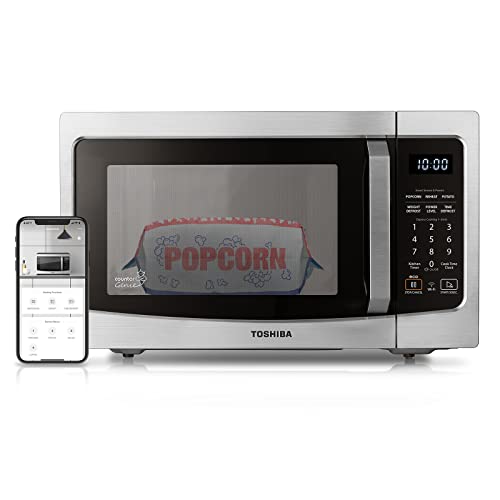
- Humidity sensor adjusts power during cooking
- Alexa and app control support hands-free use
- 23 programs with mute and eco modes
Best For: Smart kitchens and voice-controlled reheating
Best Value
Panasonic Compact Sensor Microwave

- 1.3-cubic-foot capacity with a 13.4-inch turntable
- Seven auto-cook menus and sensor cooking
- Quick 30 Seconds, popcorn, and keep-warm functions
Best For: Simple everyday cooking at a practical feature level
Best Flatbed Design
Toshiba Inverter Flatbed Microwave

- Turntable-free interior fits varied dishes and multiple plates
- Inverter technology supports even cooking
- 11 sensor menus detect moisture and adjust power
Best For: Flexible loading and easier interior cleanup
Compact Sensor Pick
Farberware 1.2 Cu. Ft. Microwave

- 1,000 watts with sensor auto-cook settings
- Compact 1.2-cu.-ft. countertop design
- Ten power levels and child safety lock
Best For: Small kitchens, apartments, and offices
Family-Size Sensor Choice

- 1,200 watts with pre-programmed sensor menu
- 13.6-inch turntable fits a 13-inch pizza
- Sound control, memory, and auto-defrost features
Best For: Families and larger meals
High-Power Sensor Workhorse
Farberware 1.6 Cu. Ft. Microwave

- 1,100 watts with smart sensor auto-cook settings
- 1.6-cu.-ft. capacity for larger dishes
- Ten power levels and multi-stage cooking
Best For: Households wanting capacity and flexible controls
Best with Extra Features
Toshiba 1.1 Cu. Ft. Smart Sensor Microwave

- Compact countertop size for dorms and apartments
- 13 sensor menus with 10 power levels
- Mute, memory, and two-step child lock
Best For: Small kitchens needing flexible everyday cooking
Large-Capacity Choice
Toshiba 2.2 Cu. Ft. Smart Sensor Microwave
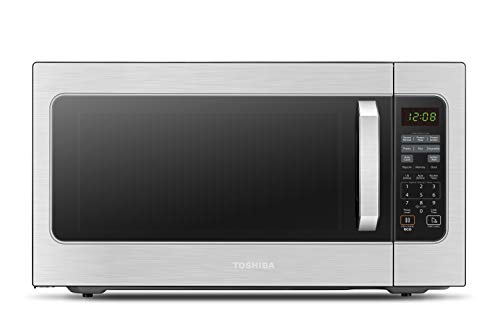
- Fits a 16-inch pizza or whole chicken
- Humidity sensor adjusts time and power
- 23 menus with auto-defrost and ECO mode
Best For: Families cooking large portions and dishes
Multifunction Upgrade
Toshiba OptiChef PRO MAX Air Fryer Microwave

- Smart sensor with Origin Inverter technology
- Air-fryer-style ChefFry Plus cooking
- Color screen and 25 cooking programs
Best For: Cooks wanting microwave, air-fry, and convection-style versatility
Best Overall – Panasonic Inverter Sensor Microwave
The Panasonic NN-SN686S is a strong all-around choice among microwave ovens with sensor cooking. Its Genius Sensor adjusts cooking time and power for different foods, while inverter technology delivers a steadier stream of power for more even results. The 1.2-cubic-foot stainless-steel countertop design also includes 14 preset menus and a 13.4-inch turntable.
Best For: Shoppers who want sensor cooking, inverter performance, and versatile presets in a compact countertop microwave.
Pros:
- Genius Sensor automatically adjusts power and cooking time.
- Inverter Turbo Defrost is designed for more consistent defrosting.
- Includes 14 preset menu items, keep-warm, quick-minute, and delay-start functions.
- Compact exterior design provides a 1.2-cubic-foot interior.
Cons:
- Its 1.2-cubic-foot capacity is smaller than some 1.3-cubic-foot alternatives.
- The included 13.4-inch turntable may limit larger dishes.
- The listed manufacturer warranty is only 30 days.
Choose this Panasonic if even heating and broad automatic-cooking functionality matter more than maximum capacity. It is especially appealing for everyday reheating, defrosting, and keeping food warm.
Best Smart Features – Toshiba Alexa Sensor Microwave
The Toshiba ML-EM34P(SS) combines sensor cooking with connected controls, making it one of the more feature-rich microwave ovens with sensor cooking. Its built-in humidity sensor adjusts cooking power, while Alexa and app compatibility can provide hands-free operation when paired with an Echo device. The 1.3-cubic-foot interior includes 23 programs and a 12.4-inch turntable.
Best For: Connected kitchens where voice control, app operation, and automatic sensor reheating are priorities.
Pros:
- Humidity sensor automatically adjusts cooking power for heating.
- Works with Alexa and app control for hands-free operation.
- Offers 23 programs, including popcorn, potato, pizza, and vegetables.
- Mute and eco modes add convenience for shared or quiet spaces.
Cons:
- An Echo device is not included for voice operation.
- The 12.4-inch turntable is smaller than those on some competing models.
- At 35.1 pounds, it is relatively heavy for a countertop appliance.
This Toshiba is a practical fit if smart-home integration is as important as automatic cooking. Its sensor and preset functions simplify routine reheating, while the mute mode is useful when you want less operating noise.
Best Value – Panasonic Compact Sensor Microwave
The Panasonic NN-SU696S offers a straightforward way to get sensor cooking without moving into a more complex smart appliance. This 1.3-cubic-foot countertop microwave provides 1100 watts of cooking power, a 13.4-inch turntable, seven preset auto-cook menus, and practical shortcuts such as Quick 30 Seconds and a dedicated popcorn button.
Best For: Households seeking a roomy, easy-to-use countertop microwave with essential automatic cooking controls.
Pros:
- 1.3-cubic-foot capacity and a 13.4-inch turntable accommodate everyday dishes.
- Includes sensor cooking, seven auto-cook menus, and 10 power levels.
- Quick 30 Seconds and popcorn controls simplify common tasks.
- Keep-warm, delay-start, timer, and child-lock functions add utility.
Cons:
- Its 1100-watt output is lower than the 1200-watt Panasonic model in this roundup.
- It uses conventional electric heating rather than inverter technology.
- The listed details do not specify a humidity-sensor or smart-home feature.
This model makes sense for buyers who value simple controls and useful shortcuts over premium inverter or connected features. Its larger capacity and broad everyday functions make it a versatile household microwave.
Best Flatbed Design – Toshiba Inverter Flatbed Microwave
The Toshiba ML-EM13PAITF(BS) stands out among microwave ovens with sensor cooking because it replaces the traditional turntable with a flatbed interior. That design accommodates dishes of different shapes and simplifies cleanup, while inverter technology and a humidity-sensing system support more even, controlled cooking. It also provides 11 smart sensor menus and 11 power levels.
Best For: Cooks who want a turntable-free interior for flexible dish placement and easier cleanup.
Pros:
- Flatbed design accommodates various dish sizes and multiple plates without a turntable.
- Inverter technology supports even cooking and precise power control.
- 11 smart sensor menus adjust cooking based on food moisture.
- Smooth interior is designed for easier cleanup, and the unit includes eco and mute features.
Cons:
- It lacks the rotating turntable some users prefer for familiar cooking performance.
- The supplied details do not list a dedicated popcorn preset.
- The black-stainless finish may not match all kitchen styles.
This Toshiba is the most distinctive option here for oversized, irregularly shaped, or multiple dishes. Its flatbed layout paired with inverter and sensor technology offers convenience without sacrificing automatic cooking controls.
Compact Sensor Pick – Farberware 1.2 Cu. Ft. Microwave
If you want microwave ovens with sensor cooking for a smaller kitchen, office, or apartment, this Farberware model combines a compact 1.2-cubic-foot footprint with 1,000 watts of power. Its sensor auto-cook settings and one-touch programs simplify everyday meals.
Best For: Small spaces that still need practical cooking flexibility.
Pros:
- Smart sensor auto-cook settings and six one-touch options support quick meal preparation.
- Ten power levels, multi-stage cooking, and defrost-by-weight or defrost-by-time provide control.
- Easy-clean stainless-steel interior and exterior, LED display, interior lighting, and child safety lock add convenience.
Cons:
- The 1.2-cubic-foot capacity is smaller than the larger models in this roundup.
- Its 1,000-watt output is lower than the 1,100- and 1,200-watt alternatives.
This is a sensible choice when counter space matters most. It offers the core sensor-cooking and customization features many households need without moving to a larger footprint.
Family-Size Sensor Choice – Toshiba 1.6 Cu. Ft. Microwave
Among microwave ovens with sensor cooking, this Toshiba stands out for family-size capacity and 1,200-watt power. Its pre-programmed sensor menu is designed for foods such as pizza, potatoes, and vegetables, while the 13.6-inch turntable accommodates a 13-inch pizza.
Best For: Families wanting higher power, generous capacity, and convenient sensor menus.
Pros:
- Sensor menus help automate heating for popular foods.
- Large 1.6-cubic-foot capacity and 13.6-inch position-memory turntable suit bigger dishes.
- Includes auto defrost, multi-stage cooking, memory function, child safety lock, and sound on/off control.
Cons:
- Its larger exterior dimensions require more counter space.
- The listed power consumption is 1,600 watts, which may matter when planning kitchen electrical use.
The Toshiba is a strong fit for shoppers who regularly heat family-size portions. Its sensor menu, larger turntable, and higher cooking wattage prioritize capacity and convenience over compactness.
High-Power Sensor Workhorse – Farberware 1.6 Cu. Ft. Microwave
This Farberware is a practical option for shoppers comparing microwave ovens with sensor cooking and wanting more room than a compact model provides. It offers a 1.6-cubic-foot capacity, 1,100 watts of output, smart sensor auto-cook settings, and multiple ways to customize cooking.
Best For: Households needing full-size capacity with straightforward controls and sensor-assisted cooking.
Pros:
- Smart sensor auto-cook settings and six one-touch programs make common foods easy to prepare.
- Ten power levels and multi-stage cooking allow more precise heating.
- Auto defrost by weight or time, easy-clean stainless-steel construction, interior lighting, and child safety lock add everyday utility.
Cons:
- The 1.6-cubic-foot design takes more counter space than the 1.2-cubic-foot Farberware model.
- It provides 1,100 watts, below the 1,200-watt output of the Toshiba option.
Choose this model if you want a balanced middle ground: larger capacity than a compact microwave, solid 1,100-watt output, and a familiar set of sensor, one-touch, and manual cooking controls.
Best with Extra Features – Toshiba 1.1 Cu. Ft. Smart Sensor Microwave
If you need microwave ovens with sensor cooking for a smaller kitchen, this 1.1-cubic-foot Toshiba model combines a compact footprint with automatic cooking controls. Its smart sensor, 13 preset menus, and 1,000W output cover everyday reheating, cooking, and defrosting without taking up excessive counter space.
Best For: Dorm rooms, apartments, and compact kitchens that need versatile sensor cooking.
Pros:
- Compact 20.6-by-14.8-by-11.8-inch countertop design.
- Smart sensor cooking with 13 preset menus and 10 power levels.
- Useful mute, memory, weight-based defrost, and time-based defrost functions.
- 12.4-inch glass turntable and two-step child lock.
Cons:
- Its 1.1-cubic-foot capacity is less suitable for oversized dishes.
- The 12.4-inch turntable may not accommodate larger pizzas or cookware.
This is a practical choice when counter space matters more than maximum capacity. It offers a well-rounded set of sensor and convenience features in a relatively small countertop format.
Large-Capacity Choice – Toshiba 2.2 Cu. Ft. Smart Sensor Microwave
For households that regularly cook larger portions, this Toshiba is one of the more spacious microwave ovens with sensor cooking. The 2.2-cubic-foot interior, 16.5-inch turntable, 1,200W output, and humidity sensor are designed for family-size meals and larger dishes.
Best For: Families and cooks who need room for a 16-inch pizza, whole chicken, or large serving dishes.
Pros:
- Large 2.2-cubic-foot capacity with a 16.5-inch glass turntable.
- Humidity sensor automatically adjusts cooking time and power.
- Includes 23 menu options, auto-defrost by weight or time, and multi-stage cooking.
- ECO mode, sound control, memory function, and child safety lock add convenience.
Cons:
- Its 24.4-inch width and 49.2-pound weight require substantial counter space.
- The larger format may be excessive for single users or small kitchens.
This model prioritizes interior space and family-oriented usability. Choose it if accommodating large cookware is more important than maintaining a compact countertop footprint.
Multifunction Upgrade – Toshiba OptiChef PRO MAX Air Fryer Microwave
This Toshiba combines sensor cooking with air-frying and convection-style functionality, making it a versatile option among microwave ovens with sensor cooking. Its humidity sensor, Origin Inverter technology, colorful touchscreen, and ChefFry Plus system are aimed at users who want more than basic reheating.
Best For: Cooks who want microwave convenience alongside air-frying and multifunction countertop cooking.
Pros:
- Smart humidity sensor supports even heating and moisture retention.
- ChefFry Plus adds an air-fryer-style fan and heating element.
- Origin Inverter technology is designed for precise temperature control and even cooking.
- 2.4-inch color screen, 25 programs, Alexa compatibility, and 1.3-cubic-foot capacity.
Cons:
- Its 1.3-cubic-foot capacity is smaller than the large Toshiba model.
- It has five power levels, fewer than the other listed Toshiba microwaves.
- Multifunction controls may be more than users seeking a basic microwave need.
This is the most feature-rich option in the group, especially for kitchens where one appliance must handle several cooking methods. Its added functions make it appealing for versatility, though shoppers wanting simple microwave operation may prefer a more conventional model.
How We Picked the Best Microwave Ovens with Sensor Cooking
We focused on models that clearly offer sensor cooking, sensor reheat, or smart sensor programs, then compared the features that matter most in daily use. Our selection includes compact units for small kitchens, larger family-size microwaves, inverter models designed for more consistent power delivery, and a combination microwave with air-frying capability.
We also considered listed capacity, cooking power, countertop footprint, ease-of-use features, cleaning convenience, child-safety controls, and useful presets. Because product specifications and availability can change, verify the current details before purchasing.
Quick Comparison
| Best For | What to Look For |
|---|---|
| Small kitchens | About 1.1 to 1.3 cubic feet and a compact footprint |
| Family meals | 1.6 to 2.2 cubic feet, a larger turntable, and at least 1,100 watts |
| Even, gentle cooking | Inverter technology paired with sensor programs |
| Multifunction cooking | A combination model with air-fry or convection features |
| Simple reheating | Sensor reheat, one-touch presets, and an easy-to-read control panel |
Key Buying Factors for Microwave Ovens with Sensor Cooking
Capacity and Counter Space
Capacity affects both the dishes you can fit inside and the amount of counter space the appliance requires. Models around 1.1 to 1.3 cubic feet suit apartments, offices, and smaller households. Choose 1.6 cubic feet or more if you regularly heat family-size plates, casserole dishes, or large bowls. Check the interior and turntable dimensions rather than relying on capacity alone.
Wattage and Cooking Performance
Higher wattage generally reduces cooking time, although results also depend on food quantity, container shape, and the selected program. Around 1,000 watts works well for standard reheating, while 1,100 to 1,200 watts is useful for faster cooking and larger portions. Follow the package directions and adjust as needed because microwave power ratings are not the only factor affecting results.
Sensor Features and Controls
Sensor cooking detects humidity during operation and can automatically stop or adjust the cycle. Sensor reheat is especially useful for leftovers, while sensor cook programs may cover foods such as vegetables, potatoes, popcorn, or frozen meals. Look for controls that are clearly labeled and easy to operate without consulting the manual every time.
Inverter and Combination Features
Inverter technology is worth considering if you often defrost delicate foods or want steadier low-power cooking. A flatbed design can make loading easier and may accommodate irregularly shaped dishes, but it may not behave exactly like a traditional turntable model. Combination units add functions such as air frying, though they typically cost more and need additional clearance and cleaning.
Who Should Buy Which Microwave Ovens with Sensor Cooking?
Choose a compact Panasonic, Toshiba, or Farberware model if you have limited space or primarily reheat individual portions. A 1.6- or 2.2-cubic-foot Toshiba or Farberware unit is a better match for families and frequent batch reheating. Select a Panasonic inverter model if controlled, even cooking and defrosting are priorities. If you want one appliance for reheating plus crisping foods, consider the Toshiba OptiChef PRO MAX air-fryer combination model, provided you have room for its extra functions.
Before checkout, measure your counter depth and overhead clearance, confirm the interior dimensions, and check whether the outlet and ventilation requirements suit your kitchen. Sensor programs improve convenience, but proper container placement, stirring, standing time, and occasional manual adjustments still produce the best results.