Making fresh pasta for a crowd is much easier when your machine can handle repeated rolling, consistent thickness, and enough dough to keep pace with the rest of the meal. The best pasta machines for large batches combine usable capacity with reliable motors, sturdy construction, and cutters or shaping options that suit your menu.
This roundup includes electric extruders, motorized roller machines, and manual pasta makers from brands such as Philips, Marcato, VEVOR, and Imperia. Use the buying guide below to compare capacity, speed, cleanup, durability, and the level of hands-on work each type requires.
Best 10 Pasta Machines for Large Batches Picks for 2026
Best Heavy-Duty Capacity
Commercial Electric Pasta Maker

- Rated for up to 66 lb of noodles per hour
- 750W motor and stainless-steel working parts
- Kneads, rolls, and cuts in one machine
Best For: Restaurants, catering, and high-volume home preparation
Best Large-Batch Home Pick
Philips 7000 Series Pasta Maker

- Makes up to eight portions at once
- Automatic preparation in under 10 minutes
- Eight discs and dishwasher-safe parts
Best For: Family meals and convenient home batch cooking
Best Motorized Roller
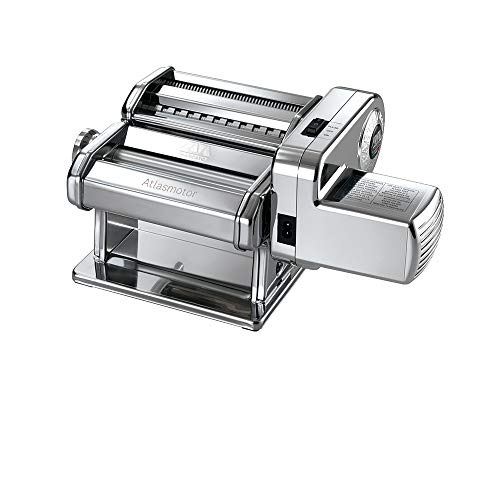
- Includes a handcrank and Pastadrive motor
- Rolls sheets up to six inches wide
- Provides 10 thickness positions
Best For: Home cooks wanting motor assistance with manual control
Best Budget Manual Option

- Nine thickness settings from 0.5mm to 3mm
- Two cutter widths for varied pasta
- Lightweight manual stainless-steel design
Best For: Hands-on home pasta making on a budget
Classic Manual Pick

- 150 mm rolling width and 10 thickness settings
- Includes cutter for three pasta shapes
- Italian-made with a 10-year warranty
Best For: Hands-on cooks making consistent pasta batches
Versatile Stainless-Steel Option

- Seven adjustable thickness settings
- Includes 2 mm and 6 mm cutters
- Works for pasta and dumpling wrappers
Best For: Flexible manual pasta making at home
Automatic Large-Batch Choice
VEVOR 150W Electric Pasta Maker

- 500 g flour capacity for about four people
- Eight pasta shapes and four automatic modes
- Dishwasher-safe parts with cleaning accessories
Best For: Families wanting automated, repeatable batches
Best with Extra Features

- 10 thickness settings from 0.8 to 4.8 mm
- Makes lasagna, fettuccine, and tagliolini
- Chrome-steel manual construction
Best For: Flexible home pasta making with three core shapes
Family Kitchen Option

- Nine adjustable rolling settings
- Detachable cutters make spaghetti and fettuccine
- Includes handle and countertop clamp
Best For: Hands-on family pasta making and varied noodle styles
Expandable Heavy-Duty Choice

- Heavy-duty chromed-steel construction
- Compatible with an optional electric motor
- Supports accessory expansion and three core pasta shapes
Best For: Frequent pasta makers planning larger batches or future upgrades
Best Heavy-Duty Capacity – Commercial Electric Pasta Maker
For buyers comparing pasta machines for large batches, this commercial electric model stands out for its stated output of 45–66 pounds of fresh noodles per hour. Its 750W motor, stainless-steel roller and cutter, and combined kneading, pressing, and cutting functions are aimed at sustained, high-volume preparation.
Best For: Restaurants, catering kitchens, and large households that need high-throughput noodle, pasta, or dough-sheet production.
Pros:
- Rated workload of up to 66 pounds of noodles per hour.
- 750W all-copper motor with stainless-steel roller and cutter.
- Combines kneading, pressing, and cutting in one machine.
- Supports multiple noodle widths and dough thicknesses from 0.1 to 20mm, according to the listing.
Cons:
- At about 46 pounds, it is substantially less portable than countertop manual machines.
- Its commercial footprint and capacity may be excessive for occasional home use.
This is the strongest volume-oriented option in the group. Choose it when production capacity and heavy-duty construction matter more than compact storage or a lightweight setup.
Best Large-Batch Home Pick – Philips 7000 Series Pasta Maker
The Philips 7000 Series is a convenient choice among pasta machines for large batches, producing up to eight portions in one cycle and preparing pasta in under 10 minutes according to the listing. Automatic operation, eight shaping discs, and dishwasher-safe parts make it particularly approachable for family meals.
Best For: Families and home cooks who want automated, relatively quick batch preparation with minimal hands-on work.
Pros:
- Large capacity of up to eight portions per batch.
- Automatic operation and stated preparation time under 10 minutes.
- Includes eight discs for different pasta shapes.
- Non-stick, dishwasher-safe parts simplify cleanup.
Cons:
- Its 150W motor is considerably less powerful than the commercial model’s 750W motor.
- Designed for home batches rather than continuous restaurant-scale production.
For family-sized servings, the Philips offers a more convenient balance of capacity, speed, and cleanup than a manual roller. It is a better fit for home kitchens than for nonstop commercial output.
Best Motorized Roller – Marcato Atlasmotor 110V
The Marcato Atlasmotor combines a hand-crank pasta roller with a Pastadrive motor, giving batch cooks the option to roll sheets electrically or manually. It handles sheets up to six inches wide and offers 10 thickness positions, making it a practical choice for repeated small-to-medium batches.
Best For: Home cooks who want motor-assisted rolling while retaining manual control and the option to expand into additional Marcato accessories.
Pros:
- Includes the Atlas 150, handcrank, clamp, Pastadrive motor, and manual.
- Creates pasta sheets up to 150mm, or six inches, wide.
- Offers 10 clearly marked thickness positions.
- Made and assembled in Italy, according to the listing.
Cons:
- It is primarily a sheeter and does not include the commercial machine’s kneading function.
- Additional pasta shapes require separately available Marcato accessories.
- The listed operation mode is manual despite the included motor, so it is not a fully automatic extruder.
This set is a strong middle ground for cooks who value control and want to reduce the effort of hand-cranking. It is less suited to very large, continuous batches than a commercial electric machine.
Best Budget Manual Option – Sailnovo 3-in-1 Pasta Maker
The Sailnovo 3-in-1 is a compact manual option for cooks who want to make several batches without relying on electricity. Its nine-position roller reaches up to 3mm thick, while the included cutter offers 2.0mm and 4.5mm widths for pasta such as spaghetti and lasagna.
Best For: Budget-conscious home cooks who prefer hands-on pasta making and need a lightweight machine for occasional or moderate batches.
Pros:
- Nine adjustable thickness settings, with sheets as thin as 0.5mm according to the listing.
- Two cutter widths for different pasta styles.
- Stainless-steel and aluminum construction is described as rust-resistant and lightweight.
- Manual operation avoids dependence on a motor or outlet.
Cons:
- Manual cranking requires more effort for large or repeated batches.
- The blade attachment should not be washed in water or placed in a dishwasher.
- It offers less automation and capacity than the electric models in this roundup.
The Sailnovo is best viewed as an accessible starter or backup machine rather than a true high-volume production tool. Its adjustability and compact design make it useful when portability and price take priority.
Classic Manual Pick – Marcato Atlas 150
MARCATO Atlas 150 Machine, Made in Italy, Green, Includes Pasta Cutter, Hand Crank, and Instructions
Check Price On AmazonFor shoppers comparing pasta machines for large batches, the Marcato Atlas 150 is a durable-feeling manual option with a 150-millimeter rolling width. Its hand-crank design supports consistent sheets for lasagne, fettuccine, and tagliolini, though larger quantities require hands-on work.
Best For: Home cooks who want an Italian-made manual machine for repeated batches and traditional pasta shapes.
Pros:
- Rolls dough up to 150 millimeters wide with 10 thickness settings from 0.6 to 4.8 millimeters.
- Includes a cutter for three pasta shapes: lasagne, fettuccine, and tagliolini.
- Made in Italy and backed by a 10-year manufacturer’s warranty.
- Can accept a Pasta Drive motor or additional cutting accessories sold separately.
Cons:
- Manual operation can take more time and effort for very large batches.
- Motor and extra cutting accessories are not included.
- Cleaning is limited to wiping with a dry brush or cloth.
The wide roller and precise thickness range make this a strong choice for cooks who value control and consistency. For the highest-volume production, its manual crank is the main limitation.
Versatile Stainless-Steel Option – Nuvantee 3-in-1 Pasta Maker
The Nuvantee is a practical manual choice among pasta machines for large batches, pairing seven thickness settings with two noodle-width cutters. Its stainless-steel construction and straightforward hand-crank operation suit cooks who want flexibility for pasta and dumpling wrappers.
Best For: Budget-conscious home cooks who want multiple thicknesses and common noodle cuts in one manual machine.
Pros:
- Seven settings roll dough from 0.5 millimeters to approximately 3 millimeters.
- Two cutters produce 2-millimeter spaghetti and 6-millimeter fettuccini-style noodles.
- Supports spaghetti, linguini, fettuccini, lasagna, dumpling wrappers, and more.
- Uses a manual, hygienic operation and includes a user-friendly manual.
Cons:
- Manual cranking may be tiring when preparing especially large quantities.
- Only two cutting widths are included.
- The cutters are described as aluminum rather than stainless steel.
With its broad thickness range and two included cutters, the Nuvantee offers useful variety without an electric motor. It is best suited to moderate home batches where versatility matters more than automation.
Automatic Large-Batch Choice – VEVOR 150W Electric Pasta Maker
For shoppers specifically seeking pasta machines for large batches, the VEVOR electric model stands out with a 500-gram flour capacity and automatic kneading and extrusion. It offers eight pasta shapes and can make enough noodles for about four people in roughly 14 minutes when the flour-to-water ratio is followed correctly.
Best For: Families and busy cooks who want automated preparation and multiple pasta shapes for batch cooking.
Pros:
- 500-gram flour capacity makes approximately four servings per batch.
- Four automatic modes simplify mixing, kneading, and noodle making.
- Includes eight pasta discs for varied shapes.
- Parts are dishwasher-safe and a cleaning brush and spatula are included.
Cons:
- Incorrect flour or water quantities can cause sticking or prevent dough from passing through.
- At 11 pounds, it is substantially heavier than the manual options here.
- Its automatic operation is less hands-on for cooks who prefer manually rolled sheets.
The VEVOR is the strongest fit for convenience and repeatable family-size batches because it automates the labor-intensive steps. Follow the supplied ratio table carefully to get the best results and avoid sticking.
Best with Extra Features – Marcato Atlas150
MARCATO Atlas150 Manual Pasta Maker Machine-LASAGNA, FETTUCCINE & TAGLIOLINI. Made in Italy
Check Price On AmazonFor shoppers comparing pasta machines for large batches, the Marcato Atlas150 offers a sturdy manual setup with 10 thickness settings and three built-in pasta formats. Its chrome-plated steel construction is suited to repeated countertop use when you prefer hands-on control.
Best For: Home cooks who want adjustable sheets plus lasagna, fettuccine, and tagliolini from one manual machine.
Pros:
- Offers 10 thickness settings, from 0.8 to 4.8 millimeters.
- Includes cutters for lasagna, fettuccine, and tagliolini.
- Chrome- and nickel-plated steel construction provides a substantial 2.6 kg build.
Cons:
- Manual operation requires continuous hand-cranking for larger batches.
- The included components are limited to the machine, crank handle, and user manual.
The Atlas150 is a practical choice when thickness flexibility matters more than automation. Its three formats cover core pasta needs, though high-volume cooks should account for the effort involved in manual rolling and cutting.
Family Kitchen Option – Sur La Table Va Bene
Among pasta machines for large batches, the Sur La Table Va Bene emphasizes straightforward manual rolling with a countertop clamp and detachable cutter. Its adjustable dial supports dough thickness selection for lasagna, noodles, and dumpling skins.
Best For: Families and casual cooks seeking a stainless steel manual machine with removable spaghetti and fettuccine cutters.
Pros:
- Provides nine adjustable rolling settings, numbered 0 through 9.
- Detachable shaper cuts spaghetti and fettuccine while the rollers handle sheets.
- Includes a sturdy handle and clamp to help stabilize the machine on the counter.
- Stainless steel construction and components weigh 2.11 kg.
Cons:
- Manual cranking can be labor-intensive when preparing especially large quantities.
- Hand-wash-only care requires additional cleanup attention.
The Va Bene is geared toward shared, hands-on cooking and covers several everyday pasta styles. Its clamp is useful for steadier operation, but batch cooks should plan for manual effort and hand washing.
Expandable Heavy-Duty Choice – Imperia IPasta Classic
For pasta machines for large batches, the Imperia IPasta Classic stands out with solid chromed-steel construction, six thickness settings, and compatibility with an optional electric motor. It also supports accessory expansion for additional pasta styles.
Best For: Dedicated home cooks who want a durable manual machine that can later support motorized operation and extra accessories.
Pros:
- Made in Italy with alloy-steel construction and a 3.66 kg weight.
- Produces sheets up to 150 mm wide, plus 6.5 mm fettuccine and 2 mm tagliolini.
- Six roller heights range from 0.5 to 5 mm.
- Compatible with the Pasta Facile 4600 motor and optional Duplex, Simplex, and Raviolamp accessories.
Cons:
- Motor and expansion accessories are not included with the manual machine.
- Six settings offer fewer adjustment points than some competing models.
- Manual operation still requires hand-cranking unless upgraded.
The IPasta Classic is the most expandable option here for cooks planning frequent production. Its included brush, pouch, support, and non-slip base add convenience, while the motor compatibility gives large-batch users a potential upgrade path.
How We Picked the Best Pasta Machines for Large Batches
We focused on features that matter when making pasta repeatedly rather than preparing a single occasional portion. The selection covers electric and manual machines, with attention to dough capacity, motor power, roller or extrusion performance, available pasta shapes, adjustment settings, construction, included accessories, and ease of cleaning. We also considered whether each model is better suited to home entertaining, regular family meal prep, or higher-volume use.
Capacity claims can vary by recipe and dough hydration, so treat listed flour or portion limits as starting points. For consistently large batches, workflow and durability are often just as important as the maximum advertised capacity.
Quick Comparison
| Machine type | Best for | Main advantage | Potential limitation |
|---|---|---|---|
| Automatic extruder | Fast, repeatable shaping | Mixes and forms pasta with less manual work | Shape selection and cleaning can vary |
| Electric roller machine | Large sheets and cut noodles | Consistent thickness with faster rolling | Still requires dough preparation and handling |
| Manual roller machine | Durable, controlled pasta making | Simple operation and fewer electrical parts | More physical effort for large quantities |
Key Buying Factors for Pasta Machines for Large Batches
Capacity and Workflow
Check how much flour or dough the machine handles per cycle, then consider whether you can keep feeding, cutting, and drying pasta efficiently. A smaller machine may still work well if it has short cycles and easy batch-to-batch operation, while a larger hopper or mixing bowl can reduce interruptions.
Motor Strength and Duty Cycle
For frequent production, look beyond wattage. A strong motor, stable housing, ventilation, and a clearly stated duty cycle are more useful indicators of whether a machine can tolerate repeated batches. Avoid overloading any model, especially with stiff dough.
Rollers, Cutters, and Shapes
Roller machines are ideal for lasagna sheets, fettuccine, spaghetti, and other cut noodles. Extruders offer more shape variety but may produce a different texture and require more detailed cleaning. Confirm that the included discs or cutters match the recipes you make most often.
Materials, Stability, and Cleanup
Stainless steel components, secure clamps, smooth adjustment mechanisms, and a stable base help during extended use. Removable parts and dry-cleaning instructions can save substantial time between batches. Never assume every component is dishwasher-safe; follow the manufacturer’s care guidance.
Who Should Buy Which Pasta Machines for Large Batches?
Choose an Automatic Extruder If Speed Matters Most
Philips and VEVOR-style automatic machines are practical for cooks who want mixing and shaping handled in one process, especially for varied pasta shapes and family-size portions.
Choose a Motorized Roller for Repeated Noodles and Sheets
A motorized Marcato Atlas setup suits users who want the control of a traditional roller with less hand-cranking. It is a strong choice for lasagna, fettuccine, and spaghetti production.
Choose a Manual Machine for Control and Longevity
Marcato, Imperia, Sailnovo, Nuvantee, and Sur La Table-style manual rollers make sense when you value straightforward mechanics, adjustable thickness, and hands-on control. For very large batches, use a second person or consider adding a compatible motor where available.
Final Buying Advice
Prioritize the machine that matches your actual pasta style and production routine, not simply the highest wattage or largest accessory count. For frequent large batches, stable construction, manageable cleanup, and a dependable workflow usually matter more than novelty features.