Consistent fermentation is easier when dough is protected from temperature swings, drafts, and accidental drying. The right proofing box can help a small bakery standardize batches without committing to a full-size proofing cabinet.
This roundup compares 10 options across capacity, temperature control, timers, portability, and storage-friendly designs, so you can match your production volume and workflow to a practical dough-proofing setup.
Best 10 Bread Proofing Boxes for Small Bakeries Picks for 2026
Best Commercial Stack
17.25-Inch Pizza Dough Proofing Boxes
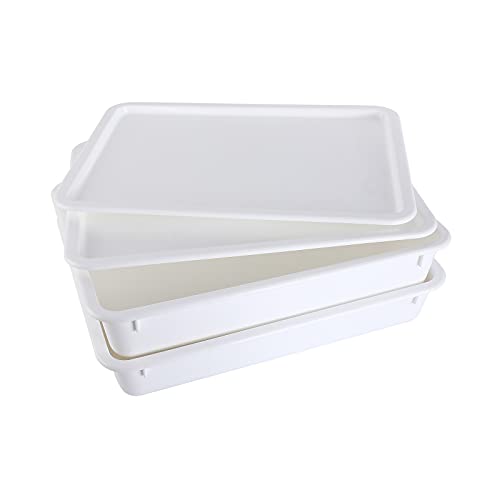
- Two BPA-free plastic boxes with snap-on covers
- Stackable and nestable for efficient storage
- Commercial-style size for pizza and bread dough
Best For: Small bakery kitchens needing simple, reusable passive proofing boxes
Best Heated Large-Capacity Option
Extra-Large Folding Dough Proofer
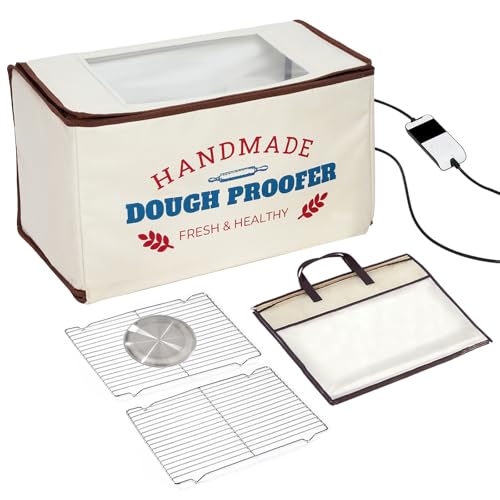
- Three-sided heating with a 50–130°F range
- 24-hour timer with audible alert
- Fits multiple bowls, bannetons, or quart jars
Best For: Small bakeries needing spacious, actively heated proofing
Best for Batch Tracking
6-Liter Translucent Proofing Containers

- Two 6-liter containers hold up to 3,000g each
- Volume markings make dough rise easy to monitor
- Dishwasher-safe and freezer-safe polypropylene
Best For: Small bakeries tracking batch fermentation with easy-clean containers
Best Compact Heated Proofer
Folding 50–113°F Bread Proofing Box

- Three heating zones for more even warming
- 50–113°F control with a 48-hour timer
- Folds for convenient storage and includes a viewing window
Best For: Small-batch bakery production in space-conscious kitchens
Best Value Dough Storage
16 L Pizza Dough Proofing Box 2-Pack

- Two 16-liter boxes for batches of dough
- BPA-free transparent plastic
- Clip-on, water-resistant lids
Best For: Covered dough storage and proofing in an existing warm environment
Best Temperature Control
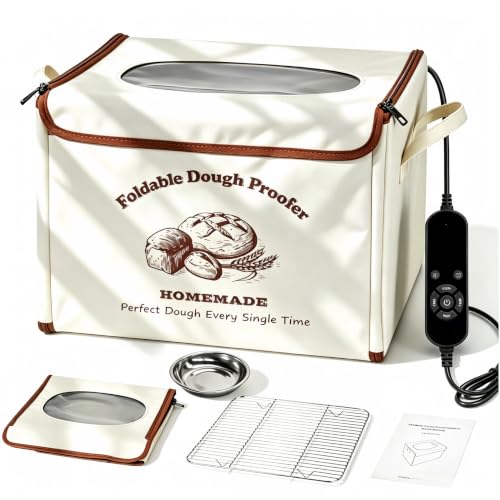
- 70°F–122°F adjustable temperature range
- 1–24-hour timer for scheduled proofing
- Folds to 45 mm for storage
Best For: Controlled, timed proofing for sourdough, yeast dough, and pizza
Best for Batch Organization
3-Pack Stackable Proofing Boxes

- Three stackable dough containers
- 17.32 × 12.63 × 4.56-inch tray size
- Vented lids help retain moisture
Best For: Simultaneous proofing and organized storage of multiple dough batches
Best Overall Capacity
Extra-Large Folding Bread Proofer
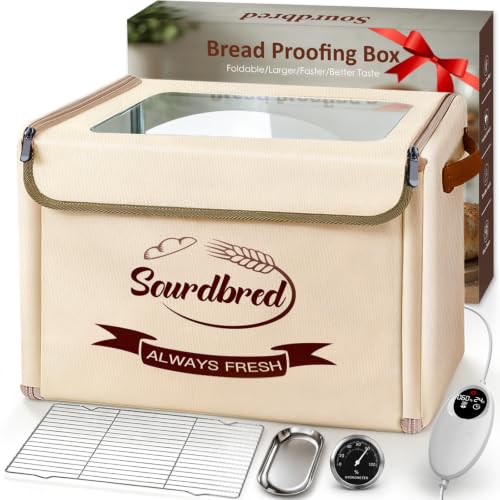
- 66–108°F control with a 1–48-hour timer
- Large interior with rack and water tray
- Folds to about 2 inches for storage
Best For: Small bakeries needing spacious, multipurpose proofing
Best for Batch Portioning

- Includes two trays and two covers
- Snap latches support stacking and transport
- Dishwasher-safe BPA-free plastic
Best For: Portioned dough storage in refrigerators or freezers
Best Sensor-Based Control

- 50–113°F adjustable temperature range
- NTC sensor monitors container temperature
- Folds for storage and includes a viewing window
Best For: Bakers wanting broad temperature control and monitoring
Best Commercial Stack – 17.25-Inch Pizza Dough Proofing Boxes
Pizza Dough Proofing Box, Commercial Grade 17.25" x 13", 2 Trays and Covers | Stackable
Check Price On AmazonFor small bakeries looking for bread proofing boxes for small bakeries, this two-piece commercial-style set offers a straightforward, space-conscious solution for pizza and bread dough. Each rectangular box measures 17.25 by 13 by 3.54 inches and includes a snap-on cover.
Best For: Small bakery kitchens that need stackable, reusable boxes for pizza dough and general bread preparation.
Pros:
- Includes two food-grade, BPA-free plastic containers with covers.
- Boxes stack when covered and nest when covers are removed to save storage space.
- Durable rectangular construction is designed for repeated kitchen use.
Cons:
- Hand wash only, according to the care instructions.
- The shallow 3.54-inch height may be less suitable for very large dough batches.
This set is a practical pick when simplicity, stacking, and predictable dimensions matter more than active temperature control. Its main limitation is that it is a passive container rather than a heated proofer.
Best Heated Large-Capacity Option – Extra-Large Folding Dough Proofer
Among bread proofing boxes for small bakeries, this extra-large folding model stands out for active temperature management and flexible capacity. It provides three-sided heating, a 50–130°F range, and room for two large mixing bowls, multiple bannetons, or quart jars.
Best For: Small bakeries that want a portable heated proofer with timer control and enough space for multiple vessels.
Pros:
- Three-sided heating is designed to reduce cold spots.
- Temperature control spans 50–130°F with a Celsius/Fahrenheit switch.
- Includes a 24-hour countdown timer with an audible alert.
- Folds flat for storage and includes a viewing window.
Cons:
- At 21.6 inches wide, it requires more counter or storage space when assembled.
- Its 100-watt heated design requires access to an electrical outlet.
This is the most feature-rich option in the group for temperature-sensitive fermentation. The large interior and foldable construction suit growing production needs, while the controls add convenience for longer proofing cycles.
Best for Batch Tracking – 6-Liter Translucent Proofing Containers
These two 6-liter containers are a strong choice for bread proofing boxes for small bakeries when monitoring dough volume and simplifying cleanup are priorities. Translucent walls, volume markings, and lidded designs make fermentation easier to track without repeatedly opening the containers.
Best For: Small bakeries making bread, sourdough, or pizza dough in batches of up to 3,000 grams per container.
Pros:
- Each container holds up to 6 liters or 3,000 grams of dough.
- Translucent walls and volume markings help track expansion.
- Lids help maintain humidity and prevent a dry dough surface.
- Dishwasher-safe, freezer-safe polypropylene is designed for repeated use.
Cons:
- These are passive containers without built-in temperature control.
- The two-container format may be less useful for very small single-batch operations.
For teams that value visible fermentation progress and easy cleaning, this set offers a more measurable workflow than an uncovered bowl. It also stacks inside the specified folding proofer, adding flexibility for kitchens that use both container and heated proofing methods.
Best Compact Heated Proofer – Folding 50–113°F Bread Proofing Box
For small bakeries seeking bread proofing boxes for small bakeries with a compact footprint, this folding heated box combines adjustable warming with convenient storage. It offers three heating zones, 50–113°F temperature control, and a 48-hour timer in an 11-by-15-by-11-inch format.
Best For: Small bakery kitchens that need a portable warmer for sourdough, bread, pizza dough, starters, or yogurt.
Pros:
- Three heating zones provide front, back, and bottom warming.
- Temperature adjusts from 50–113°F, with timer settings up to 48 hours.
- Folding design helps reduce storage demands between uses.
- Viewing window allows progress checks without opening the box.
Cons:
- The 113°F maximum is narrower than the 130°F range of some heated proofers.
- The listed interior is intended to fit one standard proofing bowl, limiting batch size.
This model suits bakeries that need controlled warmth without committing to a larger permanent appliance. Its viewing window, timer, and foldable construction make it especially practical for small-batch production and shared kitchen spaces.
Best Value Dough Storage – 16 L Pizza Dough Proofing Box 2-Pack
For small bakeries seeking practical bread proofing boxes for small bakeries, this two-pack offers simple, spacious dough storage without adding powered equipment. Each 16-liter box measures 16.45 by 11.65 by 5.7 inches and can hold approximately four to six dough balls.
Best For: Small bakeries and home bakers that want multiple covered containers for pizza or bread dough proofing and storage.
Pros:
- Two 16-liter boxes provide useful batch capacity.
- Transparent, BPA-free plastic makes contents easy to view.
- Clip-on, water-resistant lids help retain moisture and prevent leaks.
- Suitable for dough, marinating, produce, snacks, and other food storage.
Cons:
- No temperature control or timer for managed proofing conditions.
- The listed dimensions may require checking refrigerator shelf clearance.
This is a straightforward choice when your bakery already has a suitable proofing environment and primarily needs covered, reusable containers for organizing several dough balls.
Best Temperature Control – Foldable PID Dough Proofer
For small bakeries that need repeatable conditions, this powered bread proofing box offers PID temperature control from 70°F to 122°F, with stated precision of up to ±1°F. Its 1-to-24-hour timer supports scheduled proofing for sourdough, yeast dough, and pizza dough.
Best For: Bakers who prioritize controlled warmth, timed fermentation, and compact storage over a simple passive container.
Pros:
- Adjustable 70°F–122°F range with PID temperature control.
- 1-to-24-hour timer accommodates longer fermentation schedules.
- Folds to 45 mm thick for easier storage in space-limited kitchens.
- Includes a stainless steel bowl, hygrometer, iron stand, and overheat protection.
Cons:
- Requires a 120-volt power connection and uses 235 watts.
- More involved to clean and operate than a basic lidded dough box.
- Its 28-liter capacity is supplied as a single unit rather than a multi-box pack.
This is the strongest fit when consistent temperature and timed proofing are central to your workflow. The foldable design helps offset the extra footprint of powered equipment.
Best for Batch Organization – 3-Pack Stackable Proofing Boxes
This three-pack is a practical option for small bakeries comparing bread proofing boxes for small bakeries with an emphasis on batch organization. Each box measures 17.32 by 12.63 by 4.56 inches, and the covered trays are designed to stack while dough rests.
Best For: Bakeries that proof several pizza or bread dough portions at once and need stackable, space-conscious containers.
Pros:
- Three containers support simultaneous dough batches.
- Stackable design saves space during proofing and storage.
- Food-grade, BPA-free plastic is described as durable and impact resistant.
- Vented lids help retain moisture without being airtight.
Cons:
- Provides no active temperature control or timer.
- The supplied listing shows a 13-liter capacity, smaller than the 16-liter alternative.
- Snap lids are vented rather than airtight, so they are not intended for sealed storage.
Choose this set when quantity and stacking matter more than temperature automation. The three-box format can simplify portioning and keep multiple dough batches covered without relying on towels.
Best Overall Capacity – Extra-Large Folding Bread Proofer
For small bakeries seeking bread proofing boxes for small bakeries that can handle varied fermentation tasks, this extra-large folding proofer combines adjustable heat, a long timer, and flexible interior space. Its 66–108°F range, 1–48-hour timer, metal rack, and water tray support controlled proofing while the box folds to about 2 inches for storage.
Best For: Small bakeries and serious home bakers needing a spacious, multipurpose proofing setup.
Pros:
- Large 16.5 x 12 x 12-inch interior can accommodate a large bowl and multiple bottles.
- Adjustable 66–108°F temperature range and 1–48-hour timer offer precise control.
- Three heating areas, five-layer insulation, a water tray, and metal rack support stable, humid proofing.
- Folds to roughly 2 inches and includes handles for easier storage and movement.
Cons:
- Hand-wash care may require more cleanup effort than dishwasher-safe alternatives.
- The fabric construction is not intended for oven or microwave use.
This is the most versatile option for a bakery that needs both capacity and temperature control without committing permanent counter space. Its broad timer range and extra-large viewing window are especially useful for longer sourdough workflows.
Best for Batch Portioning – Stackable Pizza Dough Boxes
For small bakeries comparing bread proofing boxes for small bakeries, this two-piece set is a practical choice for portioned dough rather than temperature-controlled fermentation. Each BPA-free plastic box has a lidded design, snap-on latches, and a stackable format suited to refrigerator, freezer, or countertop storage.
Best For: Bakeries proofing and storing multiple pizza or bread dough portions in limited storage space.
Pros:
- Two trays with covers provide a straightforward setup for batch dough storage.
- Snap-on locks help secure the lids during stacking or transport.
- Dishwasher-safe, BPA-free plastic is convenient for repeated food-contact use.
- 14.96 x 10.43 x 5.31-inch dimensions are designed to fit many refrigerators.
Cons:
- There is no built-in heating or temperature control.
- The 5.31-inch height may be less suitable for large dough bowls or tall rises.
This set makes the most sense when your workflow depends on dividing dough into individual portions and keeping them organized. It is less suitable if you need an actively warmed proofing environment, but its stackable, dishwasher-safe design can simplify daily handling.
Best Sensor-Based Control – Folding Heated Proofing Box
For small bakeries looking at bread proofing boxes for small bakeries with direct temperature monitoring, this folding heated box offers a 50–113°F adjustment range and an NTC sensor designed to sense the dough container’s actual temperature. Its 12-hour timer, transparent window, and 16 x 12 x 10-inch capacity support hands-off proofing in a compact footprint.
Best For: Bakers who want wider temperature settings and sensor-assisted monitoring for multiple dough bowls.
Pros:
- 50–113°F temperature range covers a broad selection of fermentation requirements.
- NTC sensor is designed to monitor the actual temperature of the dough container.
- LED timer supports fermentation periods up to 12 hours.
- Folding construction, transparent window, and insulated three-layer build save space while retaining visibility.
Cons:
- The timer is limited to 12 hours, shorter than some extended-fermentation options.
- Hand-wash care adds maintenance time.
- It is not oven safe or microwave safe.
This model is a strong fit when temperature feedback matters more than an especially long timer. The wider range and sensor-focused design offer useful control, while the foldable body keeps the proofer practical for compact bakery workspaces.
How We Picked the Best Bread Proofing Boxes for Small Bakeries
We evaluated these boxes by the features that matter most in a small commercial or serious home-bakery workflow: usable capacity, temperature range, timer flexibility, insulation or active heating, ease of cleaning, portability, and storage. We also considered whether a unit accommodates dough balls, bulk dough, sourdough containers, or multiple trays.
Heated models can provide more repeatable results in cool rooms, while unheated containers are often simpler, quieter, and less expensive. Foldable designs earn extra consideration when counter space is limited, but their hinges, racks, and heating components should be checked for durability before frequent commercial use.
Quick Comparison
| Best For | Look For | Most Useful Feature |
|---|---|---|
| Pizza production | Wide footprint and multiple trays | Room for several dough balls |
| Sourdough and artisan bread | Low, stable heat and long timing | Accurate temperature control |
| Small counters | Folding construction | Compact storage |
| Batch production | Large internal capacity | Multi-level or rack-supported layout |
| Flexible daily use | Adjustable timer and temperature | Control over different recipes |
Key Buying Factors for Bread Proofing Boxes for Small Bakeries
Capacity and Layout
Start with the number and size of batches you typically proof at once. Measure your dough trays, containers, and available counter space rather than relying only on advertised dimensions. A box that holds four to six pizza dough balls may be sufficient for a modest service, while larger bakeries may need multiple tiers or an extra-large enclosure.
Temperature Range and Consistency
Look for a controllable range suited to your recipes, not simply the highest temperature. Sourdough and enriched doughs often benefit from gentle, stable warmth. Verify whether the listed temperature is the set point or an approximate operating range, and leave room around vents or heating elements as directed.
Timer and Controls
A timer helps prevent over-proofing during busy prep periods. Short timers work for quick pizza workflows; 24- to 48-hour settings are more useful for long fermentation, cold-to-warm transitions, or sourdough schedules. Clear controls are especially valuable when multiple staff members share the equipment.
Cleaning, Durability, and Safety
Choose smooth, wipeable surfaces and removable components where possible. Lids, latches, racks, and folding joints should feel secure and remain easy to sanitize. Heated models should have dependable power protection, stable placement, and enough ventilation for the manufacturer’s requirements.
Who Should Buy Which Bread Proofing Boxes for Small Bakeries?
Choose a compact multi-pack container if you mainly proof individual pizza balls or need inexpensive capacity expansion. Select a heated folding box when your bakery has inconsistent room temperatures and limited storage space. An extra-large heated model is better for frequent batch production, provided its footprint fits your work area. For sourdough-focused operations, prioritize accurate low-temperature control and a long timer over maximum capacity. If your bakery already has a warm, stable room, a commercial-grade unheated box may deliver the simplest and most economical workflow.