Making bread, pizza, noodles, or sourdough at scale demands more than a standard stand mixer. The best dough kneading machines for large batches combine useful capacity, dependable power, sturdy construction, and controls that make repeated mixing easier.
We compared 10 commercial and semicommercial models across bowl size, rated capacity, motor power, timing features, fermentation functions, and practical usability. This guide will help you match the machine to your recipes, production volume, and available workspace.
Best 10 Dough Kneading Machines for Large Batches Picks for 2026
Maximum-Capacity Pick

- Handles up to 25 kg of dough
- Full food-grade stainless steel build
- 90-degree tilt for unloading and cleaning
Best For: Large commercial dough batches
Multi-Function Commercial Choice

- Includes hook, beater, and wire whip
- Three speeds and a 30-minute timer
- Stainless food-contact components
Best For: Commercial kitchens needing dough and general mixing
Fermentation-Focused Pick
Joydeem 9.5Qt Electric Dough Maker

- Handles up to 2,800 grams of flour
- Includes seasonal fermentation modes
- Four modes cover kneading and filling mixing
Best For: Home bakers making fermented dough
Dual-Rotation Value Pick
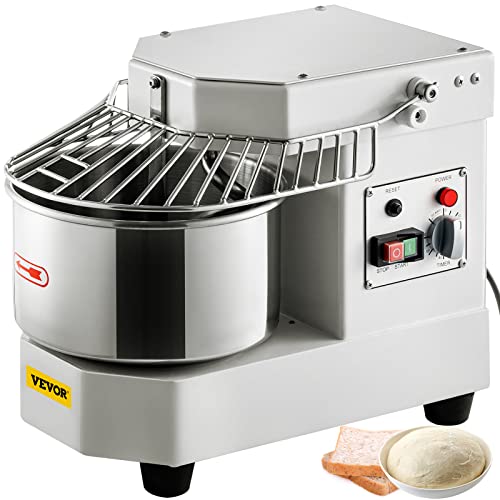
- Dual rotation promotes even kneading
- Handles up to 3 kg of dough
- Includes a 60-minute timer and safety shield
Best For: Moderate dough batches in small commercial kitchens
Commercial Powerhouse

- 50-quart stainless steel bowl for large batches
- 2,200W motor with two speeds
- Dual-action mixing and safety shutoff cover
Best For: Bakeries, pizzerias, and high-volume commercial kitchens
Heavy-Duty Workhorse
30QT Forward-Reverse Dough Mixer

- 30-quart stainless steel mixing container
- 1,500W motor with double gears and belts
- Forward-reverse rotation and tilting bowl
Best For: Restaurants, schools, and bakeries needing mid-size commercial capacity
Best Commercial-Style Mixer

- Mixes up to 11 pounds of dough
- 650W motor drives bowl and hook rotation
- Includes a 60-minute timer and safety shield
Best For: Restaurants, bakeries, and high-volume home baking
Best Fermentation Capacity

- Handles up to 17 pounds of dough
- Offers three constant-temperature fermentation modes
- 750W motor with reversible kneading action
Best For: Large-batch bread and pizza dough preparation
Maximum-Capacity Pick – 25 KG Commercial Dough Mixer
For bakeries, pizzerias, restaurants, and schools needing dough kneading machines for large batches, this TECHTONGDA mixer stands out with its stated 25 kg capacity and 2,200-watt motor. Its stainless steel construction and 90-degree-tilting bowl are designed for demanding, repeated use.
Best For: Commercial kitchens handling very large dough batches for pizza, bread, buns, dumplings, or noodles.
Pros:
- Handles up to 55.1 pounds or 25 kg of dough at one time.
- Full food-grade stainless steel construction is durable and easy to clean.
- Two-way twisted mixer supports mixing and counterclockwise dough removal.
- Tilting bowl helps with unloading and cleaning.
Cons:
- Its 41-inch dimensions require substantial floor space.
- One listed speed provides less speed flexibility than multi-speed mixers.
- Designed for 110V operation but draws 2,200 watts, so electrical requirements should be checked.
This is the strongest capacity choice in the group. It makes the most sense when batch size and commercial durability matter more than compactness or multiple speed settings.
Multi-Function Commercial Choice – VEVOR 15Qt Food Mixer
This VEVOR 15-quart mixer is a practical option for kitchens that need dough kneading machines for large batches while also preparing fillings, batters, whipped cream, and other foods. Its dough hook, flat beater, and wire whip give it broader recipe coverage than a dough-only machine.
Best For: Restaurants, bakeries, and pizzerias that want one commercial mixer for dough and general food preparation.
Pros:
- Includes a dough hook, flat beater, and wire whip.
- Three speeds support kneading, mixing, and whipping tasks.
- 30-minute timer reduces the need for constant monitoring.
- Food-contact components are made from stainless steel and are detachable for cleaning.
Cons:
- Its stated food capacity is up to 1.5 kg or 3.3 pounds, smaller than the largest commercial option here.
- At 105.8 pounds, it is not especially easy to reposition.
- The machine should be stopped before changing speeds.
Choose this model for versatility rather than maximum dough volume. The included attachments and timer make it useful for mixed commercial prep, but its listed dough capacity may not suit the largest production runs.
Fermentation-Focused Pick – Joydeem 9.5Qt Electric Dough Maker
The Joydeem HMJ-A901 combines kneading and controlled fermentation in a compact countertop design. For shoppers comparing dough kneading machines for large batches, its 9.5-quart bowl supports 900 to 2,800 grams of flour, while dedicated seasonal fermentation modes add flexibility for bread and sourdough projects.
Best For: Home bakers and small-scale kitchens making bread, pizza, roti, dumplings, or sourdough with guided fermentation.
Pros:
- Supports flour weights from 900 to 2,800 grams, with a stated 2,500-gram limit for fermented dough.
- Offers Mix, Ferment, Mix + Ferment, and Blend modes.
- Winter and Summer fermentation settings support year-round dough preparation.
- 304 stainless steel bowl and blade are durable and easy to clean.
Cons:
- Its 300-watt motor and capacity are better suited to smaller batches than heavy commercial production.
- The body uses both plastic and stainless steel rather than an all-metal construction.
- Replacement-part coverage noted in the listing is for home use only.
This is a strong choice when fermentation control matters as much as kneading. It offers more dough-program flexibility than a basic mixer, but commercial users may need a higher-capacity machine.
Dual-Rotation Value Pick – VEVOR 8.5Qt Dough Mixer
This VEVOR mixer uses a dual-rotation system to work the bowl and hook together, helping distribute dough more evenly. It is a practical middle ground for users seeking dough kneading machines for large batches, with a stated capacity of up to 3 kg or 6.6 pounds of dough and a 60-minute timer.
Best For: Small commercial kitchens, bakeries, and serious home users needing dedicated dough mixing with a moderate batch capacity.
Pros:
- Dual rotation uses a 21-rpm bowl and 159-rpm hook to simulate manual kneading.
- Handles up to 3 kg or 6.6 pounds of dough at one time.
- 60-minute timer supports longer mixing tasks.
- Safety shield, automatic shutoff, and nonslip feet support stable operation.
Cons:
- Only one speed is listed.
- Its 8-liter bowl is smaller than the 25 kg commercial model.
- At 81.6 pounds, it is relatively heavy for a compact mixer.
The dual-rotation design makes this a focused dough machine rather than an all-purpose stand mixer. It fits moderate production needs well, especially when even kneading and a longer timer are more important than multiple attachments.
Commercial Powerhouse – 50QT Dual-Action Dough Mixer
For bakeries, pizzerias, and other professional kitchens comparing dough kneading machines for large batches, this 50-quart mixer prioritizes capacity, power, and consistent mixing. Its 2,200-watt motor, dual speeds, and dual-action movement are suited to frequent, high-volume dough preparation.
Best For: Commercial kitchens that need to mix substantial batches of soft or firm dough on a regular basis.
Pros:
- Large 50-quart bowl supports high-volume mixing.
- Dual-action mixing rotates both the spiral hook and bowl for thorough dough development.
- Two speeds accommodate soft and hard dough.
- Food-contact components use hygienic 304 stainless steel, and the safety cover automatically shuts off power when opened.
Cons:
- Its 30.3-by-30.3-by-35.4-inch footprint requires substantial floor space.
- The commercial capacity may be excessive for occasional or small-batch home baking.
This is the most production-focused option in the group. Choose it when maximum capacity and durable, repeatable mixing matter more than compact storage.
Home Baking Specialist – 7.4QT Fermenting Dough Maker
Among dough kneading machines for large batches, this compact 7.4-quart model is better suited to family-size production than commercial volume. It combines mixing with temperature-controlled fermentation, making it a practical choice for home bakers preparing bread, pizza, pasta, or sourdough-style dough.
Best For: Home bakers who want a compact mixer with built-in proofing support for everyday family-size batches.
Pros:
- 7.4-quart 304 stainless steel bowl suits family-size batches.
- Mix-pause-mix programming is designed to simulate hand kneading.
- Ferment mode maintains a stated 77–100°F range for proofing.
- Removable, dishwasher-safe parts simplify cleanup.
Cons:
- Its 250-watt motor and single speed are not aimed at heavy commercial workloads.
- The ferment function requires yeast or fermentation powder.
- At 75 dB, it is not a silent appliance.
This machine trades industrial capacity for convenience. Its integrated fermentation modes and small footprint make it the better fit for home kitchens rather than large-scale production.
Heavy-Duty Workhorse – 30QT Forward-Reverse Dough Mixer
This 30-quart commercial mixer offers a middle ground for shoppers seeking dough kneading machines for large batches without moving up to a 50-quart unit. Its 1,500-watt motor, sturdy construction, and forward-reverse operation support pizza and bread production in restaurants, schools, and bakeries.
Best For: Commercial users who need a durable 30-quart mixer with practical dough removal and cleaning features.
Pros:
- 30-quart stainless steel container handles substantial dough batches.
- 1,500-watt motor, double gears, and belts are designed for efficient mixing.
- Forward and reverse rotation supports dough making and removal.
- Tilting bowl, latch, protective gear covers, and viewing window add practical usability and safety features.
Cons:
- At 109.3 pounds, it is difficult to move frequently.
- The stated 85 dB noise level may be noticeable in busy kitchens.
- Its 201 stainless steel gear covers are not the same material as the stainless steel mixing container.
This model is a sensible capacity compromise for professional settings. It offers more room and sturdier construction than a home machine while remaining smaller than the 50-quart option.
Best All-Around Fermentation Mixer – 7.4Qt Dough Maker
For home bakers comparing dough kneading machines for large batches, this 7.4-quart model offers a useful balance of capacity and convenience. Its 250W motor handles bread, pizza, noodles, dumpling wrappers, cookies, and cakes, while the automatic fermentation function helps streamline dough preparation.
Best For: Families and home bakers who want large-batch mixing with built-in fermentation.
Pros:
- Handles 300g to 2100g of flour in one batch.
- Automatic fermentation operates from 77–100°F.
- Detachable stainless steel bowl is dishwasher safe.
- Clear lid and top feeding window make monitoring and adding ingredients easier.
Cons:
- The 250W motor is less powerful than the commercial models in this roundup.
- Its 7.4-quart capacity is smaller than the largest option here.
This is a practical choice when fermentation assistance and easier cleanup matter as much as mixing capacity. It is particularly appealing for frequent household baking, though heavier commercial workloads may call for a more powerful machine.
Best Commercial-Style Mixer – 10.5QT Dual-Rotation Mixer
Among dough kneading machines for large batches, this 10.5-quart Garvee mixer stands out for its commercial-style dual-rotation design. The 650W copper motor drives both the bowl and spiral hook, helping mix up to 11 pounds of dough in approximately 10–15 minutes.
Best For: Restaurants, bakeries, pizzerias, and serious home users needing heavy-duty dough mixing.
Pros:
- 10.5-quart bowl handles up to 11 pounds of dough.
- Dual rotation increases contact between the dough, hook, and bowl.
- 60-minute timer supports more controlled mixing cycles.
- Security shield, automatic shutoff, nonslip feet, and overload protection add practical safeguards.
Cons:
- At 105 pounds, it is substantially heavier than the other listed machines.
- Its 21.26-by-13.39-by-25.39-inch footprint requires dedicated space.
- Only two speeds are listed.
This model is built around capacity and stability rather than portability. Its large bowl, synchronized rotation, and timer make it a strong fit for repeated production, provided you have enough room for a 105-pound commercial-style machine.
Best Fermentation Capacity – 17-LB Commercial Dough Mixer
This INTBUYING model is one of the highest-capacity dough kneading machines for large batches, with a 5kg stainless steel bowl rated for 17 pounds. Its 750W motor, forward-and-reverse kneading action, fermentation modes, and 30-minute timer are designed for substantial bread and pizza dough preparation.
Best For: Users who need high-capacity kneading plus adjustable fermentation without transferring the dough.
Pros:
- 17-pound capacity supports large production batches.
- Three constant-temperature fermentation modes accommodate different dough needs.
- Forward-and-reverse action simulates repeated manual kneading and can form dough in about 15 minutes.
- 750W pure copper motor includes overheat protection and noise reduction.
Cons:
- The 30-minute timer is shorter than the 60-minute timer on the Garvee mixer.
- Its 21.26-by-13.78-by-21.26-inch dimensions still require dedicated counter or floor space.
- The supplied details list fermentation and timing features but do not specify multiple speed settings.
With the largest stated dough capacity in this comparison, this mixer is aimed at users who regularly prepare substantial batches. The fermentation modes and reversible kneading action make it especially versatile for bread and pizza production.
How We Picked the Best Dough Kneading Machines for Large Batches
We focused on machines designed for substantial dough workloads rather than ordinary countertop mixers. The comparison considers stated bowl or kneading capacity, motor wattage, construction materials, mixing controls, timer functions, fermentation features, safety provisions, and the types of dough each design is suited to handle.
Capacity claims can refer to bowl volume, flour capacity, or finished dough weight, so buyers should verify the manufacturer’s specifications before ordering. We also considered whether a machine appears better suited to occasional household use, frequent small-business production, or heavier commercial work.
Quick Comparison
| Best For | What to Prioritize | Models in This Roundup |
|---|---|---|
| Large commercial batches | High stated capacity, powerful motor, durable body | 50QT and 30QT commercial mixers |
| Small bakeries and pizzerias | Midrange capacity, timer, stainless-steel bowl | 15QT, 17LB, and 10.5QT models |
| Home or cottage baking | Compact footprint, fermentation function, simple controls | 7.4QT, 8.5QT, and 9.5QT models |
| Multi-purpose preparation | Dough and filling functions | Joydeem dual-function model |
Key Buying Factors for Large-Batch Dough Kneading
Capacity and Batch Size
Choose capacity based on your actual dough weight, not just bowl volume. A larger bowl does not always mean the machine can safely knead an equally large amount of stiff dough. Leave room for expansion and confirm limits for bread, pizza, enriched, and whole-grain recipes.
Motor Power and Duty Cycle
Higher wattage can help with dense dough, but wattage alone does not determine performance. Look for a motor and transmission intended for sustained mixing, especially if the machine will run several batches per day. A timer is helpful for repeatability, but it does not replace monitoring the dough.
Construction, Stability, and Cleaning
Stainless-steel bowls are durable and generally easier to sanitize. A heavy base reduces movement during kneading, while removable components and accessible surfaces simplify cleanup. Check the machine’s dimensions, weight, electrical requirements, and whether it needs a dedicated, stable work area.
Controls and Safety
Forward or reverse functions, adjustable timing, splash guards, security shields, and emergency shutoffs can improve day-to-day operation. Fermentation settings are useful when you want mixing and proofing in one appliance, but verify temperature control and interior space before relying on them for every recipe.
Who Should Buy Which Dough Kneading Machines for Large Batches?
Choose a 30QT or 50QT machine if you operate a bakery, pizzeria, catering kitchen, or other business producing very large batches. These models make the most sense when output justifies their larger footprint, power demand, and heavier construction.
For a small commercial kitchen or serious home baker, a 10.5QT, 15QT, 17LB, or 25-kilogram-capacity model may offer a more practical balance of throughput and space. Look for a timer and stainless-steel bowl if you make repeat batches regularly.
Choose a 7.4QT, 8.5QT, or 9.5QT dough maker when counter space and versatility matter more than maximum volume. Fermentation functions can be especially convenient for household bread and pizza baking. Before buying, confirm the listed capacity, voltage, plug configuration, warranty, replacement parts, and return policy.