Finding the right dough sheeter can help a small bakery roll pastry more consistently while reducing repetitive work and saving valuable counter space.
This roundup compares 10 manual and electric models by capacity, adjustability, construction, footprint, and ease of use so you can choose equipment that fits your menu and daily production.
Best 10 Dough Sheeters for Small Bakeries Picks for 2026
Compact Electric Pick
Small-Batch Electric Dough Sheeter

- 0.4–4 mm adjustable thickness
- 15.7-inch stainless rolling area
- 250W motor for 50–500 g portions
Best For: Small-batch pastry prep with powered rolling
Space-Saving Manual Pick
Foldable Commercial Tabletop Sheeter

- 0–25 mm thickness adjustment
- No electricity required
- Folds for compact storage
Best For: Versatile manual prep in space-conscious workspaces
Stainless Steel Value Pick

- 0.2–27 mm adjustable thickness
- Food-grade 304 stainless steel
- Folds for cabinet or drawer storage
Best For: Versatile manual dough prep with easy storage
Board-Equipped Pick
Compact Dual-Board Dough Sheeter
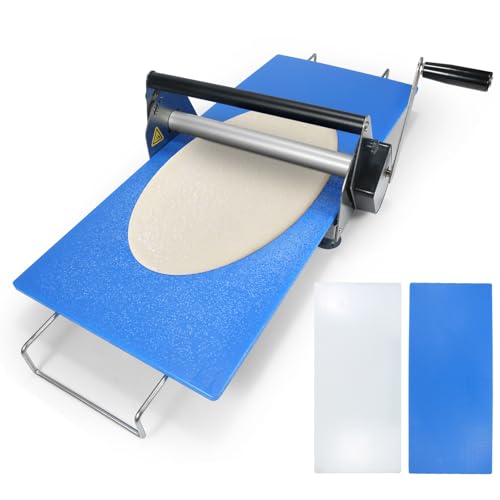
- 0–17.5 mm marked thickness settings
- Includes two 27.5-inch PE boards
- Foldable stainless steel design
Best For: Manual prep with dedicated dough-working surfaces
Best Electric Small-Bakery Sheeter
Compact Commercial Electric Dough Sheeter

- Electric rolling for even pastry layers
- Foldable frame saves storage space
- Adjustable 2–30 mm thickness
Best For: Small-batch pastry production in cafés, studios, and compact bakeries
Best Manual Value Pick
VEVOR 11-Inch Manual Dough Sheeter

- No electricity required
- Adjustable 0–12 mm thickness
- Removable parts ease cleaning
Best For: Compact bakeries needing flexible manual pastry and fondant rolling
Best Folding Manual Sheeter
Compact Two-Board Dough Sheeter

- Folding design suits tight storage areas
- Includes rough and smooth rolling boards
- Adjustable 0–17.5 mm thickness
Best For: Small kitchens rolling multiple dough types manually
Best Automatic Option
Commercial Electric Dough Sheeter

- Automatic rolling saves time and effort
- Stainless-steel body with washable parts
- Adjustable thickness for varied recipes
Best For: Small bakeries needing powered, repeatable dough preparation
Best Manual Folding Pick
15.5-Inch Manual Dough Sheeter

- Folds for compact kitchen storage
- Works without electricity
- 55 thickness settings from 0–27 mm
Best For: Space-limited bakeries wanting manual, flexible operation
Best Compact Stainless Model
304 Stainless Steel Fondant Sheeter

- 304 stainless-steel construction
- Includes a large 23.62-by-11.81-inch board
- Folds for storage and handles fondant
Best For: Small bakeries needing versatile manual rolling in limited space
Compact Electric Pick – Small-Batch Electric Dough Sheeter
For small bakeries seeking dough sheeters for small bakeries, this countertop electric model reduces repetitive rolling while offering adjustable thickness for pastry, pizza, and pie dough. Its 15.7-inch rolling area and 250W motor suit individual portions from 50 to 500 grams.
Best For: Small-batch pastry prep where powered rolling and a countertop footprint are priorities.
Pros:
- 0.4–4 mm thickness adjustment supports thin pastry sheets and thicker dough.
- 15.7-inch effective roller width provides room for wider dough sheets.
- 304 stainless steel rollers and tray are smooth and wipe clean.
- Non-slip feet and a 5.9-foot power cord support stable, flexible placement.
Cons:
- Designed for portions of 50–500 grams, so it may not suit larger batches.
- Continuous operation is limited to 30 minutes before a 10–15 minute cooling period.
- Requires access to an electrical outlet.
This is a practical choice when a small bakery wants to save hand-rolling effort without moving to a larger production machine. The portion guidance and cooldown requirement make it best suited to light, intermittent prep.
Space-Saving Manual Pick – Foldable Commercial Tabletop Sheeter
This manual option is worth considering among dough sheeters for small bakeries when electricity-free operation and broad thickness control matter. Its crank-driven roller handles applications ranging from pizza bases to thin pastry layers, while the folding frame helps conserve storage space.
Best For: Small bakeries, restaurants, and pizza shops needing a manually operated sheeter with compact storage.
Pros:
- Dual-sided adjustment provides 0–25 mm control in increments as fine as 0.5 mm.
- Manual crank operation avoids the need for electricity.
- Folds from approximately 40.6 × 22.8 × 15.7 inches to 18.5 × 11.8 × 4.7 inches.
- Alloy and stainless steel construction is intended for strength and easy cleaning.
Cons:
- Manual operation still requires physical effort.
- The expanded working footprint may need substantial counter space.
- Its 25-pound thickness and folded dimensions should be considered for storage and setup.
With unusually broad thickness adjustment and a foldable design, this model offers flexibility for varied dough styles. It is a strong fit for workspaces that want a tabletop machine without adding another powered appliance.
Stainless Steel Value Pick – 12-Inch Folding Dough Sheeter
For buyers comparing dough sheeters for small bakeries, this 12-inch folding model combines a wide working surface with an extensive 0.2–27 mm adjustment range. Its manual crank and food-grade 304 stainless steel construction make it suitable for wrappers, crusts, laminated dough, and other everyday preparations.
Best For: Home bakers and small bakeries that need broad thickness versatility in a storable manual machine.
Pros:
- 12-inch roller accommodates a range of dough sizes.
- 0.2–27 mm adjustment covers thin wrappers through thick crusts.
- 304 stainless steel is rust-resistant, food-grade, and easy to clean.
- Folding structure allows storage in cabinets or drawers.
Cons:
- Manual cranking requires operator effort for extended preparation.
- The 12-inch roller may require multiple passes for wider dough batches.
- It does not provide powered rolling.
This model stands out for combining a compact, foldable format with one of the widest stated thickness ranges in the group. Choose it when precise versatility and storage convenience are more important than electric operation.
Board-Equipped Pick – Compact Dual-Board Dough Sheeter
This compact manual machine gives small bakeries a straightforward option among dough sheeters for small bakeries, with marked thickness settings and two included rolling boards. The foldable stainless steel design is aimed at consistent prep for pastry, pizza, pasta, cookies, and similar doughs.
Best For: Bakers who want a compact manual sheeter with dedicated work boards for different dough textures.
Pros:
- Clearly marked 0–17.5 mm thickness slots support repeatable settings.
- Includes two 27.5 × 12-inch PE boards with rough and smooth surfaces.
- Stainless steel construction and a non-slip base support stable use.
- Detachable parts and wipe-clean boards simplify cleanup.
Cons:
- Manual operation requires physical effort.
- The thickness range is narrower than some competing models.
- The 32.5-inch listed length may require dedicated setup space when in use.
The included boards are the main differentiator, giving users separate surfaces for varied dough handling needs. It is a sensible pick for small operations that value organized, repeatable manual preparation and easy cleanup.
Best Electric Small-Bakery Sheeter – Compact Commercial Electric Dough Sheeter
For small bakeries needing consistent pastry layers with less manual effort, this electric dough sheeter offers adjustable thickness from 2 to 30 mm and a foldable design. Its metal construction and tabletop setup suit light commercial, café, and professional home-baking work.
Best For: Small bakeries, pastry studios, cafés, and baking classrooms producing croissants, Danish pastries, puff pastry, and other layered doughs in small batches.
Pros:
- Electric rolling helps create even, repeatable dough layers.
- Foldable design helps conserve countertop and storage space.
- Stainless steel and aluminum construction is suited to frequent light commercial use.
- Partially disassembles without tools for easier cleaning.
Cons:
- It is intended for light commercial and small-batch use, not factory-scale production.
- The listed dimensions indicate that it still needs substantial operating space when unfolded.
This is the strongest fit for bakers who prioritize speed and consistent thickness over a fully manual process. The foldable frame adds practical value where storage space is limited.
Best Manual Value Pick – VEVOR 11-Inch Manual Dough Sheeter
This manual dough sheeter is a practical option for small bakeries that want adjustable pastry thickness without adding another electrical appliance. Its dial supports settings from 0 to 12 mm, while the compact stainless-steel body fits on a countertop.
Best For: Small commercial kitchens, bakeries, coffee shops, restaurants, and home bakers making fondant, sugar paste, croissants, pasta, pizza, and decorative pastry pieces.
Pros:
- Manual operation avoids electricity and allows hands-on control.
- Readable adjustment dial supports precise thickness changes.
- Removable handle, panel, and roller simplify storage and cleaning.
- Fixed base and stainless-steel construction provide stability and easy cleanup.
Cons:
- Manual cranking requires more physical effort than an electric sheeter.
- Its maximum sheet thickness is 0.5 inch, which may not suit every dough style.
Choose this model if your production volume is modest and you value straightforward control, compact storage, and no electrical requirements. It is especially versatile for bakeries handling both pastry and decorative work.
Best Folding Manual Sheeter – Compact Two-Board Dough Sheeter
For small bakeries seeking a space-conscious manual machine, this folding dough sheeter combines adjustable thickness from 0 to 17.5 mm with two 27.5-by-12-inch polyethylene rolling boards. The stainless-steel body and non-slip base support repeatable rolling for pastry, pizza, pasta, and cookie dough.
Best For: Small bakeries, home bakeries, and compact kitchens that need a manual sheeter for varied dough types and limited storage space.
Pros:
- Folding design is convenient for storage in space-limited kitchens.
- Two rolling boards provide rough and smooth rolling options.
- Adjustable settings help control dough thickness and uniformity.
- Disassembles for cleaning, with a non-slip base for stability.
Cons:
- Manual operation requires repeated hand rolling.
- The product notes do not specify an electric drive for higher-volume production.
This model stands out when flexibility and storage convenience matter more than powered throughput. The two-board setup also makes it a useful all-purpose choice for a bakery producing several kinds of dough.
Best Automatic Option – Commercial Electric Dough Sheeter
For small bakeries seeking dough sheeters for small bakeries, this electric model prioritizes speed and repeatable thickness. Its automatic operation, stainless-steel body, and broad adjustment range make it suitable for regular pastry preparation.
Best For: Small bakeries that want powered rolling for croissants, puff pastry, pizza, fondant, and other doughs.
Pros:
- Automatic operation reduces manual rolling effort and preparation time.
- Stainless-steel construction is designed for durability and rust resistance.
- Adjustable thickness supports settings from thin tart shells to thicker doughs.
- Washable, detachable components and smooth surfaces simplify cleanup.
Cons:
- Electric operation requires access to a suitable power supply.
- At 25 pounds, it is less convenient to move than lighter manual models.
- The supplied title and notes reference slightly different maximum thickness figures.
This is the strongest fit when throughput and reduced handwork matter more than portability. Its automatic design should appeal to bakeries producing laminated doughs regularly.
Best Manual Folding Pick – 15.5-Inch Manual Dough Sheeter
Among dough sheeters for small bakeries, this manual folding model stands out for space-conscious work areas and power-free operation. It offers 55 thickness settings and a foldable design suited to kitchens that need equipment stored between uses.
Best For: Small bakeries, catering outlets, and home-based operations that prefer manual control and compact storage.
Pros:
- Folds for easier storage in kitchens with limited space.
- Manual operation works without electricity and avoids power-related interruptions.
- Offers up to 55 thickness options across a 0–27 mm range.
- Food-grade stainless-steel contact components support hygienic dough handling.
Cons:
- Manual rolling requires more physical effort than an electric sheeter.
- The 15.5-inch size may provide less working width than larger models.
- The notes do not specify a second rolling surface or included accessories beyond the stated machine.
This model is a practical choice when storage flexibility and electricity-free operation are priorities. Its wide adjustment range adds versatility, though higher-volume bakeries may prefer powered equipment.
Best Compact Stainless Model – 304 Stainless Steel Fondant Sheeter
For small bakeries comparing dough sheeters for small bakeries, this 304 stainless-steel model combines a generous rolling board with a compact folded footprint. Its manual design and 0–25 mm adjustment range cover everyday pastry, cookie, pizza, pasta, and fondant work.
Best For: Small kitchens and bakeries needing a foldable manual sheeter with fondant capability and a broad work surface.
Pros:
- Food-grade 304 stainless steel offers corrosion protection and shape retention.
- Includes a 23.62-by-11.81-inch sheeter board for varied dough sizes.
- Folds from a larger operating setup to a compact storage footprint.
- Non-stick surfaces, auxiliary rollers, and an anti-slip base support smoother handling.
Cons:
- Manual operation may be less suitable for continuous high-volume production.
- Its folding setup still requires assembly and adequate operating space when unfolded.
- The notes list both 1–20 mm in the title and 0–25 mm in the specifications, so buyers should verify the intended range.
This is a well-rounded option for bakeries that value compact storage, stainless-steel construction, and fondant versatility. The larger board and stabilizing features make it especially useful for varied small-batch work.
How We Picked the Best Dough Sheeters for Small Bakeries
We focused on the practical needs of small commercial kitchens: consistent thickness, manageable footprint, straightforward cleaning, and enough capacity for the bakery’s typical batch sizes. The selection includes compact manual machines for lower-volume prep and electric models for shops that need faster, more repeatable production.
We also considered roller-board dimensions, thickness ranges, reversible or folding designs, stainless-steel construction, non-stick surfaces, and whether a machine appears suited to pastry, pizza dough, fondant, or laminated products. Before buying, verify electrical requirements, operating instructions, food-contact materials, and the manufacturer’s stated capacity.
Quick Comparison
| Best For | Recommended Type | Why It Matters |
|---|---|---|
| Occasional pastry or fondant work | Compact manual sheeter | Lower cost, simple operation, and minimal maintenance |
| Limited counter space | Folding tabletop model | Easier storage between production sessions |
| Repeatable daily batches | Electric dough sheeter | Less manual effort and more consistent output |
| Large pastry sheets | Wide commercial roller | Fewer passes and better coverage for production work |
| Mixed bakery menus | Adjustable stainless-steel model | Greater flexibility for pastry, pizza, and fondant |
Key Buying Factors for Dough Sheeters for Small Bakeries
Manual or Electric Operation
Manual sheeters are generally easier to store and maintain, making them a sensible choice for small batches or occasional use. Electric models are better when staff repeatedly process dough throughout the day, although they require more space, power, and cleaning attention.
Roller Width and Thickness Range
Choose a working width that matches your recipes and trays. A broad roller can reduce passes for laminated dough, while a compact model may be more practical for a small prep area. A wide adjustment range is useful if the bakery makes both thin pastry and thicker pizza or fondant sheets.
Construction and Cleaning
Stainless steel is valued for durability and straightforward sanitation. Look for accessible surfaces, removable parts where appropriate, and non-stick areas that reduce dough buildup. Confirm that the unit is designed for food contact and follow the cleaning instructions rather than immersing electrical components.
Space, Stability, and Safety
Measure both the machine and the clearance needed to feed dough. Folding designs help with storage, but the unit should still lock or sit securely during use. Electric machines should match the bakery’s voltage and have suitable controls, guards, and emergency-stop features where provided.
Who Should Buy Which Dough Sheeters for Small Bakeries?
Choose a compact manual model if you are starting out, have modest production, or need a secondary tool for fondant and occasional pastry work. Choose a folding model when counter space is limited but you still want a dedicated roller. Choose an electric sheeter if staff fatigue, speed, and consistent thickness are daily concerns. Choose a wider commercial machine when your bakery regularly produces larger pastry sheets or multiple batches and can support its footprint and power requirements.