Finding enough cold storage for a large household does not always mean adding another full-size refrigerator. The right mini refrigerator can keep drinks, snacks, lunch items, and overflow groceries organized while fitting into a basement, game room, office, guest area, or dorm-style space.
This roundup compares 10 compact refrigerators ranging from single-door models to larger two-door designs with separate freezer compartments. Use the buying guide below to match capacity, layout, temperature control, and shelf flexibility to your family’s routine.
Best 10 Mini Refrigerators for Large Families Picks for 2026
Best Overall Capacity
EUHOMY 4.5 Cu.Ft. Two-Door Mini Fridge
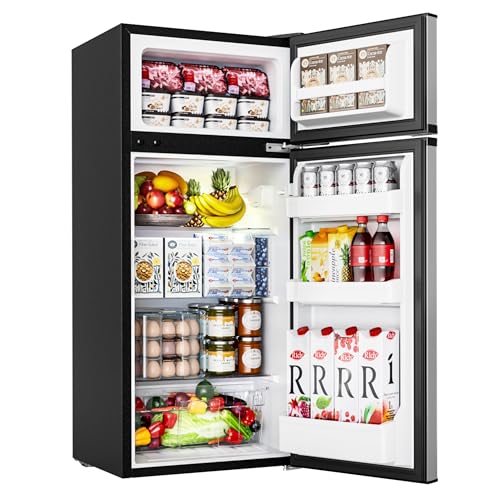
- 4.5 cu. ft. dual-zone storage
- Freezer reaches -7.6°F
- Quiet 38 dB operation
Best For: Families needing compact fresh and frozen storage
Best for Organized Fresh-Food Storage
Frigidaire 4.5 Cu.Ft. Compact Refrigerator

- 4.5 cu. ft. overall capacity
- Glass shelves and can dispenser
- Reversible door and leveling legs
Best For: Fresh-food, beverage, and snack organization
Best Compact Budget Option
Upstreman 3.2 Cu.Ft. Mini Fridge

- Compact 3.2 cu. ft. design
- Five adjustable temperature levels
- Quiet, Energy Star certified operation
Best For: Small spaces and supplemental cold storage
Best Freezer Space
4.9 Cu. Ft. Double-Door Mini Fridge

- 2.0 cu. ft. dedicated freezer
- Seven-level thermostat
- Removable glass shelves
Best For: Households needing extra frozen-food capacity
Best Compact Freezer Capacity
3.6 Cu. Ft. Two-Door Mini Fridge

- 1.0-cu.-ft. separate freezer
- Seven-level temperature control
- Quiet 38 dB operation
Best For: Compact supplemental storage with a useful freezer
Best for Everyday Use
Electactic 4.5 Cu. Ft. Mini Fridge

- Largest 4.5-cu.-ft. capacity
- 3.65-cu.-ft. fresh-food section
- Reversible door and leveling feet
Best For: Families needing the most compact refrigerator storage
Best Flexible Placement
Feelfunn 3.2 Cu. Ft. Mini Fridge

- Reversible door for easier placement
- Separate 0.96-cu.-ft. freezer
- LED light and crisper drawer
Best For: Secondary storage in rooms with limited space
Large-Family Storage Pick
Antarctic Star 4.5 Cu. Ft. Two-Door Refrigerator

- 4.5 cu. ft. capacity with separate freezer
- Removable shelf and produce drawer
- Reversible door with adjustable temperature
Best For: Organized chilled and frozen storage in compact spaces
Compact Freezer Pick

- 3.2 cu. ft. total capacity
- Glass shelves and door storage
- Automatic defrost with adjustable thermostat
Best For: Supplemental snacks, drinks, and light frozen storage
Fresh-Food Capacity Pick
Antarctic Star 4.4 Cu. Ft. Refrigerator

- All 4.4 cu. ft. is fresh-food storage
- Two removable glass shelves
- Seven temperature settings and under-43 dB operation
Best For: Extra refrigerated space when a freezer is not needed
Best Overall Capacity – EUHOMY 4.5 Cu.Ft. Two-Door Mini Fridge
For shoppers comparing mini refrigerators for large families, the EUHOMY stands out with a full 4.5-cubic-foot capacity and separate refrigerator and freezer sections. Its dual-zone layout makes it easier to store fresh groceries, drinks, frozen meals, and ice cream in one compact appliance.
Best For: Families needing substantial fresh and frozen storage in a compact room, apartment, office, or RV.
Pros:
- Separate 3.7-cu.-ft. refrigerator and 0.8-cu.-ft. freezer compartments
- Freezer reaches as low as -7.6°F, while the refrigerator maintains 32–50°F
- Quiet 38 dB operation and stated consumption of about 1 kWh per day
- Reversible door, adjustable shelves, LED light, and included crisper box
Cons:
- Manual defrosting requires periodic maintenance
- Its 42.9-inch height may not suit low-clearance spaces
With the largest capacity among these compact options and a genuinely separate freezer, this EUHOMY is a strong choice when shared household storage matters more than the smallest footprint.
Best for Organized Fresh-Food Storage – Frigidaire 4.5 Cu.Ft. Compact Refrigerator
Among mini refrigerators for large families, this Frigidaire emphasizes usable organization in a compact 4.5-cubic-foot cabinet. Glass shelves, a 2-liter door basket, can dispenser, and chiller compartment help keep drinks and everyday snacks easy to access.
Best For: Households prioritizing organized beverage and snack storage with a polished stainless-steel finish.
Pros:
- 4.5 cu. ft. capacity with 4.3 cu. ft. of fresh-food space
- Includes glass shelves, a 2-liter door basket, can dispenser, and chiller compartment
- Reversible door and leveling legs support flexible placement
- Energy Star certified design with a flush back
Cons:
- The 0.3-cu.-ft. internal freezer is relatively small
- Manual defrosting is required
This model makes sense when fresh-food and drink organization are more important than freezer capacity. Its stainless-steel door and flexible placement features also suit visible kitchen, office, or apartment locations.
Best Compact Budget Option – Upstreman 3.2 Cu.Ft. Mini Fridge
For families seeking mini refrigerators for large families but working with limited space, the Upstreman offers a smaller 3.2-cubic-foot footprint with dedicated refrigeration and freezer areas. Its adjustable shelves and crisper drawer help make the most of the available interior.
Best For: Smaller households, bedrooms, offices, or secondary storage areas where floor space is limited.
Pros:
- Compact dimensions with 2.9 cu. ft. of refrigeration space
- Five temperature levels from 32°F to 50°F
- Quiet 38 dB operation and Energy Star certification
- Reversible door, adjustable glass shelves, crisper drawer, and leveling feet
Cons:
- The 0.3-cu.-ft. freezer is not suitable for ice cream or ice cubes
- Smaller capacity than the other listed models
- Manual defrosting is required
This is a practical space-saving choice, but its limited freezer compartment and lower total capacity make it better as a supplemental refrigerator than as the primary food storage appliance for a large household.
Best Freezer Space – 4.9 Cu. Ft. Double-Door Mini Fridge
For shoppers comparing mini refrigerators for large families, this 4.9-cubic-foot double-door model offers one of the roomiest freezer compartments in the group. Its 2.0-cubic-foot freezer and 2.89-cubic-foot refrigerator section provide a useful balance for frozen foods and everyday groceries.
Best For: Families that need more dedicated freezer room while still wanting a compact freestanding refrigerator.
Pros:
- Large 2.0-cu.-ft. freezer within a 4.88-cu.-ft. total capacity
- Seven-level thermostat supports adjustable cooling
- R600 compressor and wrap-around cooling are designed for consistent cooling
- Removable glass shelves accommodate taller items
Cons:
- Manual defrosting is required
- At roughly 47.4–47.9 inches tall, it needs considerable vertical clearance
- Listed annual energy consumption is 400 kWh
This model is especially appealing when freezer capacity is the deciding factor. Before buying, measure carefully for its taller profile and account for the stated energy use.
Best Compact Freezer Capacity – 3.6 Cu. Ft. Two-Door Mini Fridge
For shoppers comparing mini refrigerators for large families, the Tehanld 3.6-cubic-foot model provides useful cold-storage capacity without taking up much floor space. Its separate 1.0-cubic-foot freezer and 2.6-cubic-foot refrigerator compartment can handle drinks, snacks, fresh foods, and frozen items in bedrooms, offices, dorms, or small apartments.
Best For: Families needing a compact refrigerator with a relatively spacious dedicated freezer.
Pros:
- Separate 1.0-cu.-ft. top freezer and 2.6-cu.-ft. refrigerator section
- Seven-level mechanical thermostat with a 32°F–50°F refrigerator range
- Quiet 38 dB operation and stated 0.48 kWh daily energy use
- Removable glass shelves, interior LED lighting, and a heat-compensation button
Cons:
- Manual defrost requires periodic maintenance
- Right-hand door orientation is not reversible
- Its 3.6-cu.-ft. capacity may still be limited for a large household’s primary food storage
This is a practical secondary refrigerator when freezer space matters. The independent freezer, flexible shelves, low-noise operation, and compact dimensions make it more family-friendly than many smaller beverage-focused units, though large families may need it as supplemental rather than primary storage.
Best for Everyday Use – Electactic 4.5 Cu. Ft. Mini Fridge
The Electactic 4.5-cubic-foot refrigerator is one of the stronger fits for shoppers seeking mini refrigerators for large families. It offers the largest total capacity in this group, dividing storage between a 3.65-cubic-foot refrigerator compartment and a 0.85-cubic-foot freezer while maintaining a footprint suited to tight spaces.
Best For: Families prioritizing maximum compact storage for fresh foods, drinks, and frozen essentials.
Pros:
- Largest listed capacity at 4.5 cubic feet
- Three adjustable shelves and a dedicated crisper drawer
- Reversible door and adjustable leveling feet suit different room layouts
- ETL certification and thick insulation provide added operating and outage protection
Cons:
- Uses a stated 356 kWh per year, more than the smaller Tehanld model
- Manual defrost requires hands-on upkeep
- The freezer is smaller than the refrigerator compartment at about 0.85 cubic feet
With its extra refrigerator capacity, flexible installation, and family-oriented storage layout, this is the most capable choice here for increasing cold storage in a kitchen, utility area, office, or dorm. The taller 42.91-inch profile and higher annual energy use are worth considering before purchase.
Best Flexible Placement – Feelfunn 3.2 Cu. Ft. Mini Fridge
The Feelfunn 3.2-cubic-foot model is a flexible option for shoppers considering mini refrigerators for large families as an extra food-and-drink station. Its 2.24-cubic-foot refrigerator area and 0.96-cubic-foot freezer fit in a compact footprint, while the reversible door helps accommodate different room layouts.
Best For: Families wanting a movable secondary fridge for a bedroom, office, garage, RV, or dorm.
Pros:
- Separate refrigerator and freezer zones in a compact design
- Reversible door and adjustable front legs improve placement flexibility
- Interior LED light, adjustable glass shelves, and crisper drawer support everyday organization
- Rated at 38 dB or less and includes a one-year warranty
Cons:
- At 3.2 cubic feet, it offers less total capacity than the other listed models
- Manual defrost requires periodic attention
- Stated energy use is 0.98 kWh per day, or about 356 kWh annually
This model balances compact sizing with useful organization features. The reversible door, quiet operation, and dedicated produce drawer make it convenient as supplemental storage, but families needing the greatest overall capacity should look first at the Electactic 4.5-cubic-foot option.
Large-Family Storage Pick – Antarctic Star 4.5 Cu. Ft. Two-Door Refrigerator
For shoppers comparing mini refrigerators for large families, this Antarctic Star model stands out with a two-door layout, a separate freezer, and 4.5 cubic feet of total capacity. Its removable glass shelf, drawer, and door storage help organize drinks, produce, and frozen foods in apartments, offices, or other compact spaces.
Best For: Families needing more organized refrigerated and frozen storage in a compact footprint.
Pros:
- Separate freezer compartment for frozen foods or ice cubes.
- Removable glass shelf and produce drawer support flexible organization.
- Reversible door and freestanding design suit different room layouts.
- Adjustable temperature control ranges from 32–50°F in the refrigerator and 3 to -1°F in the freezer.
Cons:
- Manual defrosting requires periodic maintenance.
- Its 42.91-inch height may not fit beneath some counters or shelves.
- The listed fresh-food capacity is 0.9 cubic feet, with much of the stated capacity assigned to the freezer.
This is the most storage-oriented option in the group, particularly for households that need a dedicated freezer section. Check the internal split carefully if fresh-food space is your main priority.
Compact Freezer Pick – Igloo 3.2 Cu. Ft. Mini Fridge
Among mini refrigerators for large families, the Igloo 3.2-cubic-foot model is a practical secondary fridge for drinks, snacks, and a modest amount of frozen food. Its compact 32.5-inch height, glass shelving, and adjustable mechanical thermostat make it suitable for homes, dorms, and offices.
Best For: Families wanting an easy-to-place auxiliary refrigerator for everyday snacks and beverages.
Pros:
- 3.2 cubic feet of total capacity with a separate freezer compartment.
- Two glass shelves and two door shelves help organize refrigerated items.
- Adjustable mechanical temperature control covers a 32–50°F refrigerator range.
- Automatic defrost reduces routine maintenance.
Cons:
- The freezer capacity is only 0.2 cubic feet, limiting frozen-food storage.
- It has one door rather than a dedicated refrigerator-and-freezer door layout.
- The door orientation is listed as left, which may limit placement flexibility.
This Igloo is better viewed as a snack and drink refrigerator than a primary family food-storage solution. Its smaller freezer makes it useful as supplemental cold storage, but not for households needing substantial frozen capacity.
Fresh-Food Capacity Pick – Antarctic Star 4.4 Cu. Ft. Refrigerator
For large families seeking mini refrigerators for large families as extra fresh-food storage, this Antarctic Star model offers a full 4.4 cubic feet of refrigerator space without a freezer compartment. Two removable glass shelves, door storage, and seven temperature settings make it useful for produce, beverages, and snacks.
Best For: Families prioritizing refrigerated food and drink capacity over frozen-food storage.
Pros:
- All 4.4 cubic feet are listed as refrigerator and fresh-food capacity.
- Two reinforced, removable glass shelves accommodate different item sizes.
- Seven-speed temperature adjustment covers 32–50°F.
- Runs at less than 43 decibels, according to the supplied product notes.
Cons:
- There is no freezer compartment for frozen foods or ice.
- Manual defrosting requires periodic attention.
- At 22.05 inches deep, it may need more clearance than some compact fridges.
This is the strongest choice here when a household needs additional refrigerator-only space. Choose it over the other options only if frozen storage is already available elsewhere.
How We Picked the Best Mini Refrigerators for Large Families
We focused on models with enough usable storage for overflow food and beverages rather than treating compact size as the only priority. The selection includes refrigerators from roughly 3.2 to 4.9 cubic feet, with attention to freezer configuration, door design, shelf adjustability, thermostat control, and practical organization.
Two-door models generally offer a better balance for larger households because they separate frozen items from refrigerated food. Single-door units can still be useful when a smaller footprint, lower capacity, or simpler layout matters most.
Quick Comparison
| What to Compare | Best Fit |
|---|---|
| 3.2–3.6 cubic feet | Drinks, snacks, lunches, and supplemental storage |
| 4.4–4.9 cubic feet | Families needing more overflow capacity |
| Separate freezer compartment | Households storing frozen meals, ice, or treats |
| Single-door design | Simple access and a smaller overall footprint |
| Adjustable shelves | Mixed-size containers, pitchers, and taller bottles |
Key Buying Factors for Mini Refrigerators for Large Families
Capacity and Usable Layout
Look beyond the advertised cubic-foot measurement. Door bins, shelf spacing, and freezer placement determine how much food you can actually store. Larger households should prioritize models near the upper end of this group when floor space allows.
Freezer Space
A separate freezer is valuable for frozen dinners, ice cream, ice packs, and short-term meal storage. However, freezer compartments reduce refrigerator capacity, so consider whether your family needs true freezing space or mainly additional chilled storage.
Shelves and Organization
Adjustable or removable shelves make it easier to fit tall bottles, meal-prep containers, and bulky packages. Glass shelves can also help contain spills, while door storage is useful for cans, condiments, and smaller items.
Placement and Operation
Measure the available area, including clearance around the unit for ventilation and enough room to open the door. Check the power requirements, surface stability, noise expectations, and whether the door swing works in your chosen location. A compact refrigerator should supplement a household’s main appliance, not be overloaded.
Who Should Buy Which Mini Refrigerators for Large Families?
Choose a larger two-door model if your family needs dependable overflow storage plus a dedicated freezer for frozen foods and drinks. These are the most versatile choices for basements, rec rooms, home offices, and busy shared spaces.
Choose a 3.2- to 3.6-cubic-foot model if the refrigerator will mainly hold beverages, snacks, packed lunches, or a limited amount of fresh food. This range is easier to place in tighter rooms and works well as a secondary unit.
Choose a single-door refrigerator if you want straightforward organization, a compact footprint, and mostly refrigerated storage. It is a practical option for beverage stations, guest areas, and offices where freezer capacity is less important.
Before buying, compare external dimensions with the available space and confirm that the interior layout matches your household’s routine. For large families, the best mini refrigerator is usually the model that combines the most usable organization with enough freezer or beverage capacity—without being forced into an overcrowded location.