Fresh pasta is easier to make when the machine matches your cooking style, counter space, and preferred noodle shapes. The best pasta machines can roll smooth sheets, cut consistent strands, or automate much of the mixing and extrusion process.
We compared 10 popular manual and electric models to help you choose a practical machine for occasional dinners, frequent pasta making, or feeding a larger household.
Best 10 Pasta Machines Picks for 2026
Classic Italian Pick
Marcato Atlas150 Manual Pasta Maker

- Made in Italy with chrome-steel construction
- 10 thickness settings from 0.8 to 4.8 mm
- Makes lasagna, fettuccine, and tagliolini
Best For: Traditional manual pasta making with flexible thickness control
Versatile Budget Option
Sailnovo 3-in-1 Manual Pasta Maker

- Thickness range from 0.5 to 3 mm
- Two cutter widths for varied noodles
- Rust-resistant stainless-steel body
Best For: Beginners making pasta and dumpling wrappers
Electric Upgrade
Marcato Atlasmotor Electric Pasta Machine
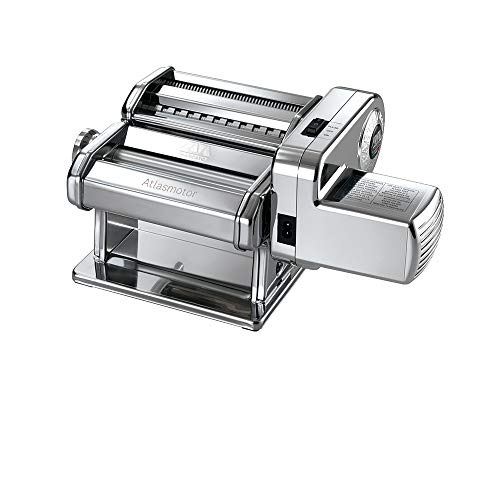
- Includes Pastadrive motor and handcrank
- Offers manual or electric operation
- 10 settings for sheets up to 150 mm wide
Best For: Frequent pasta makers wanting motorized convenience
Simple Multi-Shape Choice

- Seven settings from 0.5 to 3 mm
- Includes 2 mm and 6 mm cutters
- Works for pasta and dumpling wrappers
Best For: Home cooks seeking an accessible manual pasta maker
Fast Family Pasta Maker

- Fresh pasta in under 10 minutes
- Makes up to 8 portions
- Eight discs plus mixing function
Best For: Families seeking fast, automated pasta making
Italian Manual Classic

- Made in Italy from durable metals
- Makes lasagna, fettuccine, and tagliolini
- Compatible with 12 optional accessories
Best For: Hands-on cooks wanting expandable pasta options
Versatile Budget Roller
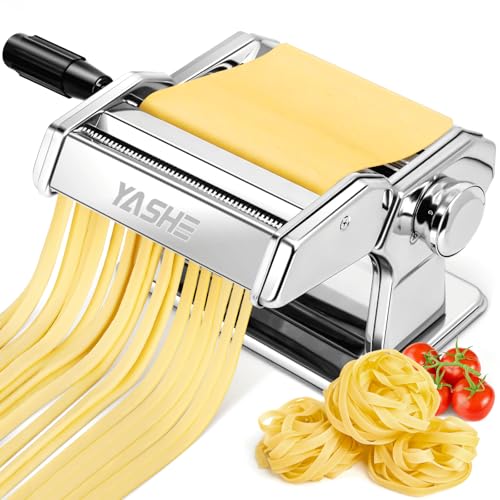
- Nine adjustable thickness settings
- Includes 2mm and 6.5mm cutters
- Cleaning kit and clamp included
Best For: Beginners wanting versatile manual pasta making
Italian Craftsmanship Pick

- Italian-made chromed-steel construction
- Six thickness settings and three pasta formats
- Compatible with optional motor and accessories
Best For: Traditional pasta making with expandable capabilities
Automatic Family-Batch Pick
VEVOR 150W Electric Pasta Maker

- Four automatic modes for easy operation
- 500 g flour capacity for about four people
- Eight discs plus dishwasher-safe parts
Best For: Convenient family-size noodle making
Adjustable Manual Value Pick
Sur La Table Va Bene Pasta Maker

- Nine settings for adjustable dough thickness
- Cuts spaghetti and fettuccine
- Handles lasagna sheets and dumpling skins
Best For: Flexible hand-cranked pasta preparation
Classic Italian Pick – Marcato Atlas150 Manual Pasta Maker
MARCATO Atlas150 Manual Pasta Maker Machine-LASAGNA, FETTUCCINE & TAGLIOLINI. Made in Italy
Check Price On AmazonFor shoppers comparing pasta machines, the Marcato Atlas150 is a traditional manual model made in Italy. Its chrome-steel construction and 10 thickness settings support everything from relatively thick sheets to thin pasta, while the included cutters handle lasagna, fettuccine, and tagliolini.
Best For: Home cooks who want a durable, traditional pasta machine with broad thickness control.
Pros:
- Made in Italy with chrome- and nickel-plated steel construction.
- Offers 10 thickness settings, from 0.8 mm to 4.8 mm.
- Includes cutters for lasagna, fettuccine, and tagliolini.
Cons:
- Manual operation requires hands-on effort.
- The 2.6 kg build may be less convenient to move and store.
The Atlas150 is a strong choice if precise manual adjustment and classic construction matter more than electric convenience. Its three included pasta functions cover several everyday shapes without requiring extra accessories.
Versatile Budget Option – Sailnovo 3-in-1 Manual Pasta Maker
The Sailnovo is a practical choice among pasta machines for cooks who want adjustable dough thickness and two cutting widths. Its manual design includes a clamp, stainless-steel body, and settings suitable for spaghetti, lasagna, and dumpling skins.
Best For: Beginners and families seeking a lightweight manual machine for several pasta styles.
Pros:
- Provides nine stated thickness settings, ranging from 0.5 mm to 3 mm.
- Two cutting widths—2.0 mm and 4.5 mm—support different noodle styles.
- Stainless-steel construction is designed to resist rust and stores relatively easily.
Cons:
- The blade attachment should not be washed in water or placed in a dishwasher.
- Manual rolling and cutting require more effort than an electric machine.
With its broad thickness range and two cutters, the Sailnovo offers useful flexibility at a straightforward feature level. Follow the dry-cleaning guidance carefully to protect the blade attachment.
Electric Upgrade – Marcato Atlasmotor Electric Pasta Machine
If you want pasta machines with less repetitive hand cranking, the Marcato Atlasmotor adds a Pastadrive motor to the Atlas 150 platform. The 110V set can be used manually or electrically and rolls sheets up to 150 mm wide with 10 thickness positions.
Best For: Frequent pasta makers who want the option of motorized or manual operation.
Pros:
- Includes the Atlas 150, handcrank, clamp, Pastadrive motor, and manual.
- Supports both electric and manual operation.
- Offers 10 clear thickness positions and 150 mm-wide pasta sheets.
- Made and assembled in Italy.
Cons:
- The set is heavier at 9.5 pounds.
- It is a more equipment-intensive choice than a basic manual machine.
The Atlasmotor is appealing when convenience and flexibility justify a larger setup. Its motor reduces the need for continuous hand cranking, while the included handcrank preserves manual control when preferred.
Simple Multi-Shape Choice – Nuvantee 3-in-1 Pasta Maker
The Nuvantee is one of the more straightforward pasta machines for home cooks who want adjustable thickness and two noodle widths. Its stainless-steel construction and manual roller support pasta sheets from 0.5 mm to 3 mm, plus dumpling wrappers and several noodle styles.
Best For: Home cooks looking for an accessible manual machine for pasta and dumpling dough.
Pros:
- Seven thickness settings cover dough from 0.5 mm to 3 mm.
- Includes 2 mm and 6 mm cutters for different noodle widths.
- Stainless-steel construction and a manual operating design.
- Suitable for spaghetti, linguine, fettuccine, lasagna, and dumpling wrappers.
Cons:
- Manual operation requires physical effort.
- The supplied cutters are limited to two widths.
The Nuvantee balances a useful thickness range with a compact set of pasta functions. It is a sensible fit for shoppers who want variety without moving to an electric machine or a larger accessory system.
Fast Family Pasta Maker – Philips 7000 Series
For shoppers comparing pasta machines, the Philips 7000 Series is a convenient automatic option that can produce fresh pasta in under 10 minutes. Its large capacity, eight shaping discs, and mixing function make it suited to more than just noodles.
Best For: Families and cooks who want fast, mostly hands-off pasta making with multiple shape options.
Pros:
- Prepares fresh pasta in under 10 minutes.
- Makes up to eight portions in one batch.
- Includes eight discs and supports mixing for cookies, pizza, bread, and more.
- Features non-stick, dishwasher-safe parts and HomeID app recipe guidance.
Cons:
- At 20 pounds, it is substantially heavier than the manual alternatives in this roundup.
- Its automatic design may be less appealing to shoppers who prefer hands-on pasta making.
The Philips stands out when speed, capacity, and convenience matter most. Choose it over a manual roller if you regularly make pasta for a group or want app-supported guidance and easier cleanup.
Italian Manual Classic – Marcato Atlas 150 Design
Among traditional pasta machines, the Marcato Atlas 150 Design offers manual control with Italian-made chrome-plated steel and anodized aluminum construction. It rolls sheets from 0.5 to 4.8 millimeters and cuts lasagna, fettuccine, and tagliolini.
Best For: Home cooks who value durable Italian craftsmanship, hands-on control, and a machine that can grow with optional accessories.
Pros:
- Made in Italy with chrome-plated steel and anodized aluminum.
- Creates lasagna sheets, 6mm fettuccine, and 1.5mm tagliolini.
- Offers 10 thickness settings and a smooth roller system.
- Compatible with 12 optional Marcato accessories.
Cons:
- Optional accessories for additional pasta shapes are sold separately.
- Not dishwasher safe; cleaning requires wiping with a dry cloth.
- Manual operation requires more hands-on effort than an automatic machine.
The Atlas 150 Design is a strong choice for cooks who enjoy the process of rolling and cutting pasta. Its included cutters cover three styles, while the accessory compatibility provides room to expand later.
Versatile Budget Roller – YASHE 3-in-1 Pasta Maker
For shoppers seeking adaptable pasta machines, the YASHE 3-in-1 combines an adjustable roller with two cutter widths. Its manual design handles dough from 0.3 to 3 millimeters and includes a clamp, cleaning brush, and cloth.
Best For: Beginners and pasta lovers who want an affordable manual machine for several pasta and dough styles.
Pros:
- Offers nine thickness settings from 0.3mm to 3mm.
- Includes 2mm and 6.5mm cutters for spaghetti and fettuccine.
- Food-grade stainless steel and aluminum alloy construction.
- Includes a fixing clamp, cleaning brush, cloth, and English manual.
Cons:
- Manual cranking requires more effort and time than an automatic model.
- The supplied cutter widths are limited to two options.
- Its maximum sheet thickness of 3mm is narrower than the Marcato’s listed range.
The YASHE offers useful versatility without requiring separate cutter attachments for its included pasta widths. It is a practical starting point for homemade pasta, lasagna, dumpling skins, and other rolled doughs.
Italian Craftsmanship Pick – Imperia iPasta Classic Line
For shoppers comparing pasta machines, the Imperia iPasta Classic Line stands out as a manual option with solid chromed-steel construction and adjustable thickness control. It rolls sheets up to 150 mm wide and cuts fettuccine or tagliolini, while its included clamp, crank, brush, and storage pouch make it ready for traditional countertop use.
Best For: Home cooks who want an Italian-made manual pasta roller with multiple thickness settings and accessory-expandability.
Pros:
- Made entirely in Italy with durable chromed steel construction.
- Six thickness settings from 0.5 mm to 5 mm for sheets, fettuccine, and tagliolini.
- Compatible with an optional electric motor and additional pasta-making accessories.
- Includes a non-slip base, table support, cleaning brush, crank, and cotton storage pouch.
Cons:
- Manual operation requires turning the crank by hand.
- Additional motor and specialty accessories are sold separately.
- Cleaning is limited to wiping with a damp cloth or using the included brush.
This is a strong choice if you value durable materials, classic hand-cranked operation, and room to expand beyond basic pasta shapes. Its steel build and six settings offer useful control for homemade sheets and noodles.
Automatic Family-Batch Pick – VEVOR 150W Electric Pasta Maker
Among automatic pasta machines, the VEVOR 150W model is designed for convenience: choose one of four automatic modes, add ingredients, and use one of eight included discs to make different noodle shapes. Its 500 g flour capacity is sized for roughly four people, with a stated preparation time of about 14 minutes.
Best For: Beginners and families who want an electric noodle maker with large capacity, guided ratios, and varied shaping options.
Pros:
- Automatic operation with four modes for simpler preparation.
- 500 g flour capacity can make approximately four servings.
- Includes eight pasta discs for a range of shapes.
- Comes with measuring cups, a spatula, cleaning brush, and dishwasher-safe parts.
Cons:
- Water-to-flour ratios need to be followed carefully to prevent sticking or failed extrusion.
- At 11 pounds, it is less lightweight than a basic manual roller.
- The included instructions and ratios are important for consistent results.
The VEVOR is the practical pick for reducing hands-on kneading and rolling. Its capacity and automatic modes suit batch preparation, though careful measuring is essential for smooth operation.
Adjustable Manual Value Pick – Sur La Table Va Bene Pasta Maker
For shoppers seeking straightforward pasta machines, the Sur La Table Va Bene uses a hand crank, detachable cutter, and countertop clamp to roll dough for spaghetti, fettuccine, lasagna, or dumpling skins. Its nine-position adjustment range provides flexibility when choosing a thinner sheet or a thicker pasta base.
Best For: Home cooks who want a manual stainless-steel pasta maker with broad thickness adjustment and familiar pasta shapes.
Pros:
- Nine adjustable settings provide control over dough thickness.
- Detachable shaper cuts both spaghetti and fettuccine.
- Can prepare sheets for lasagna and dumpling skins.
- Includes a removable handle and clamp for more stable countertop use.
Cons:
- Requires manual cranking.
- Care instructions specify hand washing only.
- The box includes two cutters, limiting the listed pasta shapes compared with machines offering more discs.
This model offers a practical balance of control and simplicity for cooks who prefer a manual workflow. The clamp and nine settings are especially useful when consistency and adjustable sheet thickness matter.
How We Picked the Best Pasta Machines
We evaluated these Pasta Machines by looking at construction, roller and cutter options, thickness control, operating effort, cleaning requirements, and the types of pasta each model can produce. We also separated manual rollers from electric and fully automatic machines, since they suit different kitchens and expectations.
Italian-made models often appeal to shoppers who prioritize traditional construction and long-term repairability. Electric and automatic machines are more convenient when speed, reduced hand effort, and repeatable results matter most. Product specifications can vary by package, so confirm included cutters, dies, motors, clamps, and accessories before ordering.
Quick Comparison
| Type | Best For | Main Advantage | Trade-Off |
|---|---|---|---|
| Manual roller | Traditional pasta making | More control and simple mechanics | Requires hand cranking |
| Motorized roller | Frequent sheet-and-cut pasta | Faster rolling with less effort | Costs more and needs storage for the motor |
| Automatic extruder | Convenience and varied shapes | Mixes, kneads, and extrudes | More parts to clean |
| Electric pasta maker | Family-size batches | Consistent automated production | Bulkier than manual machines |
Key Buying Factors for Pasta Machines
Manual or Automatic Operation
Manual machines are usually the best choice for cooks who enjoy the process and want direct control over dough thickness. Motorized rollers reduce cranking, while automatic models are better for hands-off preparation and larger batches.
Rollers, Cutters, and Pasta Shapes
Check whether the machine makes sheets, fettuccine, spaghetti, tagliolini, or extruded shapes. A wider selection is useful, but only if you will actually use the included attachments. Die-based machines may offer more variety than standard roller-and-cutter designs.
Thickness Settings and Capacity
More thickness settings help with delicate sheets, filled pasta, and thicker noodles. For automatic machines, consider flour capacity and the number of portions produced per cycle. A compact machine may be easier to store, while a larger one can save time for families.
Build Quality and Cleanup
Look for sturdy metal construction, a secure clamp or stable base, clear controls, and removable parts where appropriate. Never immerse a traditional roller machine unless the manufacturer specifically allows it; dry brushing and careful wiping are commonly safer cleaning methods.
Who Should Buy Which Pasta Machines?
- Choose a classic manual Italian machine if you value durable construction, hands-on control, and traditional sheet pasta.
- Choose a motorized roller if you make pasta regularly but want to keep both hands available for feeding and guiding dough.
- Choose an automatic extruder if convenience, multiple shapes, and minimal manual work are your priorities.
- Choose a compact budget model if you are learning, have limited storage, or make fresh pasta only occasionally.
- Choose a higher-capacity electric model if you prepare several portions at once and prefer consistent, repeatable results.
Before buying, compare the machine’s footprint with your available counter and cabinet space, then verify the included accessories and cleaning instructions. The right pasta maker is the one whose setup and cleanup fit naturally into the way you already cook.