Growing herbs, greens, flowers, and compact vegetables indoors is easier when your planter provides the right height, drainage, and root space. The best raised garden beds for indoor gardening also help contain soil, organize plants, and make daily care more comfortable.
We compared 10 elevated, mobile, self-watering, and trellised models to help you find a practical fit for a sunroom, enclosed patio, balcony, or bright indoor growing area.
Best 10 Raised Garden Beds for Indoor Gardening Picks for 2026
Top Self-Watering Pick

- 31-inch height reduces bending
- 45-liter self-watering planting area
- Ventilated dome protects seedlings
Best For: Indoor herbs, vegetables, and seed starting
Best Large Capacity

- 5 cubic feet of planting space
- 331-pound load capacity
- Includes liner and drainage holes
Best For: Spacious sunrooms, enclosed porches, or covered patios
Best Mobile Design

- Six-inch wheels and built-in handle
- 31.5-inch comfortable working height
- Lower shelf adds storage
Best For: Movable herbs, salad greens, and compact crops
Best Open-Base Option

- 4-by-2-foot planting footprint
- Open base supports drainage and root growth
- Lightweight galvanized steel construction
Best For: Large sunrooms, greenhouses, and open-base setups
Best Mobile Pick
Elevated Resin Garden Bed with Wheels
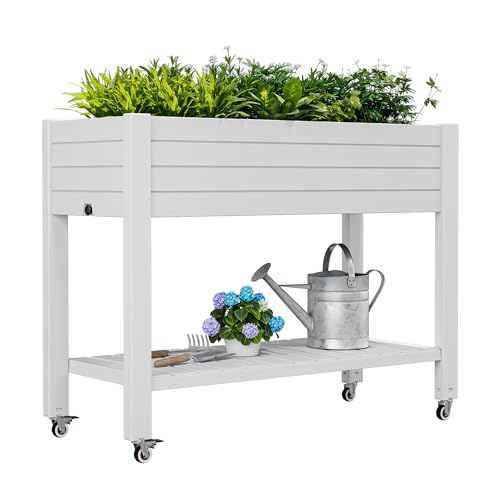
- Locking wheels for flexible placement
- 33.7-inch height reduces bending
- Drainage gauge and storage shelf
Best For: Gardeners needing a movable, elevated planter
Best Heavy-Duty Value
Galvanized Oval Raised Garden Bed

- Double-layer galvanized metal
- Open base supports drainage
- 7.14-cubic-foot growing capacity
Best For: Vegetable growers wanting a sturdy outdoor bed
Best Large Elevated Bed

- 8.4 cubic feet of planting space
- 30-inch ergonomic height
- Six drainage holes and divider panel
Best For: Spacious indoor or enclosed areas needing a long planter
Best Vertical Pick
Self-Watering Tomato Trellis Bed

- 56-inch vertical design with adjustable trellis
- Reservoir helps maintain soil moisture
- Lockable wheels support easy repositioning
Best For: Small indoor spaces and climbing vegetables
Best Long Planter
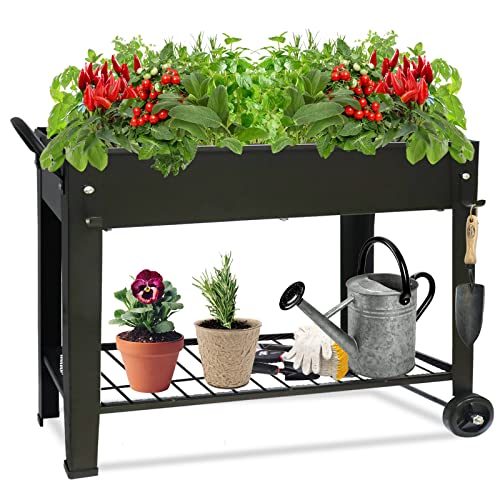
- 40-inch-long elevated planting box
- Rust-resistant coated galvanized steel
- Wheels, handle, and controlled drainage
Best For: Herbs, flowers, and vegetables in long indoor spaces
Best Multi-Box Setup

- Four separate planter boxes for mixed crops
- 32.4-inch elevated, comfortable working height
- Drainage tray helps protect indoor surfaces
Best For: Organized indoor herb and flower gardening
Top Self-Watering Pick – Elevated Grow Dome Planter
For raised garden beds for indoor gardening, this elevated polypropylene planter combines a comfortable 31-inch working height with a built-in reservoir and ventilated grow dome. Its 45-liter planting area suits herbs, vegetables, flowers, and starter plants in smaller spaces.
Best For: Indoor gardeners who want self-watering support and a protective cover for seedlings or compact crops.
Pros:
- Elevated design reduces bending and kneeling.
- Self-watering reservoir includes a water-level indicator.
- Ventilated dome helps protect plants while allowing monitoring.
- Weather-resistant polypropylene is easy to clean and assemble.
Cons:
- The 29.5-by-15-inch footprint limits planting space compared with larger beds.
- The grow dome adds height and may restrict taller plants.
This is the most purpose-built option here for indoor use, especially if consistent moisture and seed starting are priorities. The compact footprint and elevated height make it practical where floor space and accessibility matter.
Best Large Capacity – Wooden Elevated Garden Bed
Although designed for outdoor use, this wooden elevated bed offers generous growing space for gardeners comparing raised garden beds for indoor gardening in a sunroom, enclosed porch, or other suitable area. Its 5-cubic-foot capacity, 31-inch height, and included liner provide a substantial planting setup.
Best For: Large indoor or covered growing spaces where a roomy wooden bed and elevated working height are more important than portability.
Pros:
- Large 48-by-24-inch planting area holds about 5 cubic feet.
- 331-pound soil-and-plant capacity supports substantial crops.
- 31-inch height helps reduce bending and kneeling.
- Includes a PE liner and four drainage holes.
Cons:
- Its large footprint may be difficult to place indoors.
- Untreated fir wood and waterproof-painted legs require more care than plastic or metal.
- Assembly is recommended for two people.
This bed is a strong capacity choice, but its outdoor-oriented wooden construction makes it better suited to a spacious, protected location than a typical indoor room. Confirm the available floor area and drainage setup before buying.
Best Mobile Design – Rolling Metal Planter Cart
For gardeners who need flexibility, this rolling metal planter cart is a practical alternative among raised garden beds for indoor gardening, provided it is used in a suitable indoor or covered setting. Six-inch wheels, a handle, a lower shelf, and a 31.5-inch height make it easy to reposition and maintain.
Best For: Gardeners who want a movable herb or salad-green planter with storage for tools and supplies.
Pros:
- Wheels and handle support smooth repositioning.
- 31.5-inch height reduces bending and kneeling.
- 400-pound capacity accommodates soil and plants.
- Lower shelf stores tools, pots, or soil.
Cons:
- Its 2.5-cubic-foot capacity is smaller than the large wooden bed.
- The 15.7-inch width provides a relatively narrow planting area.
- It is listed for outdoor use, so indoor placement should account for drainage.
The cart stands out for mobility and organization rather than maximum growing volume. It is especially useful when you need to move plants toward light or clear floor space, but a drainage-safe location is essential.
Best Open-Base Option – Galvanized Steel Garden Bed
This 4-by-2-foot galvanized steel bed is a straightforward option for comparing raised garden beds for indoor gardening in a large sunroom, greenhouse, or other space where an open base is appropriate. The open-bottom design supports drainage and root expansion, while the lightweight steel construction is easy to move during setup.
Best For: Gardeners who want a spacious, low-profile metal bed with open-bottom drainage and root access.
Pros:
- Offers a roomy 48-by-24-inch growing area.
- Open base allows root expansion and natural drainage.
- Lightweight galvanized steel resists corrosion and rust.
- Designed for quick assembly without complex tools.
Cons:
- At 12 inches tall, it does not provide the reduced-bending benefit of elevated legged beds.
- The open base requires a suitable floor or soil location indoors.
- It lacks a built-in self-watering reservoir or protective cover.
This is a practical choice when open drainage and a broad planting footprint matter most. Its low height and open base make it less convenient for finished indoor floors, so placement planning is important.
Best Mobile Pick – Elevated Resin Garden Bed with Wheels
For raised garden beds for indoor gardening, patios, or other compact spaces, this elevated resin planter emphasizes mobility and comfortable access. Its locking wheels let you reposition it for better light, while the elevated design helps reduce bending and kneeling.
Best For: Gardeners who want a movable, waist-height planter for herbs, vegetables, flowers, or succulents.
Pros:
- 360-degree locking wheels make it easier to move between sunny and shaded locations.
- 33.7-inch height supports more comfortable planting, weeding, and harvesting.
- Drainage gauge, self-watering design, and drainage hole help monitor moisture.
- Built-in shelf adds storage, while the 17.7-gallon bed offers useful planting capacity.
Cons:
- Its resin construction and outdoor-focused design may be less suitable for a permanent indoor setup.
- The 42.4-inch length and 16.8-inch width still require dedicated floor space.
This is a versatile choice when mobility, ergonomic height, and moisture monitoring matter most. The quick assembly and storage shelf add practical convenience for small-space gardening.
Best Heavy-Duty Value – Galvanized Oval Raised Garden Bed
Those comparing raised garden beds for indoor gardening may appreciate this galvanized metal kit for its sturdy open-base construction. The 4-by-2-by-1-foot bed provides a substantial growing area, though its outdoor-oriented metal design is better suited to a patio, balcony, or yard.
Best For: Vegetable gardeners seeking a durable, open-bottom bed with a simple assembly process.
Pros:
- Double-layer galvanized Q195 metal is designed to resist corrosion and support repeated use.
- Open base helps prevent standing water and allows roots to access surrounding soil.
- Oval structure is designed for added interface strength and stability.
- Assembly is intended to take about five minutes.
Cons:
- The 12-inch height does not provide the same bend-reducing access as taller raised beds.
- Its open base may be impractical for indoor use without a suitable contained growing area.
With a 7.14-cubic-foot capacity and thick galvanized construction, this bed is a straightforward option for larger vegetable plantings. Consider the open bottom carefully if you plan to use it in a contained indoor location.
Best Large Elevated Bed – 72-Inch Wood Planter Box
For raised garden beds for indoor gardening in a large sunroom, enclosed porch, or spacious balcony, this wooden planter offers an expansive 72-inch growing area. Its 30-inch elevated frame provides easier access, while six drainage holes help excess water escape.
Best For: Gardeners who need a long, elevated bed for vegetables, flowers, succulents, or mixed plantings.
Pros:
- Large 8.4-cubic-foot planting area accommodates a broad selection of plants.
- 30-inch height reduces the need for bending and kneeling.
- Six drainage holes support root aeration and help release excess water.
- Divider panel separates plants, and the frame has a stated 300-pound capacity.
Cons:
- The 72-inch length requires considerable floor or balcony space.
- Unfinished Chinese fir wood may need more care than resin or galvanized metal.
- Its 24-inch width can limit the planting area to a relatively narrow strip.
This planter stands out for capacity and reachability rather than portability. It makes the most sense where you have enough room for a long bed and want organized, elevated planting with a divider.
Best Vertical Pick – Self-Watering Tomato Trellis Bed
If you want raised garden beds for indoor gardening that make the most of limited floor space, this 56-inch vertical planter combines a deep planting box with an adjustable trellis. Its reservoir, lockable wheels, and tall design make it practical for growing tomatoes, herbs, flowers, and other climbing plants indoors or outdoors.
Best For: Indoor gardeners who want a movable, space-saving planter for vertical crops and climbing vegetables.
Pros:
- Adjustable trellis supports a one- to four-tier vertical setup.
- Self-watering reservoir and air holes help manage soil moisture and plant health.
- Lockable swivel casters make repositioning easier.
- Tool-free assembly and expandable, detachable components add flexibility.
Cons:
- The 12-by-12-inch footprint limits planting width compared with larger bed-style planters.
- Its 56-inch height may be too tall for some indoor locations.
This is a strong choice when vertical growing and mobility matter more than a wide planting area. The trellis is especially useful for tomatoes and other climbing plants, while the reservoir can reduce how often you need to water.
Best Long Planter – Galvanized Rolling Herb Bed
For raised garden beds for indoor gardening with a long, elevated planting area, this galvanized metal planter measures 40 inches long and stands 31.5 inches high. Its wheels and handle make movement manageable, while the drainage design helps control excess water for herbs, flowers, and vegetables.
Best For: Indoor growers who prefer a long, waist-height planter with a sturdy metal construction.
Pros:
- Long 40-inch planting box provides ample growing space.
- Galvanized steel with a black anti-rust coating is designed for durability.
- Two wheels and a handle help with repositioning.
- Bottom groove and waterproof plug support controlled irrigation.
Cons:
- Only one side has wheels, so moving it may require lifting or maneuvering the opposite end.
- The narrow 11-inch width may limit root space for larger plants.
- The metal construction weighs more than lightweight plastic alternatives.
This planter suits indoor layouts that can accommodate its long rectangular footprint. It offers a comfortable working height and useful water-control features, though its narrow profile is better suited to herbs and smaller plants than deep-rooted crops.
Best Multi-Box Setup – Four-Box Trellis Herb Garden
This multi-box option is a practical pick among raised garden beds for indoor gardening when you want separate spaces for different plants. It includes four rectangular planter boxes, an 11-inch trellis, a 32.4-inch elevated frame, and drainage trays for cleaner indoor growing.
Best For: Indoor gardeners who want separate containers for herbs, flowers, and climbing plants at a comfortable standing height.
Pros:
- Four planter boxes allow different plants to be grown separately.
- An 11-inch trellis supports tomatoes, strawberries, vines, and peppers.
- Drainage holes and a removable tray help manage excess water and soil.
- Tool-free assembly and lightweight construction simplify setup and repositioning.
Cons:
- The individual boxes are relatively narrow at about 7 inches deep.
- The trellis is shorter than the planter frame, limiting support for very tall climbers.
- Indoor placement still requires room for the 35.1-inch-wide frame.
This is a flexible choice for households that want a tidy, organized indoor herb garden rather than one large soil bed. The separate boxes and drainage tray make plant grouping and indoor maintenance straightforward.
How We Picked the Best Raised Garden Beds for Indoor Gardening
We focused on features that matter in real indoor and sheltered growing spaces: stable construction, manageable dimensions, drainage, working height, mobility, storage, and plant-support options. The lineup includes wood, galvanized metal, and resin designs, along with beds that add wheels, shelves, dividers, grow covers, trellises, or self-watering functionality.
Because indoor gardening can expose floors and furniture to excess moisture, we also considered how easily each style can be positioned near a window, protected from spills, and maintained without creating unnecessary mess. Always use a waterproof tray or mat when placing a raised bed on finished flooring.
Quick Comparison
| Best For | Look For | Useful Features |
|---|---|---|
| Small indoor spaces | Compact footprint | Elevated legs, drainage control |
| Easy maintenance | Comfortable working height | Wheels, shelf, divided planting area |
| Herbs and greens | Moderate soil depth | Self-watering design or grow cover |
| Tomatoes and climbers | Vertical support | Cage, trellis, or locking wheels |
| Large harvests | High capacity and stability | Reinforced legs, broad planting area |
Key Buying Factors for Raised Garden Beds for Indoor Gardening
Size, Height, and Placement
Measure the available footprint, doorway, and turning space before buying. Taller beds reduce bending, while compact models work better beside windows or in narrow rooms. Remember to leave room for watering and harvesting.
Drainage and Water Management
Drainage holes are essential, but indoor setups need a plan for runoff. Self-watering reservoirs can reduce watering frequency, while drainage gauges or controlled outlets make moisture easier to monitor. Use lightweight, well-draining soil rather than dense garden soil.
Materials and Stability
Wood offers a warm appearance but may need protection from constant moisture. Galvanized metal is durable and easy to clean, though it can heat up in strong sun. Resin is lightweight and often convenient for mobile planters. Check leg construction and weight capacity when using deep, wet soil.
Mobility and Plant Support
Locking casters are useful for rotating plants toward light or cleaning underneath the bed. Shelves add storage, while trellises and tomato cages support vertical crops without requiring separate equipment. Confirm that wheels lock securely before loading the planter.
Who Should Buy Which Raised Garden Beds for Indoor Gardening?
Choose a compact self-watering or covered planter if you are growing herbs and leafy greens in a limited indoor area. A wheeled elevated bed is better for gardeners who need to adjust light exposure or avoid bending. Select a trellis or tomato-cage model for climbing plants, and choose a wider, higher-capacity bed for larger vegetable groupings. If durability and simple cleanup are priorities, consider galvanized metal; if appearance and built-in organization matter most, wood or resin may be the better match.