Starting herbs from seed is easier when each variety has the right amount of space, moisture, and light. The best seed trays help prevent overwatering while keeping delicate seedlings organized from sprout to transplant.
These 10 options cover compact windowsill gardens, large batches, humidity-controlled kits, and trays with built-in grow lights, so you can choose a setup that matches your herbs and growing space.
Best 10 Seed Starting Trays for Herbs Picks for 2026
Best Reusable Pick

- 36 flexible silicone cells
- Organized, labeled layout
- Dishwasher-safe and reusable
Best For: Indoor herb growers prioritizing easy transplanting and reuse
Best Lighted Kit

- Five lighted 12-cell trays
- Vented humidity domes
- 60 cells with drainage
Best For: Indoor herb propagation with supplemental LED lighting
Best Budget Multipack

- Ten 12-cell trays
- 120 total growing spaces
- Shovel and scoop included
Best For: High-volume herb starts on a budget
Best Mini-Greenhouse Set

- Ten 12-cell trays
- Adjustable-vent domes
- Watertight base trays included
Best For: Humidity-controlled herb propagation indoors or outdoors
Best Bulk Value

- 144 cells across 24 reusable trays
- Deep cells support root development
- Includes five labeling stakes
Best For: Starting large batches of herbs and other plants
Best Windowsill Pick

- Eight extra-large flexible cells
- Designed for windowsill seed starting
- Dishwasher-safe and reusable
Best For: Starting a small indoor herb garden
Best Complete Indoor Setup
80-Cell Trays with Grow Lights
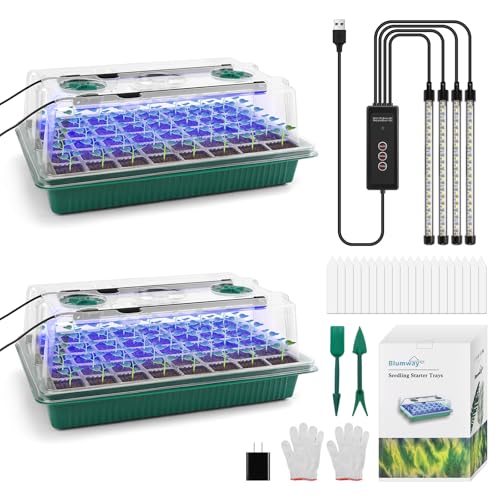
- Two trays with 80 total cells
- Integrated adjustable full-spectrum lights
- Humidity domes with ventilation control
Best For: Growing herbs indoors with limited natural light
Best Value Kit
Peat Pellet Herb Starter Trays

- Four 12-cell trays with bases and humidity domes
- Includes 50 expanding peat pellets
- Reusable plastic with drainage holes
Best For: All-in-one herb starting in small indoor or outdoor spaces
Best for Adjustable Humidity
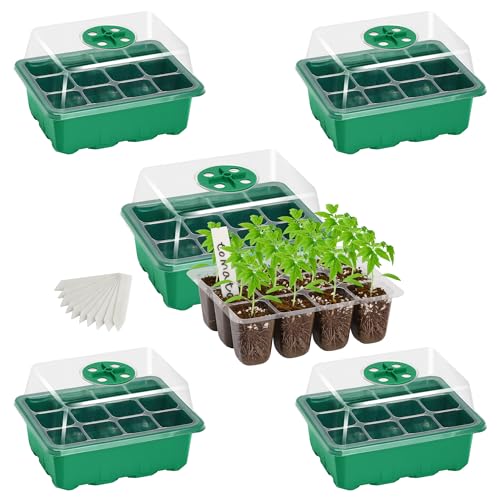
- Five trays provide 60 total cells
- Adjustable vents help regulate humidity and airflow
- Clear, heat-resistant design works with heat mats
Best For: Indoor gardeners starting larger herb seeds
Best Complete Setup
Self-Watering Herb Tray with Grow Light

- 60 cells with integrated LED grow lights
- Self-watering system with capillary mat
- Adjustable vents, timer, dome, labels, and tools included
Best For: Indoor beginners needing consistent light and moisture
Best Reusable Pick – Burpee SuperSeed 36-Cell Tray
For gardeners comparing seed starting trays for herbs, the Burpee SuperSeed stands out for its reusable silicone cells and organized 36-cell layout. Its pop-out design is especially useful when basil, parsley, or other herb seedlings are ready for transplanting.
Best For: Indoor herb growers who want an organized, reusable tray with easy seedling removal.
Pros:
- 36 flexible, food-grade silicone cells gently pop out for transplanting.
- Drainage slots and watering-tray channels help manage excess water.
- Alphanumeric rows and an included Plant-o-Gram help identify seedlings.
- Top-shelf dishwasher safe for easier cleaning and reuse.
Cons:
- It does not include a humidity dome or grow light.
- Its 36-cell capacity may be more than needed for a very small herb garden.
This is a strong choice when transplant convenience and repeat use matter more than having a bundled propagation setup.
Best Lighted Kit – 5-Pack LED Herb Starter Trays
If your indoor herbs need supplemental light, this five-pack of seed starting trays for herbs combines 12-cell inserts with a built-in 12-LED grow light for each tray. Clear domes, drainage holes, and compact dimensions make the set suitable for windowsills and other small growing spaces.
Best For: Indoor gardeners starting several small batches of herbs where supplemental lighting is useful.
Pros:
- Each tray includes a full-spectrum light with 12 LED beads.
- Vented domes help retain moisture while allowing airflow adjustments.
- Five trays provide 60 total planting spaces with drainage holes.
- Transparent inserts make moisture and early root development easier to observe.
Cons:
- The power adapter is not included.
- The included USB cable connects five trays, so setup requires access to a compatible 5V/2A adapter.
This kit offers a convenient all-in-one approach for indoor herb propagation, particularly where natural window light is limited.
Best Budget Multipack – Mr. Pen 120-Cell Tray Kit
For starting a large selection of herbs, the Mr. Pen kit supplies ten 12-cell trays, or 120 cells total. Each tray has a transparent vented dome and drainage holes, while the included shovel and scoop add basic tools for planting and transplanting.
Best For: Gardeners who want many herb-growing spaces and a bundled set of basic planting tools.
Pros:
- Ten trays provide 120 total cells for broad herb variety or succession planting.
- Transparent domes retain moisture and offer adjustable ventilation.
- Drain holes help reduce overwatering and root-rot risk.
- Includes a shovel and scoop for planting and transplanting.
Cons:
- It does not include base trays, grow lights, or a heat mat.
- The plastic construction may offer less flexibility than silicone cells during transplanting.
This high-capacity set makes sense for gardeners who value quantity and included hand tools over premium cell materials or integrated lighting.
Best Mini-Greenhouse Set – MIXC 120-Cell Starter Kit
The MIXC kit is a practical option for seed starting trays for herbs when humidity control is a priority. It includes ten 12-cell trays, watertight base trays, adjustable-vent domes, and labels, creating a self-contained mini-greenhouse setup for indoor or outdoor use.
Best For: Herb growers who want humidity domes, base trays, and ventilation control in one reusable set.
Pros:
- Ten trays provide 120 cells for starting multiple herb varieties.
- Adjustable vents help regulate humidity and temperature.
- Watertight base trays support a contained propagation setup.
- Includes ten humidity domes and ten plant labels.
Cons:
- No grow lights or planting tools are included.
- The many separate components may require more setup and storage space.
Choose this set if you want a reusable, portable propagation system with moisture control rather than built-in lighting or flexible transplant cells.
Best Bulk Value – 144-Cell Herb Seed Trays
For gardeners starting many varieties at once, these seed starting trays for herbs provide 144 cells across 24 compact trays. The 1.5-inch-square, 2.25-inch-deep cells support root development, while drainage slits help manage excess water during germination.
Best For: Growing large batches of herbs, flowers, vegetables, or succulents in an organized setup.
Pros:
- 144 cells provide substantial capacity for succession planting or multiple varieties.
- Deep cells are designed to encourage healthy root development.
- Drainage slits help prevent overwatering.
- Includes five plant stakes for labeling seedlings.
Cons:
- Does not include a humidity dome or grow light.
- The individual six-cell trays may require a separate bottom tray for easier handling and watering.
This is a practical high-volume option when quantity and flexibility matter most. Its reusable construction and included stakes make it well suited to gardeners who start herbs regularly and want a straightforward tray system.
Best Windowsill Pick – Burpee SuperSeed 8-Cell Tray
This Burpee tray is a compact choice for seed starting trays for herbs when space is limited. Its eight extra-large silicone cells fit a windowsill, and the flexible cells pop seedlings out gently when it is time to transplant.
Best For: Indoor herb growing on a windowsill or other small, bright growing area.
Pros:
- Eight extra-large cells give individual seedlings more room than smaller-cell trays.
- Flexible food-grade silicone cells simplify transplanting.
- Molded drainage slots and watering channels help manage excess moisture.
- Top-shelf dishwasher safe for convenient cleaning and reuse.
Cons:
- Eight cells provide less capacity than multi-tray sets.
- It does not include a grow light or humidity dome.
Choose this tray for a tidy, low-capacity setup rather than a large propagation project. Its windowsill-friendly dimensions and flexible cells are especially useful when easy transplanting is a priority.
Best Complete Indoor Setup – 80-Cell Trays with Grow Lights
For indoor seed starting trays for herbs, this two-pack combines 80 cells with humidity domes and integrated full-spectrum grow lights. Adjustable brightness, lighting modes, timers, ventilation, and dome height give you more control over the early growing environment.
Best For: Starting herbs indoors where natural light is limited and humidity control is useful.
Pros:
- Two trays provide 80 cells for growing multiple seedlings.
- Full-spectrum lights offer three lighting modes, five brightness settings, and three timer settings.
- Higher domes, adjustable vents, and clear covers support monitoring and humidity adjustment.
- Deeper cells and drainage holes help support root growth and moisture management.
Cons:
- The grow-light setup requires USB power or the included plug-in adapter.
- Its larger, more feature-rich design takes more setup space than a basic tray.
- The notes do not specify whether the trays are dishwasher safe.
This is the most self-contained option of the three, particularly for indoor gardeners without dependable sunlight. It costs more in complexity than a basic tray, but the lighting, domes, and ventilation make environmental control much easier.
Best Value Kit – Peat Pellet Herb Starter Trays
This four-tray kit is a practical option if you want seed starting trays for herbs with the growing medium included. Its 12-cell trays, peat pellets, humidity domes, and base trays create a tidy setup for starting herbs indoors or outdoors.
Best For: Gardeners who want an all-in-one, peat-pellet-based setup for herbs, cuttings, flowers, or vegetables.
Pros:
- Includes four 12-cell trays, four bases, four humidity domes, and 50 peat pellets.
- Peat pellets expand in warm water, reducing the need to measure and add loose soil.
- Clear domes, adjustable airflow through the design, and drainage holes support a controlled starting environment.
- Thick plastic trays are designed for repeated use and easy cleaning.
Cons:
- The included peat pellet netting may need to be cut away before transplanting if roots outgrow it.
- Each tray has only 12 cells, so larger plantings may require using multiple trays.
Choose this set when convenience and included supplies matter most. It is especially useful for a windowsill or small indoor growing area, though the relatively small cell count may not suit high-volume herb propagation.
Best for Adjustable Humidity – Clear 12-Cell Herb Trays
These seed starting trays for herbs are a straightforward choice for gardeners who want visibility and control. The clear trays make it easier to monitor seedlings, while adjustable vents let you fine-tune humidity and airflow during germination.
Best For: Indoor gardeners starting larger herb seeds or using a heat mat.
Pros:
- Five 12-cell trays provide 60 total cells for multiple herb varieties.
- Clear plastic helps you observe seedlings without disturbing them.
- Adjustable vents support control over humidity and temperature.
- Heat-resistant construction is designed for use with a heat mat, and plant labels are included.
Cons:
- The kit is intended for indoor use, according to the supplied details.
- It does not include seeds or growing medium.
- The 1.5-inch cells may be less suitable for very small seeds than for larger seeds.
This five-pack offers a useful balance of capacity and control for an indoor herb-starting station. Its vented domes and clear construction are particularly helpful when you want to check growth and adjust conditions without removing the cover.
Best Complete Setup – Self-Watering Herb Tray with Grow Light
This self-watering kit is a strong choice among seed starting trays for herbs when indoor light and moisture consistency are priorities. It combines 60 cells with LED grow lights, a capillary mat, adjustable vents, and a humidity dome for a more complete germination setup.
Best For: Beginners and indoor herb growers who want integrated lighting and self-watering support.
Pros:
- Includes a 60-cell tray, base tray, capillary mat, support stand, dome, vents, labels, and gardening tools.
- Two LED strips use 56 high-efficiency beads per tray and include adjustable brightness and timer functions.
- The self-watering system is designed to provide consistent moisture while helping prevent overwatering or drying.
- Large drainage holes and adjustable vents support airflow and moisture management.
Cons:
- The larger 16.6-by-11-inch footprint requires more indoor space than compact trays.
- Its integrated light and watering components make it a more involved setup than a basic tray.
- It is designed for indoor use.
If you want one system for lighting, humidity, and watering, this kit offers the most comprehensive feature set of the three. It is a practical fit for herb growing in spaces where natural sunlight is limited, provided you have room for its elevated tray design.
How We Picked the Best Seed Starting Trays for Herbs
We focused on tray capacity, cell size, drainage, humidity control, durability, and ease of transplanting. We also included different formats: reusable trays, multi-pack kits, peat-pellet sets, self-watering designs, windowsill trays, and models with grow lights. Since herbs vary in root size and germination needs, the selection balances compact options for basil, thyme, and chives with larger cells for parsley, cilantro, and seedlings that need more time indoors.
For indoor growing, we also considered how easy each tray is to position near a window or under supplemental lighting. Features such as clear domes, sturdy bases, plant labels, and dishwasher-safe construction can make repeated seed-starting projects simpler.
Quick Comparison
| Best For | Look For |
|---|---|
| Small windowsill gardens | Compact trays with larger cells or a narrow footprint |
| Growing many varieties | High cell counts and separate compartments |
| New gardeners | Humidity dome, base tray, labels, and simple watering |
| Low-light rooms | Integrated grow lights or room for a light fixture |
| Repeated use | Thick reusable plastic and easy-to-clean components |
Key Buying Factors for Seed Starting Trays for Herbs
Cell Size and Capacity
Small cells maximize space but dry out quickly and can restrict roots if seedlings remain indoors too long. Larger cells are more forgiving for slow-growing herbs or plants that will be transplanted later. Choose capacity based on the number of varieties you plan to grow, not just the total number of cells.
Drainage and Water Control
Drainage holes are essential for preventing saturated soil and root problems. A base tray makes bottom watering easier, while self-watering designs can reduce daily monitoring. Regardless of the format, avoid leaving herb seedlings in standing water.
Humidity and Ventilation
A clear dome helps maintain moisture during germination, especially for seeds that need consistent humidity. Once seedlings emerge, open vents or remove the dome gradually to improve airflow and reduce fungal growth.
Light and Placement
A bright south-facing window may work for some herbs, but seedlings often become leggy without enough direct light. Trays with integrated LEDs are convenient for compact setups; otherwise, leave enough room to position a grow light close above the canopy.
Reusable Construction
If you start seeds every season, reusable trays can provide better long-term value. Look for sturdy cell inserts, washable bases, and designs that can be cleaned thoroughly between plantings to reduce the risk of carrying over plant diseases.
Who Should Buy Which Seed Starting Trays for Herbs?
Choose a compact windowsill tray if you are growing a few culinary herbs in a small apartment. A high-capacity multi-pack is better for gardeners starting several varieties or successive batches. Beginners should prioritize a complete kit with a dome, base, labels, or peat pellets because it reduces the number of separate supplies required.
For dim rooms, select a tray with a grow light or pair a standard tray with a dependable adjustable light. Gardeners who want to reuse their setup should favor durable, washable trays, while anyone planning short-term transplanting can save space with smaller cells and simpler designs. Whichever option you choose, match the tray to your available light, watering routine, and intended transplant date.