Starting seeds indoors gives you more control over timing, moisture, temperature, and light—especially when outdoor conditions are unreliable. The right tray can make that process cleaner and more consistent, whether you are raising a few herbs or dozens of vegetable seedlings.
We compared ten seed-starting options with different cell counts, tray depths, humidity controls, watering systems, and lighting features. This guide explains which designs suit small spaces, high-volume planting, repeat use, and year-round indoor growing.
Best 10 Seed Starting Trays for Year Round Growing Picks for 2026
Best Adjustable-Ventilation Set
5-Pack 40-Cell Seed Starter Trays

- 200 total cells across five trays
- Adjustable vents and clear humidity domes
- Drainage holes for easier moisture management
Best For: High-volume seed starting and propagation
Best Space-Saving Kit
MIXC 5-Pack Mini Propagator Trays
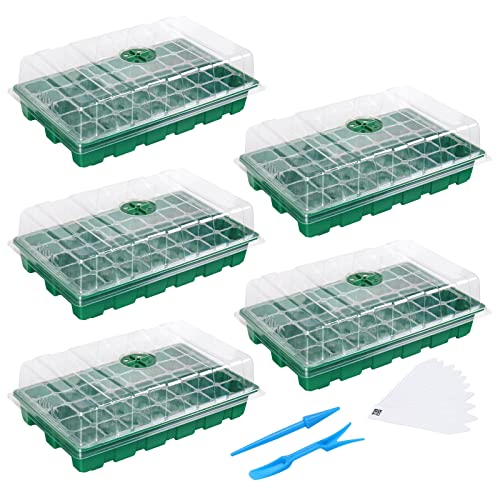
- Five 40-cell trays provide 200 cells
- Stackable bases conserve operating space
- Includes vents, labels, and garden tools
Best For: Compact indoor seed starting with small seeds
Best for Organized Batches
10-Pack 12-Cell Seed Starter Trays

- Ten separate trays total 120 cells
- Four vent holes per humidity dome
- Includes bases, labels, and tools
Best For: Separating varieties and planting schedules
Best Reusable Design

- Flexible cells simplify seedling removal
- Watering channels improve moisture handling
- Reusable and top-shelf dishwasher safe
Best For: Indoor growers focused on gentle transplanting
Best All-in-One Kit
Large Trays with Grow Lights and Heat Mat
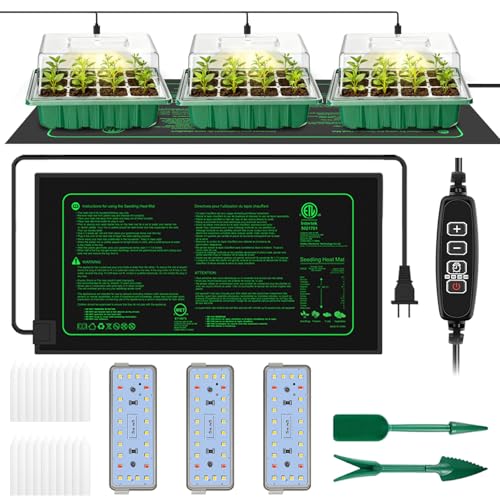
- Includes three trays, grow lights, heat mat, and controller
- Heat mat targets approximately 70°F to 85°F
- Large cells suit vegetables, flowers, succulents, and cuttings
Best For: Indoor gardeners seeking a complete year-round propagation setup
Best Deep-Cell Value

- Five-pack supplies 270 total planting cells
- Deep 2.8-inch cells support longer roots
- Thick plastic is designed for repeated use
Best For: Batch seed starting with separate lights and temperature control
Best for Hydroponic Flats

- Ten trays provide ample capacity for growing cycles
- No-drain design retains runoff and supports hydroponics
- Fits compatible 20-by-10-inch grow pads and micro-mats
Best For: Microgreens, wheatgrass, seedlings, and hydroponic flat growing
High-Volume Pick
Mr. Pen 350-Cell Seed Starter Tray Kit

- Five trays provide 350 cells total
- Reusable plastic resists deformation
- Vented domes help manage humidity
Best For: Large indoor batches of herbs, flowers, and vegetables
Versatile Starter Set
VIVOSUN 72-Cell Seed Starter Trays

- Six trays provide 72 cells total
- Vented domes and drainage holes aid moisture control
- Includes tools, labels, and base trays
Best For: Beginners and routine indoor seed starting
All-in-One Indoor System
120-Cell Self-Watering Tray with Grow Light

- Two trays provide 120 cells total
- Self-watering system supports consistent moisture
- Adjustable LED lighting includes timer controls
Best For: Indoor, year-round growing with supplemental light
Best Adjustable-Ventilation Set – 5-Pack 40-Cell Seed Starter Trays
For gardeners comparing seed starting trays for year round growing, this five-pack offers 200 total cells, clear humidity domes, and adjustable vents. The durable plastic construction and drainage holes make it a practical option for starting seeds, propagating cuttings, or nurturing young plants indoors or in a greenhouse.
Best For: Gardeners who want a high-capacity, reusable-style setup with adjustable humidity control for multiple planting projects.
Pros:
- Includes five 40-cell trays for 200 total growing spaces.
- Adjustable dome vents help regulate airflow and humidity.
- Drainage holes and clear domes support easier watering and monitoring.
- Attached stickers help create a tighter dome-to-base fit.
Cons:
- The 40-cell layout may be more capacity than needed for a small planting project.
- Plastic trays are listed at about 1.85 inches in height, limiting space for larger seedlings.
Gardzen’s main advantage is its combination of high capacity and ventilation control. It is a strong fit when you want to organize many seedlings while keeping the growing environment visible and adjustable.
Best Space-Saving Kit – MIXC 5-Pack Mini Propagator Trays
If you need seed starting trays for year round growing in a limited space, the MIXC kit adds stackable bottom trays and compact 40-cell units. Transparent plastic, adjustable dome vents, labels, and included garden tools make it suited to organized indoor or outdoor seed starting.
Best For: Indoor growers who want a compact, stackable system for small seeds and multiple planting batches.
Pros:
- Five trays provide 200 cells in total.
- Stackable bottom trays help save space before germination.
- Adjustable vents allow control over temperature and humidity.
- Includes two garden tools and 10 plant labels.
Cons:
- The 1.5-by-1.5-by-2-inch cells are intended for small seeds.
- The compact cells may require earlier transplanting for vigorous seedlings.
The MIXC kit stands out for its space-conscious design and included accessories. Its small cells are best used for organized batches of herbs, vegetables, flowers, or other seeds that do not need a large starting volume.
Best for Organized Batches – 10-Pack 12-Cell Seed Starter Trays
This 10-pack is a flexible choice for seed starting trays for year round growing because each unit is separate. The 12-cell trays can be assigned to different vegetables, herbs, or flowers, while adjustable four-hole vents, drainage holes, and clear domes help manage individual growing groups.
Best For: Gardeners who prefer separating varieties or sowing schedules into small, independently managed trays.
Pros:
- Ten individual trays provide 120 total cells.
- Four ventilation holes per dome support adjustable airflow and moisture.
- Drainage holes and base trays help contain excess water.
- Includes 20 labels and two gardening tools.
Cons:
- Each tray has only 12 cells, so it offers less capacity per unit than 40-cell designs.
- The small 7.1-by-5.5-inch footprint may require more shelf organization for larger planting plans.
Its individual-tray format makes this kit especially convenient for staggered sowing and variety tracking. It also works well when you want to move or isolate small batches without disturbing the rest of your seedlings.
Best Reusable Design – Burpee SuperSeed 36-Cell Tray
For gardeners seeking seed starting trays for year round growing with easier transplanting, the Burpee SuperSeed uses 36 flexible silicone cells. Its drainage and watering channels, labeled rows, side handles, and pop-out design make it a practical indoor tray for vegetables, flowers, and herbs.
Best For: Indoor gardeners who prioritize gentle transplanting and a tray designed for cleaning and reuse.
Pros:
- Flexible cells pop out to help reduce root disturbance during transplanting.
- Molded drainage slots and watering channels support aeration and moisture control.
- Alphanumeric rows and a Plant-o-Gram diagram help identify seedlings.
- Easy to clean, reusable, and top-shelf dishwasher safe.
Cons:
- One tray provides 36 cells, less capacity than the multi-pack options.
- It is listed for indoor use, offering less stated versatility for outdoor setups.
The SuperSeed is the most transplant-focused option in this group. Its flexible silicone cells and water-management features make it appealing for gardeners who plan to reuse one quality tray across successive growing seasons.
Best All-in-One Kit – Large Trays with Grow Lights and Heat Mat
For year-round growing, this three-pack seed-starting kit combines 36 extra-large cells with grow lights, humidity domes, and a heat mat. The temperature controller and indoor design make it a practical choice when you need more control over germination during colder months or in low-light spaces.
Best For: Indoor gardeners who want an integrated setup for starting vegetables, flowers, succulents, and cuttings.
Pros:
- Includes trays, grow lights, heat mat, controller, labels, and tools.
- Heat mat is designed to maintain approximately 70°F to 85°F.
- Extra-large 1.96-inch-square cells provide 1.85 inches of depth.
- Humidity domes and drainage trays help support controlled moisture management.
Cons:
- Designed for indoor use only.
- More equipment than needed for gardeners who already own lights or a heat mat.
This is the most complete option in the group for maintaining a consistent indoor propagation environment. Its added components improve flexibility for year-round growing, though the larger kit may take more setup space.
Best Deep-Cell Value – Reusable 54-Cell Plug Trays
These five-pack plug trays offer 54 deep cells for gardeners who want to start many plants in a compact format. Their 2.8-inch depth is useful for seedlings with longer roots, while the thick plastic construction supports repeated use in indoor gardens, greenhouses, or hydroponic setups.
Best For: Gardeners starting larger batches of seedlings, herbs, lettuce, microgreens, or small plants without built-in lighting or heat.
Pros:
- Five reusable trays provide substantial planting capacity.
- Each tray has 54 cells and a 2.8-inch depth.
- Thick plastic construction is designed for durability and reuse.
- Suitable for seed starting, hydroponics, indoor gardening, and greenhouses.
Cons:
- Does not include grow lights, a heat mat, or humidity domes.
- The high cell count may be less convenient for very large individual plants.
For year-round growing, these trays are a strong basic foundation when you already have environmental controls in place. The deep cells and five-tray quantity emphasize capacity and root room rather than an all-in-one system.
Best for Hydroponic Flats – Large No-Drain Grow Trays
These ten large trays are designed without drain holes, making them useful as drip trays or for hydroponic growing media. Their broad 20-by-10-inch bottom footprint accommodates compatible grow pads and mats, giving year-round growers a flexible base for microgreens, wheatgrass, seedlings, and indoor cultivation.
Best For: Indoor growers using hydroponic pads, micro-mats, microgreens, wheatgrass, or trays that need to retain runoff.
Pros:
- Ten trays offer strong quantity for repeated sowing cycles.
- No-drain design works for drip collection and hydroponic growing.
- Accommodates 20-by-10-inch grow pads and micro-mats.
- Suitable for seedlings, microgreens, wheatgrass, greenhouses, and indoor gardening.
Cons:
- No drain holes require careful watering to avoid excess moisture.
- Does not include cells, lights, a heat mat, or growing media.
- Its flat format is less suited to separating many individual seedlings.
This is a practical choice for year-round growing systems built around hydroponic mats or flat crops. Choose it when water retention and tray quantity matter more than individual cell organization.
High-Volume Pick – Mr. Pen 350-Cell Seed Starter Tray Kit
For gardeners who need plenty of capacity, this Mr. Pen kit is a practical choice among seed starting trays for year round growing. Its five reusable trays provide 350 cells in total, while the clear, vented humidity domes help maintain warmth and moisture for germination.
Best For: Starting large batches of flowers, vegetables, herbs, and other plants indoors.
Pros:
- Includes five trays with 350 cells total.
- Reusable plastic is designed to resist deformation.
- Adjustable dome vents help control moisture and temperature.
- Transparent lids create a mini greenhouse effect.
Cons:
- The high cell count may be more capacity than small-space gardeners need.
- Listed for indoor use, so outdoor growing may require additional protection.
Choose this kit when organization and quantity matter most. It offers straightforward humidity control and substantial planting capacity, making it well suited to planned indoor seed-starting projects.
Versatile Starter Set – VIVOSUN 72-Cell Seed Starter Trays
The VIVOSUN kit balances manageable capacity with useful accessories, making it a flexible option among seed starting trays for year round growing. Six 12-cell trays come with base trays, humidity domes, vents, drainage holes, labels, and garden tools for a coordinated indoor setup.
Best For: Beginners and gardeners who want reusable trays with transplant-friendly accessories.
Pros:
- Six trays provide 72 cells in total.
- Adjustable vents and drainage holes support moisture control.
- Compatible with a heat mat operating from 0–120°F.
- Includes labels, garden tools, base trays, and humidity domes.
Cons:
- Each tray has only 12 cells, so larger projects may require more handling.
- The listed capacity is smaller than high-volume multi-tray kits.
This is a useful middle-ground kit for organized indoor propagation. Its reusable construction and included accessories simplify the process from germination through transplanting into beds, raised beds, or containers.
All-in-One Indoor System – 120-Cell Self-Watering Tray with Grow Light
For indoor growers seeking more automation, this self-watering kit combines propagation trays, capillary mats, humidity domes, and LED lighting. It stands out among seed starting trays for year round growing by supporting consistent moisture and adjustable supplemental light in one setup.
Best For: Indoor seed starting when self-watering and built-in lighting are priorities.
Pros:
- Provides 120 cells across two 60-cell trays.
- Self-watering design helps reduce drying and overwatering.
- Includes four LED strips with adjustable brightness and a timer.
- Vented domes, enlarged drainage holes, and capillary mats support seedling care.
Cons:
- Its lighting system and accessories make it more involved than a basic tray.
- The system is listed for indoor use and requires space for its 16.6-inch-wide setup.
This kit is the strongest fit for growers building a dedicated indoor station. The combination of moisture management, ventilation, and adjustable LED lighting can make year-round propagation more convenient, particularly for beginners or larger projects.
How We Picked the Best Seed Starting Trays for Year Round Growing
We evaluated the selected kits by looking at the features that most affect germination and transplanting: cell size and depth, drainage, humidity control, tray durability, watering convenience, included lighting or heat support, and overall capacity. Reusable construction matters for gardeners who start multiple crops each year, while included domes and bases can make a basic setup easier for beginners.
Because the needs of a windowsill herb grower differ from those of a serious indoor gardener, we included compact cell trays, high-capacity multipacks, deep plug trays, self-watering systems, and kits with grow lights or heat mats.
Quick Comparison
| Best For | Look For |
|---|---|
| Beginners | Complete kits with bases, domes, and clear instructions |
| Many seedlings | High cell counts or multipacks with consistent sizing |
| Large-rooted plants | Deep cells that reduce root crowding |
| Year-round indoor growing | Adjustable humidity, dependable drainage, and supplemental light |
| Repeat use | Thick, washable trays that resist cracking |
Key Buying Factors for Seed Starting Trays for Year-Round Growing
Cell Size and Depth
Small cells conserve mix and work well for herbs, lettuce, flowers, and early-stage seedlings. Larger or deeper cells are better for tomatoes, peppers, squash, and plants that need more time before transplanting. Check that the cell dimensions match your preferred potting mix and transplant schedule.
Drainage and Water Management
Drainage holes help prevent saturated roots, but the tray should sit over a leak-resistant base. Self-watering designs can reduce daily maintenance, although they still require monitoring so the growing medium does not remain waterlogged. Trays without drainage holes are best used as outer catch trays unless you control watering carefully.
Humidity, Heat, and Light
Clear domes retain moisture during germination and are especially helpful in dry indoor rooms. Adjustable vents make it easier to reduce condensation once seedlings emerge. Heat mats can improve germination for warm-season crops, while grow lights are often essential for strong, compact growth during winter or in rooms with limited sunlight.
Durability and Cleanup
Thin plastic may be inexpensive but can deform during handling. If you plan to grow from seed every season, choose sturdy trays that can be emptied, washed, and disinfected. Removable inserts and separate bases also make transplanting and cleanup easier.
Who Should Buy Which Seed Starting Trays for Year Round Growing?
- New indoor gardeners: Choose a complete kit with cells, a base, and a vented humidity dome.
- Gardeners growing several varieties: Pick a multipack or high-cell-count set so crops can be started on the same schedule.
- Tomato, pepper, and flower growers: Favor deeper cells and adjustable humidity rather than the highest cell count alone.
- Winter growers: Select a setup with a grow light, heat mat, or compatibility with both, depending on the crops.
- Experienced, repeat users: Invest in thick reusable trays with reliable drainage and easy-to-clean surfaces.
The best Seed Starting Trays for Year Round Growing are the ones that match your crop size, available light, watering habits, and planting volume. Prioritize controllable moisture and adequate light over extra cells you will not use.