Starting seeds indoors is easier when each variety has the right amount of space, moisture, and airflow. The best seed starting trays help maintain consistent conditions while making transplanting less stressful.
We compared 10 popular options across cell count, dome design, drainage, reusability, and overall practicality so you can choose a setup that fits your growing space and planting plans.
Best 10 Seed Starting Trays Picks for 2026
High-Capacity Pick
Gardzen 70-Cell Seed Starter Trays

- Five trays provide 350 cells total
- Includes bases and transparent domes
- Drainage holes support water management
Best For: Starting large batches of seeds
Adjustable-Vent Value
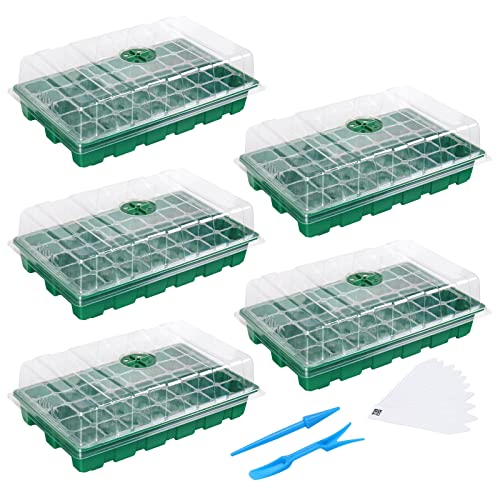
- Five trays provide 200 cells total
- Adjustable vents regulate humidity
- Includes tools and plant labels
Best For: Small seeds and compact growing spaces
Flexible-Spacing Choice
Gardzen 15-Cell Seed Starter Trays
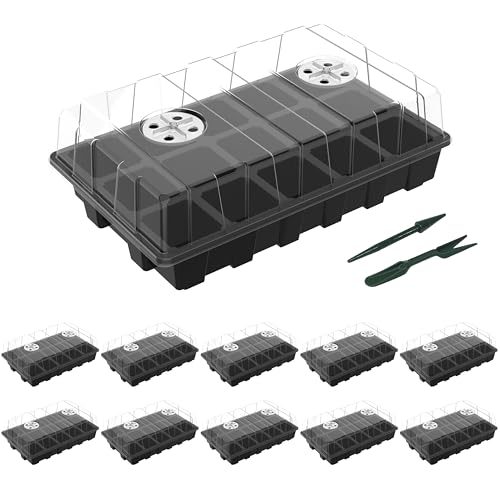
- Five trays provide 150 cells total
- Roomier 15-cell tray layout
- Vented dome design supports airflow control
Best For: Larger seedlings and propagation projects
Bulk Starter Set
MIXC 12-Cell Seed Starter Trays

- Ten trays provide 120 cells total
- Includes domes, bases, and labels
- Adjustable vents and drainage holes
Best For: Multiple indoor or outdoor planting batches
Best Reusable Tray

- Flexible silicone cells ease transplanting
- Watering tray helps manage excess moisture
- Reusable and top-shelf dishwasher safe
Best For: Organized indoor seed starting and gentle transplanting
Best Starter Kit

- Provides 120 cells across 10 trays
- Includes domes, bases, labels, and tools
- Adjustable vents support moisture control
Best For: Beginners and gardeners starting multiple seed varieties
Best High-Capacity Set

- Offers 400 cells across 10 kits
- Includes clear domes and base trays
- Designed for seeds, cuttings, and young plants
Best For: Large-batch propagation and greenhouse growing
Best for Organized Seedling Starts
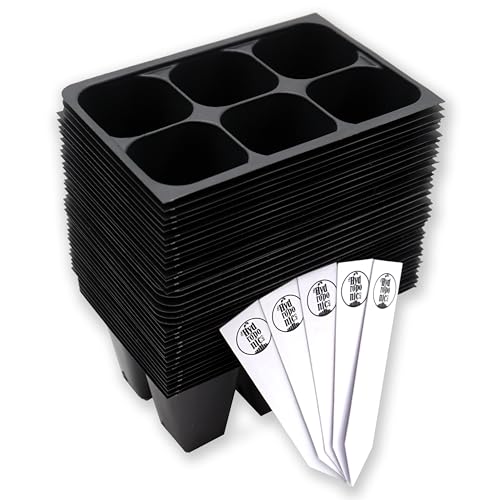
- 216 cells across 36 six-cell trays
- Deep cells with drainage slits
- Includes five plant stakes
Best For: Batch-starting flowers, herbs, succulents, and vegetables
Best Complete Kit
Mr. Pen 400-Cell Seed Starter Trays

- Ten trays with 400 total cells
- Includes bases and vented domes
- Tools included for sowing and transplanting
Best For: Home gardens, classrooms, and greenhouse projects
Best for Microgreens and Hydroponics
Large No-Drain Seed Starting Trays

- Ten large reusable plastic trays
- No drain holes for hydroponic use
- Fits 20-by-10-inch grow pads
Best For: Microgreens, wheatgrass, hydroponics, and drip-tray use
High-Capacity Pick – Gardzen 70-Cell Seed Starter Trays
For gardeners starting many seedlings at once, these seed starting trays provide five 70-cell inserts, each with a drainage base and clear dome. The drainage holes help limit overwatering, while the transparent covers make it easy to monitor growth.
Best For: Starting large batches of vegetable, flower, and herb seeds.
Pros:
- Includes five trays with 350 cells total.
- Each set includes a base tray and transparent dome.
- Drainage holes help manage excess water.
- Can also be used for cuttings and young plants.
Cons:
- The 70-cell layout offers less room per seedling than lower-cell-count trays.
- The supplied details do not mention adjustable dome vents.
This is a practical high-volume option when maximizing the number of seedlings matters most. Its complete tray, base, and dome setup also makes it convenient for organized indoor or outdoor propagation.
Adjustable-Vent Value – MIXC 40-Cell Seed Starter Kit
This MIXC kit is a compact choice for seed starting trays, with five cell trays, bottom trays, and humidity domes. Adjustable dome vents let you regulate the growing environment, and the stackable bases can help save space before germination.
Best For: Small seeds and gardeners who want adjustable humidity control in a space-conscious kit.
Pros:
- Includes five 40-cell trays for 200 cells total.
- Adjustable vents help control temperature and humidity.
- Clear plastic makes seedlings easy to observe.
- Includes two garden tools and 10 plant labels.
Cons:
- The 1.5-by-1.5-by-2-inch cells are intended for small seeds.
- Each tray has fewer cells than the higher-capacity options listed here.
With ventilation controls, labels, and tools included, this is a well-rounded starter kit for keeping a modest propagation project organized. Its stackable bottom trays are useful where storage space is limited.
Flexible-Spacing Choice – Gardzen 15-Cell Seed Starter Trays
These Gardzen seed starting trays use 15 larger cells per tray, giving seedlings more room than dense multi-cell formats. The kit includes clear domes, drainage holes, and upgraded versions with two adjustable air vents for managing ventilation.
Best For: Flower, herb, and vegetable seedlings that benefit from a roomier cell layout.
Pros:
- Five 15-cell trays provide 150 cells total.
- Adjustable top vents are designed to improve airflow control.
- Drainage holes help prevent overwatering.
- Suitable for seeds, cuttings, and young plants.
Cons:
- Some inventory may include lids without vents due to stock turnover.
- The lower cell count uses more space per seedling.
This kit suits gardeners who prefer fewer, roomier compartments and want the option to adjust ventilation. Before ordering, check the current lid configuration if vented domes are essential to your setup.
Bulk Starter Set – MIXC 12-Cell Seed Starter Trays
For repeated planting projects, this MIXC set supplies 10 seed starting trays with matching watertight bases, humidity domes, and labels. Adjustable vents and drainage holes help you manage the mini-greenhouse environment while supporting proper water flow.
Best For: Gardeners who want a reusable 10-tray kit for indoor or outdoor seed starting.
Pros:
- Ten trays provide 120 cells total.
- Includes 10 bases, 10 humidity domes, and 10 plant labels.
- Adjustable vents allow humidity and temperature regulation.
- Durable plastic trays are described as reusable and portable.
Cons:
- The 12-cell design offers less total capacity than the 40- and 70-cell trays.
- The supplied details do not specify individual cell dimensions.
This is a convenient bulk option for gardeners who prefer several smaller trays rather than a few high-density inserts. Its complete accessories and reusable construction make it suitable for maintaining multiple planting batches.
Best Reusable Tray – Burpee SuperSeed 36-Cell Tray
For gardeners who want seed starting trays they can use season after season, the Burpee SuperSeed combines 36 flexible silicone cells with a watering tray designed to improve drainage and simplify transplanting. Alphanumeric labels and the included Plant-o-Gram help keep multiple seedlings organized.
Best For: Indoor gardeners who prioritize reusable materials, organized seedling identification, and gentle transplanting.
Pros:
- Flexible food-grade silicone cells pop out seedlings with less root disturbance.
- Corner drainage slots and deep watering-tray channels help manage excess water.
- Reusable, easy to clean, and top-shelf dishwasher safe.
- Rows are labeled alphanumerically and include a Plant-o-Gram diagram.
Cons:
- With 36 cells, it offers less total capacity than the multi-pack options.
- It does not include humidity domes.
This is a practical choice for repeat indoor sowing when easy transplanting matters more than maximum volume. Its reusable silicone construction and built-in organization make it especially appealing for gardeners starting a manageable selection of vegetables, flowers, or herbs.
Best Starter Kit – 10-Pack 120-Cell Seed Trays
This 10-pack gives gardeners 120 total cells across separate 12-cell seed starting trays, making it easy to divide varieties into manageable growing groups. Clear humidity domes, adjustable vents, base trays, labels, and tools create a complete setup for indoor germination.
Best For: Beginners and gardeners starting many varieties who want individual covered trays and organized batch management.
Pros:
- Includes 10 trays, 10 domes, 10 base trays, 20 labels, and two gardening tools.
- Adjustable dome vents help manage airflow and moisture.
- Drainage holes and separate base trays support cleaner seed starting.
- Individual 12-cell trays make different varieties easier to manage separately.
Cons:
- The plastic construction may be less flexible for transplanting than silicone cells.
- Each tray has only 12 cells, so larger plantings require managing multiple units.
For the price-conscious gardener building a versatile propagation setup, this kit offers strong organization and useful coverage. The separate domes and base trays are particularly helpful when starting seeds on shelves, windowsills, or greenhouse racks.
Best High-Capacity Set – Gardzen 400-Cell Propagators
Gardeners needing substantial capacity may prefer these seed starting trays, which provide ten 40-cell propagator kits for 400 cells total. Each kit includes a clear dome and base, while drainage holes and adjustable ventilation support seed germination, cuttings, and young plants.
Best For: High-volume propagation, greenhouse projects, and gardeners raising seedlings or cuttings in larger batches.
Pros:
- Ten 40-cell kits provide 400 total growing cells.
- Clear domes make seedling development easy to monitor.
- Two top air vents allow adjustable ventilation on the upgraded design.
- Suitable for seeds, cuttings, and young plants.
Cons:
- Due to stock turnover, some kits may arrive with lids without vents.
- The larger 10-set may be excessive for small indoor growing projects.
- Plastic inserts may not offer the flexible removal of silicone cells.
This set stands out when cell count is the main priority. Its individual propagator format offers more structure than loose trays, while the domes and vents give growers useful control over the early growing environment.
Best for Organized Seedling Starts – 216-Cell Seed Starting Trays
These seed starting trays are a practical choice when you want many seedlings in a compact, organized setup. The 36 reusable trays provide 216 cells, with 1.5-inch square by 2.25-inch-deep cells, drainage slits, and five included plant stakes for labeling.
Best For: Growing flowers, herbs, succulents, and vegetables in batches indoors.
Pros:
- Includes 216 total cells across 36 six-cell trays.
- Deep cells are designed to support healthy root development.
- Drainage slits help reduce excess moisture.
- Reusable plastic construction and five plant stakes add practical value.
Cons:
- These trays do not include humidity domes or matching base trays.
- The individual six-cell format may require more handling than larger inserts.
This set suits gardeners who prioritize quantity, flexible grouping, and easy seedling labeling. It is especially useful for starting several plant varieties at once, provided you already have a suitable surface or watering setup.
Best Complete Kit – Mr. Pen 400-Cell Seed Starter Trays
For gardeners who want an all-in-one setup, this seed starting trays kit combines ten 40-cell trays with matching bases, vented humidity domes, and planting tools. The clear domes help retain warmth and humidity while allowing you to monitor seedlings as they grow.
Best For: Home gardens, classrooms, and greenhouse projects that need a complete germination setup.
Pros:
- Provides 400 cells across ten 40-cell trays.
- Includes bases and transparent, vented humidity domes.
- Comes with a dibber, widger, shovel, and scoop.
- Clear domes make growth monitoring easier.
Cons:
- The larger kit may be more than needed for a small number of seedlings.
- Its included components create more pieces to clean and store.
This is the strongest option for convenience because it supplies the trays, bases, domes, and basic planting tools together. Choose it if humidity control and transplanting accessories matter as much as cell capacity.
Best for Microgreens and Hydroponics – Large No-Drain Seed Starting Trays
These large seed starting trays are designed for gardeners who need open growing space rather than individual cells. The ten plastic trays have no drain holes, making them suitable for drip-tray use, hydroponic growing, microgreens, wheatgrass, and some seed-starting applications.
Best For: Microgreens, wheatgrass, hydroponic pads, and indoor growing setups that require trays without drainage holes.
Pros:
- Ten reusable trays provide a generous 20-by-10-inch bottom footprint.
- No drain holes suit hydroponic growing and drip-tray applications.
- Accommodates 20-by-10-inch hydroponic grow pads and micro-mats.
- Works for seedlings, microgreens, wheatgrass, soil, or hydroponic growing.
Cons:
- No drain holes can allow excess water to collect during conventional soil growing.
- The trays do not provide individual cells for separating seedlings.
This set is best viewed as a versatile flat-tray solution rather than a traditional cell-based starter system. It makes sense when you need broad, reusable surfaces for microgreens or controlled hydroponic watering.
How We Picked the Best Seed Starting Trays
We focused on the features that matter most during germination and early seedling growth: cell configuration, tray and dome construction, drainage, ventilation, reusability, and included accessories. We also considered how easily each system can support different crops, from compact herbs and flowers to larger vegetable seedlings.
Because gardening setups vary, this list includes high-capacity multi-packs, smaller reusable trays, humidity-dome kits, and simple open-bottom growing trays. Cell count was evaluated alongside usability rather than treated as the only measure of value.
Quick Comparison
| Best For | Look For | Why It Matters |
|---|---|---|
| Large planting plans | 200 to 400 total cells | Starts many plants at once |
| Mixed seed sizes | Several tray sizes or roomy cells | Accommodates different root systems |
| Humidity-sensitive germination | Vented clear domes | Retains moisture while allowing airflow |
| Repeated yearly use | Rigid, washable plastic | Reduces replacement costs and waste |
| Simple seedling propagation | Open trays or basic cell packs | Offers flexibility and fewer parts to manage |
Key Buying Factors for Seed Starting Trays
Cell Size and Count
Small cells maximize space for lettuce, herbs, flowers, and other young plants, but they dry out quickly and may restrict roots if seedlings remain inside too long. Larger cells are better for tomatoes, peppers, cucumbers, and plants that need extra root room. High-count kits are useful for serious spring planting, while smaller trays are easier to fit under lights or on a windowsill.
Drainage and Water Control
Drainage holes help prevent saturated soil and root rot, especially when trays are bottom-watered. Confirm that the kit includes a leak-catching base if it will be used indoors. Trays without drainage holes can work as outer reservoirs or grow trays, but they require careful watering and should not be confused with standard propagation inserts.
Humidity Domes and Ventilation
Clear domes help retain warmth and moisture while seeds germinate. Adjustable vents are especially useful because seedlings eventually need lower humidity and better airflow. Remove or open the dome as growth develops to reduce condensation and fungal problems.
Durability and Reuse
Thin plastic may be inexpensive but can crack during transplanting or cleaning. If you start seeds every year, choose sturdy trays that can be washed and disinfected. Reusable labels, plant stakes, and compatible base trays can also make a kit more convenient over time.
Who Should Buy Which Seed Starting Trays?
Choose a high-capacity multi-pack if you grow a large garden or start several varieties at once. A vented dome kit is a practical choice for beginners who want more control over moisture and germination conditions. Gardeners working with limited space should prioritize compact trays with manageable cell counts and dimensions. For annual reuse, select rigid trays with dependable drainage and easy-to-clean surfaces.
Before buying, measure the area under your grow light or on your windowsill, check whether the cells match your seed sizes, and confirm that the base trays and domes are included. The best Seed Starting Trays are the ones that provide enough capacity without making watering, labeling, or transplanting harder than necessary.