Healthy indoor plants need more than a bright-looking room. The right grow light delivers the usable spectrum, coverage, and schedule control plants need when natural sunlight is limited.
We’ve gathered 10 grow lights for indoor gardening, including clip-on lamps, bulbs, shelf strips, panels, and complete hydroponic systems, so you can match the light to your space and plants.
Best 10 Grow Lights for Indoor Gardening Picks for 2026
Best Adjustable Desk Light
bseah Full-Spectrum Grow Light
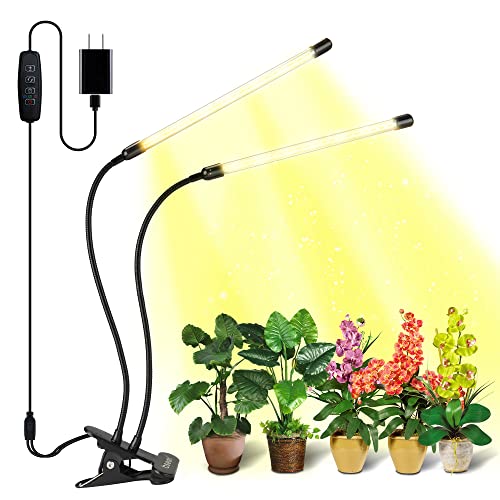
- Two full-spectrum LED tubes for tabletop plants
- 10 dimming levels and three lighting modes
- Automatic 3/9/12-hour daily timer
Best For: Small indoor potted plants and desktop gardens
Best Complete Hydroponic Kit
Ahopegarden 10-Pod Indoor Garden

- Integrated LED, reservoir, and water circulation
- 10 pods with adjustable 14.5-inch light post
- Vegetable and flower-and-fruit lighting modes
Best For: Countertop herbs, vegetables, flowers, and fruiting plants
Best for Plant Shelves

- Four modular flat panels for shelves and cabinets
- Full spectrum with 3000K, 5000K, and 660nm
- Five timer settings up to 20 hours
Best For: Organized under-shelf lighting for plant collections
Best Easy-Replacement Bulb
A19 Full-Spectrum Grow Light Bulbs

- Standard E26 base fits common fixtures
- 1000 lumens with 180-degree output
- Natural-looking 3500K full-spectrum light
Best For: Existing lamps and fixtures used for indoor plants
Best Shelf-Mounted Pick
16-Inch Six-Bar Grow Light Strips

- Six full-spectrum LED bars with 360 LEDs
- Tape, screws, and cable ties included
- Dimming plus 6/12/18-hour memory timer
Best For: Multi-level shelves and plant stands
Best Adjustable Clip-On Pick
Two-Pack Gooseneck Plant Lights

- Flexible 360-degree goosenecks with sturdy clips
- Ten dimming levels and separate light controls
- 4/8/12/18-hour cycle memory timer
Best For: Targeted tabletop plant lighting
Best Coverage Panel Set
Two-Pack Full-Spectrum LED Panels

- Two panels for stated 4-by-4-foot coverage
- White, blue, red, UV, and IR LEDs
- Hanging kit and six-foot cords included
Best For: Grow tents and broader indoor garden areas
Best Compact Halo Light
Adjustable Full-Spectrum Plant Light

- Three modes and 10 brightness levels
- 3-, 9-, and 12-hour timer cycles
- Installs in soil or on a base
Best For: Small indoor plants and tabletop displays
Best Desk Coverage
214-LED Full-Spectrum Plant Light

- 214 LEDs cover a broad full spectrum
- Six dimming levels and three timer settings
- Height adjusts from 10 to 26 inches
Best For: Seed starting and tabletop plant collections
Best for Multiple Plants
Five-Head Adjustable Tripod Grow Light

- Five independently controlled light heads
- 15- to 63-inch height range with 360-degree goosenecks
- Three modes, 10 brightness levels, and timer
Best For: Multiple plants and taller floor arrangements
Best Adjustable Desk Light – bseah Full-Spectrum Grow Light
If you need grow lights for indoor gardening without taking up much room, the bseah grow light offers a flexible desktop setup for potted plants. Its two LED tubes provide full-spectrum yellow-and-white light, while adjustable brightness, switch modes, and a recurring timer let you tailor the routine to different growth stages.
Best For: Indoor potted plants, small tabletop gardens, and growers who want adjustable lighting with automatic daily scheduling.
Pros:
- Full-spectrum LED lighting is designed to support germination, growth, flowering, and fruiting.
- Ten dimming levels and three switch modes provide useful lighting flexibility.
- Recurring 3-, 9-, or 12-hour timer can turn the light on and off automatically each day.
- Strong metal gooseneck, nonslip mat, USB power, and a stated 50,000-hour LED lifespan suit desktop use.
Cons:
- Its 10-watt output and two-tube design are better suited to smaller plant areas than large indoor gardens.
- It is not waterproof, so it should be kept away from splashes and wet growing environments.
Choose this model when compact placement and scheduling matter more than broad coverage. The flexible arm and dimmer make it easy to position over individual plants or a small cluster.
Best Complete Hydroponic Kit – Ahopegarden 10-Pod Indoor Garden
For a more hands-off approach to grow lights for indoor gardening, this 10-pod hydroponic system combines an overhead LED light with a water reservoir and circulation system. It is designed for countertop growing, with adjustable light height, a water-level window, and separate modes for vegetables or flowers and fruit.
Best For: Year-round countertop growing of herbs, vegetables, flowers, and some fruiting plants in a compact hydroponic setup.
Pros:
- Includes 10 growing stations, a 3-liter reservoir, baskets, sponges, labels, nutrients, and other starter accessories.
- Overhead full-spectrum LED has vegetable and flower-and-fruit modes.
- Light post adjusts up to 14.5 inches as plants grow.
- 16-hours-on/8-hours-off timer and water-level window simplify routine maintenance.
Cons:
- It is a complete hydroponic planter rather than a standalone light for existing pots or shelves.
- The supplied growing space is limited to 10 pods and a single level.
This is a practical choice if you want lighting, water circulation, and planting hardware in one countertop system. It requires more setup than a clip-on lamp but offers a more structured growing environment.
Best for Plant Shelves – FECiDA Flat Panel Grow Lights
These FECiDA panels are designed for growers who need grow lights for indoor gardening across shelves, cabinets, seed trays, or a small indoor greenhouse. The four flat panels use 192 LEDs each, connect in series or parallel, and include timer options from four to 20 hours for a cleaner, modular installation.
Best For: Multi-level plant shelves, propagation areas, seed trays, and indoor collections that need organized under-shelf lighting.
Pros:
- Four panels provide a modular setup for common plant shelves and cabinets.
- Each panel uses 192 LEDs and 12 watts of actual power, with 40 watts listed for the set.
- Full-spectrum lighting combines 3000K, 5000K, and 660nm wavelengths.
- Series and parallel connections, cable-management features, and five timer settings support tidy installations.
Cons:
- The panels require corded electric power and installation under a shelf, cabinet, or similar surface.
- The listed 12-month warranty is shorter than the stated LED lifespan of some competing options.
This four-panel set makes the most sense when coverage and cable organization are priorities. Its flat form factor is less convenient for a single tabletop plant but better suited to a planned shelf system.
Best Easy-Replacement Bulb – A19 Full-Spectrum Grow Light Bulbs
These A19 bulbs are a straightforward way to add grow lights for indoor gardening to an existing lamp or fixture. With standard E26 bases, 1000 lumens, and a natural-looking 3500K appearance, they provide plant-focused full-spectrum lighting without the purple color common to some grow bulbs.
Best For: Indoor plants that already have access to standard E26 sockets, including herbs, leafy greens, tomatoes, peppers, and cucumbers.
Pros:
- Standard E26 base fits common household fixtures, making installation simple.
- Full-spectrum output is intended for plants at different growth stages.
- 1000-lumen, 180-degree light output provides broad illumination from each bulb.
- Natural-looking 3500K color blends more easily into living spaces than purple or reddish bulbs.
Cons:
- These are bulbs only, so a suitable fixture and positioning are required.
- They do not provide an integrated timer or adjustable arm.
- Coverage depends on the fixture and distance from the plants.
Pick this two-bulb pack when you want the simplest upgrade to existing lighting hardware. It is especially useful for maintaining plants in rooms where appearance matters as much as supplemental light.
Best Shelf-Mounted Pick – 16-Inch Six-Bar Grow Light Strips
These six-bar strips are a practical choice among grow lights for indoor gardening when you need even illumination across a shelf, plant stand, or compact growing area. The full-spectrum LEDs combine warm white, cool white, and 660nm red light, while the dimmer and recurring timer add useful day-to-day control.
Best For: Shelves, plant stands, hydroponic setups, and other indoor spaces where several slim light bars can be installed together.
Pros:
- Six 16-inch bars use 360 LEDs and a 380–800nm spectrum.
- Includes tape, screws, and cable ties for three installation methods.
- Offers dimming and a 6/12/18-hour memory timer.
- The 95-inch power cord provides flexible placement options.
Cons:
- Requires a corded power connection.
- The bars are best suited to structured installations rather than quick repositioning.
Choose this set if you want to cover multiple shelf levels or a row of plants with a coordinated bar-light system. Its included mounting hardware and automatic timer make it especially convenient for a semi-permanent indoor garden.
Best Adjustable Clip-On Pick – Two-Pack Gooseneck Plant Lights
This clip-on model is a flexible option among grow lights for indoor gardening, particularly when plants sit on tables or in changing arrangements. Its adjustable goosenecks, separate light controls, multiple spectral modes, and ten dimming levels let you tailor coverage without installing fixed bars.
Best For: Tabletop plants, flowers, vegetables, fruits, and succulents that need adjustable, targeted lighting.
Pros:
- Full-spectrum lighting combines sunlight-white and red LEDs.
- 360-degree adjustable goosenecks help direct light where needed.
- Provides four timer choices: 4, 8, 12, or 18 hours.
- Ten brightness levels and separately controllable LED strips offer useful flexibility.
Cons:
- It is designed for indoor use and is not waterproof.
- Clamp mounting may be less suitable for large, fixed growing areas.
This is the better fit when convenience and repositioning matter more than covering a broad shelf with fixed bars. The sturdy clips and flexible necks make it easy to aim light at individual plants as they grow.
Best Coverage Panel Set – Two-Pack Full-Spectrum LED Panels
For larger indoor growing areas, these panels provide a more expansive format than strip or clip-on lights. Their full-spectrum design includes white, blue, red, UV, and IR LEDs, and the included suspension kit makes them suited to grow tents, greenhouses, and supplemental lighting setups.
Best For: Grow tents, greenhouse areas, seedlings, and indoor gardens needing broad panel coverage for vegetative and bloom stages.
Pros:
- Two panels are designed for coverage up to a stated 4-by-4-foot area.
- Full-spectrum output includes UV, IR, blue, and red LEDs.
- Thin aluminum panels are compact and designed for low-heat operation.
- Suspension hardware and six-foot power cords are included.
Cons:
- The panels are not water resistant.
- Hanging installation is less convenient for small tabletop plants.
- The stated manufacturer warranty is 90 days.
Consider this set when coverage and hanging installation are priorities. It offers a panel-based solution for small indoor grows and can also serve as supplemental side lighting in a grow tent.
Best Compact Halo Light – Adjustable Full-Spectrum Plant Light
If you need grow lights for indoor gardening in a compact setup, this 10-watt halo light offers adjustable height, three lighting modes, and touch-controlled dimming. Its pole reaches up to 26 inches and can be installed either in soil or on its included base.
Best For: Small indoor plants, tabletop displays, and gardeners who want a decorative, space-saving light with simple controls.
Pros:
- Three lighting modes and 10 brightness levels provide flexible illumination.
- Automatic 3-, 9-, or 12-hour timer cycles on and off daily after setup.
- Adjustable height and 90-degree pipe rotation help direct light toward plants.
Cons:
- The base needs to be pressed down by a flower pot for stability.
- It requires corded power and is not a wireless or battery-operated light.
- It is intended for indoor use and is not water resistant.
This is a practical choice when you want a small, adjustable plant light that also blends into a home space. Its compact coverage is better suited to individual plants or small arrangements than larger growing areas.
Best Desk Coverage – 214-LED Full-Spectrum Plant Light
For grow lights for indoor gardening that need broader tabletop coverage, this 25-watt LBW desk light uses 214 LEDs across a full-spectrum 380–780 nm range. Its 11-by-4.7-inch panel, adjustable height, and metal base make it suitable for seedlings and indoor plant groupings.
Best For: Seed starting, seedlings, and tabletop plant collections that need bright, uniform supplemental light.
Pros:
- 214 full-spectrum LEDs provide broad illumination designed to support photosynthesis.
- Six dimming levels and 3-, 6-, or 12-hour timer settings allow flexible scheduling.
- Height adjusts from 10 to 26 inches, with a sturdy metal base and anti-slip pad.
- Panel ventilation holes help with heat dissipation.
Cons:
- The tabletop design may be less suitable for floor plants or very large collections.
- It requires corded electric power.
- It is designed for indoor use and is not waterproof.
Choose this model if coverage and a stable desk setup matter more than a minimal footprint. The larger LED panel and multiple adjustment levels make it especially useful during seedling development.
Best for Multiple Plants – Five-Head Adjustable Tripod Grow Light
When grow lights for indoor gardening need to cover several plants or a larger area, this five-head floor lamp offers a 15- to 63-inch adjustable tripod and independently controlled LED heads. Red-blue, white, and mixed lighting modes combine with 10 brightness levels for flexible placement and plant care.
Best For: Multiple plants, taller floor arrangements, balconies, offices, and other spaces needing adjustable overhead coverage.
Pros:
- Five independently controlled heads can target different plants.
- Tripod height extends from 15 to 63 inches, while goosenecks rotate 360 degrees.
- Three spectrum modes and 10 brightness settings accommodate different growth stages.
- Automatic 4-, 8-, or 12-hour on/off timing reduces daily manual operation.
Cons:
- The floor-mounted tripod requires more space than a tabletop light.
- It uses corded power rather than a wireless setup.
- The supplied notes list a one-year manufacturer warranty but provide limited additional warranty detail.
This is the most flexible option for spreading light across several plants or adjusting coverage as plants grow. Its tall tripod and independently adjustable heads make it better suited to larger arrangements than compact desk lamps.
How We Picked the Best Grow Lights for Indoor Gardening
We focused on practical features that affect plant health and everyday usability: light coverage, adjustability, mounting options, timer controls, dimming, spectrum claims, and suitability for different plant sizes. The selection includes options for single houseplants, propagation shelves, herbs, seedlings, and larger grow areas.
Because product specifications and real-world needs vary, treat advertised wattage and coverage as starting points rather than guarantees. Positioning, plant type, distance, and daily exposure all influence results.
Quick Comparison
- Best for a single plant: A base-mounted or clip-on lamp offers targeted illumination without taking over a room.
- Best for shelves: Multi-bar strip lights spread light more evenly across rows of plants.
- Best for flexible placement: Bulbs work with compatible fixtures, while gooseneck lamps let you aim several light heads independently.
- Best for larger areas: Flat-panel lights and paired panels provide broader coverage for dense plant groups or grow tents.
- Best all-in-one option: A hydroponic growing system combines LED lighting with pod-based plant support.
Key Buying Factors for Grow Lights for Indoor Gardening
Coverage and Mounting
Measure the shelf, tabletop, or tent before buying. A narrow bar may suit one shelf, while a panel or multiple heads may be better for a wider canopy. Clip mounts, bases, tripods, and hanging panels each suit different layouts.
Light Spectrum and Intensity
Full-spectrum white light is a versatile choice for foliage, herbs, seedlings, and many common houseplants. Red and blue additions may support specific growth stages, but intensity and distance are just as important as color. Look for dimming or adjustable positioning so you can avoid stressing leaves.
Timers and Daily Operation
Built-in timers make consistent schedules easier and reduce the need to switch lights manually. Multiple timer settings are useful when growing plants with different light requirements. Check whether the timer repeats automatically after power interruptions.
Heat, Energy, and Noise
LEDs generally use less energy than older grow-light technologies, but high-output models can still produce noticeable heat. Leave ventilation around panels, especially in enclosed spaces, and check for fan noise if the light will sit near a desk or bedroom.
Adjustability and Durability
Flexible necks, adjustable stands, dimming levels, and movable light bars help maintain suitable distance as plants grow. Also consider cord length, control placement, stability, and whether the construction suits humid areas.
Who Should Buy Which Grow Lights for Indoor Gardening?
Apartment plant owners should prioritize compact clip-on or base-mounted lights that illuminate one or two plants with minimal setup. Indoor herb growers may prefer a shelf strip or hydroponic system with an integrated light and organized growing space. Seedling and propagation users should look for even coverage, adjustable height, and a repeatable timer schedule.
Collectors with several shelves will usually get better results from multi-bar strips or multiple targeted heads than from one small lamp. Grow-tent users should compare actual coverage, output, heat management, and mounting hardware before choosing a panel. When in doubt, select a dimmable model with flexible placement; it can adapt as your plants and setup change.