The best dough sheeters make it easier to roll consistent pastry, pizza, cookie, and fondant dough without the uneven thickness and physical strain of hand rolling. The right choice depends on your workspace, batch size, preferred dough types, and whether you want manual control or powered operation.
This roundup compares 10 dough sheeters ranging from compact folding models for home kitchens to wider commercial machines designed for frequent bakery or pizzeria use.
Best 10 Dough Sheeters Picks for 2026
Best Foldable Manual Pick
Stainless Steel Folding Dough Sheeter

- Foldable tabletop design saves storage space
- Adjustable 2–25 mm thickness range
- Manual roller suits pizza and pastry dough
Best For: Home bakers and compact kitchens
Best Adjustable Manual Option

- Wide 40.6-by-22.8-inch working platform
- Foldable frame supports compact storage
- Manual, electricity-free operation with versatile dough use
Best For: Small bakeries and large-batch home baking
Best Commercial Electric Pick
VEVOR Reversible Dough Sheeter

- Powered 15.7-inch conveyor system
- Reversible operation avoids lifting dough
- 0–35 mm thickness adjustment
Best For: Commercial bakeries and pastry kitchens
Best Compact Countertop Pick
15.5-Inch Folding Dough Sheeter

- 15.5-inch working board for countertop use
- Non-slip feet support stable rolling
- Detachable design enables easier cleaning
Best For: Home kitchens, cafes, and small food shops
Best Compact Manual Pick
VEVOR 11-Inch Manual Dough Sheeter

- Manual, electricity-free operation
- 0–0.5-inch adjustable thickness
- Removable parts and stainless-steel body
Best For: Home bakers and small commercial kitchens
Best Folding Design
15.5-Inch Folding Manual Dough Sheeter

- Folds for easier storage
- 55 settings from 0–27 mm
- Food-grade stainless-steel dough-contact parts
Best For: Space-limited home kitchens and small catering operations
Best for Fine Adjustments
40.9-Inch Folding Dough Sheeter

- 50 settings with 0.5 mm precision
- 360-degree handle and smooth gears
- Folds for compact storage
Best For: Bakers who need precise thickness control and a wide working surface
Commercial Bakery Pick
VEVOR Reversible Dough Sheeter

- 0–1.4-inch adjustable thickness
- Reversible 19.7-inch conveyor
- Folding commercial stainless steel design
Best For: Bakeries and commercial pastry kitchens
Best Heavy-Duty Pick
Folding Dough Sheeter with Dual Boards
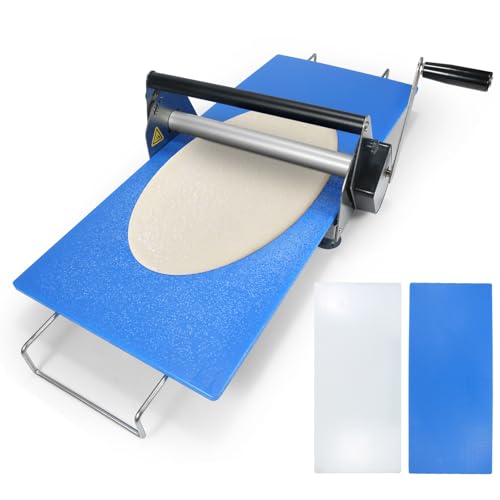
- 0–17.5mm marked thickness settings
- Two non-stick PE rolling boards
- Foldable, washable stainless steel design
Best For: Home bakers and small bakeries
Pizza Production Pick
VEVOR Semi-Automatic Pizza Roller

- Up to 240–260 pieces per hour
- 3–16-inch size range
- 1–5.5mm adjustable thickness
Best For: Commercial pizza production
Best Foldable Manual Pick – Stainless Steel Folding Dough Sheeter
For bakers who need versatile dough sheeters without giving up countertop space, this manual stainless steel model combines a broad working area with foldable storage. Its adjustable roller supports dough thicknesses from 2 to 25 mm, making it useful for everyday pastry and pizza preparation.
Best For: Home bakers and small kitchens making pizza dough, pastries, bread, or cookies.
Pros:
- Foldable design simplifies storage.
- Adjustable thickness control supports multiple dough types.
- Stainless steel frame and polished roller are suited to frequent use and easier cleanup.
- Manual handle and tabletop construction require no electricity.
Cons:
- Manual operation requires some physical effort.
- The supplied details list slightly different maximum thickness figures, so buyers should confirm the exact range.
This is a practical choice when compact storage and flexible thickness control matter more than automated production. Its manual format suits occasional or moderate-volume baking rather than high-output commercial work.
Best Adjustable Manual Option – Large Foldable Dough Sheeter
Among dough sheeters for large batches, this foldable manual model stands out for its 40.6-by-22.8-inch working platform and stated 56 thickness settings. The stainless steel contact surface and reinforced alloy frame are designed for repeated preparation of pizza, pastry, pasta, and other doughs.
Best For: Home bakers, food trucks, pizza shops, and small bakeries needing a large manual work surface.
Pros:
- Large platform accommodates substantial dough portions.
- Foldable construction helps conserve storage space.
- Manual operation works without electricity.
- Supports multiple applications, including pizza, dumpling wrappers, pie crust, and fondant.
Cons:
- Its 24-pound weight may make repositioning less convenient.
- Manual rolling may be less suitable for high-volume production.
- The listing provides conflicting information about the number of settings, so confirm the control configuration before buying.
This model is appealing for users who prioritize workspace and versatility. It offers a more expansive setup than compact tabletop rollers, while the foldable frame keeps it practical for kitchens with limited room.
Best Commercial Electric Pick – VEVOR Reversible Dough Sheeter
For commercial kitchens seeking powered dough sheeters, this VEVOR machine combines a motorized roller system with a 15.7-inch conveyor, reversible operation, and thickness adjustment up to 35 mm. Its folding conveyor and stainless steel construction add flexibility for bakery and pastry workflows.
Best For: Bakeries, patisseries, hotels, and other commercial kitchens preparing puff pastry and similar doughs.
Pros:
- Electric motor supports faster dough processing.
- Reversible conveyor allows back-and-forth pressing without lifting the dough.
- Adjustable thickness reaches 0 to 1.4 inches.
- Protective mesh cover, rubber feet, and stainless steel body support stable operation.
Cons:
- At 253.5 pounds, it is difficult to move or reposition.
- Its large footprint may not suit residential kitchens.
- Powered commercial equipment is more than occasional home bakers may need.
This is the strongest fit for production-focused users who value powered operation and reversible handling. The substantial size and weight make it better suited to a dedicated commercial workspace than a flexible home countertop.
Best Compact Countertop Pick – 15.5-Inch Folding Dough Sheeter
This 15.5-inch model is one of the more compact dough sheeters for home kitchens, bakery counters, cafes, and small food shops. Its stainless steel rollers, adjustable control knob, rotating handle, non-slip feet, and detachable design emphasize steady manual use and straightforward cleaning.
Best For: Home bakers and small businesses making pizza, croissants, puff pastry, flatbread, fondant, and laminated dough.
Pros:
- Extra-wide 15.5-inch board helps roll larger portions evenly.
- Stainless steel construction is described as rust-resistant and food-safe.
- Non-slip feet help reduce vibration during use.
- Detachable structure and damp-cloth cleaning simplify maintenance.
Cons:
- Manual operation is less efficient than an electric commercial machine.
- Its 15.5-inch width may limit very large batches.
- The supplied notes do not specify the available thickness range.
This sheeter balances countertop practicality with a broad range of baking uses. It is a sensible choice when easy cleaning, stable manual rolling, and compact storage are more important than automated throughput.
Best Compact Manual Pick – VEVOR 11-Inch Manual Dough Sheeter
If you want a straightforward countertop option among dough sheeters, this VEVOR model uses a manual handle instead of electricity. Its stainless-steel construction, fixed base, and adjustable roller make it suitable for preparing pastry, fondant, pasta, pizza dough, and other small-batch baking projects.
Best For: Home bakers and small commercial kitchens that want a compact, manually operated dough sheeter with removable parts for cleaning and storage.
Pros:
- Manual operation requires no electricity and supports repeated rolling for controlled texture.
- Adjustable thickness from 0 to 0.5 inches with a readable adjustment dial.
- Removable handle, panel, and roller simplify cleaning and storage.
- Stainless-steel construction and a fixed base support stable countertop use.
Cons:
- The 11-inch format may be limiting for especially wide dough sheets.
- Manual operation requires more hands-on effort than an electric machine.
With its compact footprint and broad thickness range, this VEVOR dough sheeter is a practical choice when counter space and simple maintenance matter more than high-volume automation.
Best Folding Design – 15.5-Inch Folding Manual Dough Sheeter
This folding model stands out among dough sheeters for its space-conscious design and extensive thickness adjustment. It offers 55 settings from 0 to 27 mm, making it adaptable for pasta, crepes, Danish dough, pizza dough, and cookies while remaining manually powered.
Best For: Home kitchens and small catering operations that need a wider rolling surface and convenient fold-away storage.
Pros:
- Folding structure helps reduce storage demands when the machine is not in use.
- Provides up to 55 thickness options across a 0–27 mm range.
- Manual operation avoids electricity use and can remain usable during power outages.
- Food-grade stainless-steel contact components and an alloy body support repeated use.
Cons:
- Manual rolling still requires physical effort for extended batches.
- The supplied listing describes one rolling surface rather than a multi-roller setup.
The combination of a 15.5-inch working width, fine adjustment, and folding construction gives this sheeter a useful balance of flexibility and storage convenience for space-limited kitchens.
Best for Fine Adjustments – 40.9-Inch Folding Dough Sheeter
For bakers who prioritize repeatable thickness, this folding dough sheeter combines dual adjustment knobs, 0.5 mm precision, and 50 total settings. Its long unfolded working format is suited to pizza, pastry, pie crusts, fondant, and bread dough, while the folded profile helps conserve storage space.
Best For: Home bakers and compact bakeries that want precise manual control, a broad working surface, and foldable storage.
Pros:
- Offers 0–27 mm adjustment with 0.5 mm precision and 50 settings.
- 360-degree rotating handle and smooth gears are designed to reduce rolling effort.
- Folds from a 41-by-16-inch format to a more compact storage size.
- Food-grade PP plates and a stainless-steel body provide smooth, low-stick contact surfaces.
Cons:
- Its long unfolded footprint requires substantial counter space during use.
- Manual operation may be less convenient than electric equipment for very large production runs.
This model is a strong fit when thickness consistency is the priority. Its foldable design offsets the large working area, although users should plan for enough counter space to unfold it fully.
Commercial Bakery Pick – VEVOR Reversible Dough Sheeter
For bakeries and hotel kitchens that need high-volume dough sheeting, this commercial dough sheeter combines a wide 19.7-inch conveyor with electric operation and reversible feeding. Its stainless steel construction and folding conveyor make it a substantial but practical choice for pastry production.
Best For: Bakeries, patisseries, and commercial kitchens making puff pastry, cakes, fondant, and other baked goods.
Pros:
- Adjustable thickness from 0 to 1.4 inches for different dough types.
- Reversible conveyor lets you press dough back and forth without lifting it.
- Folding conveyor helps reduce storage space when the machine is not in use.
- Protective mesh cover, rubber feet, and thickened stainless steel construction support secure operation.
Cons:
- At 297.6 pounds, it is difficult to move once installed.
- Its 90.55-by-35.04-inch footprint requires substantial workspace.
- The commercial design may be more machine than a casual home baker needs.
This is the strongest option here for broad, commercial pastry work, especially when adjustable thickness and reversible operation matter more than portability. Plan the installation area carefully because its size and weight are significant.
Best Heavy-Duty Pick – Folding Dough Sheeter with Dual Boards
This compact manual dough sheeter suits home bakers and small bakeries that want repeatable results without committing to a large electric machine. Its folding design, marked thickness settings, and two removable rolling boards make it flexible for everyday dough preparation.
Best For: Home bakers and small bakeries preparing croissants, pizza, pasta, cookies, puff pastry, and Danish dough.
Pros:
- Clearly marked thickness slots provide control from 0 to 17.5mm.
- Includes two 27.5-by-12-inch PE boards with rough and smooth surfaces.
- Foldable stainless steel design saves space between uses.
- Detachable parts and wipe-clean boards simplify cleanup.
Cons:
- Manual operation requires more hands-on effort than an electric dough sheeter.
- The 17.5mm maximum setting is narrower than the range offered by some commercial models.
- Its compact format is better suited to smaller batches than high-volume production.
Choose this model when storage space and straightforward manual control are priorities. The dual boards broaden its uses, while the non-slip base and stainless steel frame provide a stable setup for smaller-scale baking.
Pizza Production Pick – VEVOR Semi-Automatic Pizza Roller
For pizzerias and food-service operations focused on round pizza bases, this semi-automatic dough sheeter is built for speed. It handles 3- to 16-inch dough sizes, offers 1-5.5mm thickness adjustment, and is rated for up to 240-260 pieces per hour.
Best For: Pizzerias, cafes, bakeries, and fast-food restaurants producing pizza dough at commercial volume.
Pros:
- Rated to press up to 240-260 pieces per hour.
- Supports dough sizes from 3 to 16 inches with adjustable 1-5.5mm thickness.
- Semi-automatic two-stage pressing helps produce evenly shaped round dough.
- Stainless steel body, food-grade resin rollers, security cover, and non-slip feet support daily use.
Cons:
- It is not suitable for puff pastry or Haitian-style cream layer dough.
- Manual flipping between the upper and lower rollers is still required.
- At 90.4 pounds, it is not especially portable.
This is a focused production tool rather than an all-purpose pastry sheeter. Its throughput and pizza-size range make it a strong fit for commercial pizza service, but buyers seeking puff-pastry capability should consider a different design.
How We Picked These Dough Sheeters
We selected models across the main categories buyers are likely to consider: compact folding machines, manual stainless-steel sheeters, reversible commercial units, and semi-automatic electric rollers. We focused on useful working width, adjustable thickness, portability, construction, ease of cleaning, and suitability for common applications such as pizza, pastry, cookies, pasta, and fondant.
Because specifications and included accessories can vary by seller, confirm the current dimensions, thickness range, power requirements, and delivered setup before ordering.
Quick Comparison
| Best For | Recommended Type | What to Prioritize |
|---|---|---|
| Home baking | Compact folding manual sheeter | Small footprint, simple storage, easy cleanup |
| Pizza and pastry variety | Reversible manual model | Adjustable rollers and useful working width |
| Small bakery production | Wider commercial sheeter | Durable frame, consistent output, stable operation |
| Higher-volume production | Semi-automatic electric model | Motor power, throughput, safety features, serviceability |
Key Buying Factors for Dough Sheeters
Working Width and Overall Size
Wider rollers handle larger pastry sheets and pizza bases, but they also require more counter or floor space. Measure both the machine’s footprint and the clearance needed to feed and retrieve dough. Folding designs are especially useful when storage space is limited.
Thickness Adjustment
Look for a broad, clearly marked adjustment range if you make several types of dough. Thin settings are useful for pasta, cookies, and delicate pastry, while thicker settings suit pizza and some fondant work. Smooth, repeatable adjustments are more valuable than a high maximum thickness alone.
Manual or Electric Operation
Manual sheeters are generally simpler, quieter, and easier to place in a home kitchen. They require more effort and may be slower for repeated batches. Electric machines can improve consistency and productivity, but check voltage, motor power, cleaning access, and whether the unit needs a dedicated stable location.
Build Quality and Cleaning
Stainless steel surfaces are practical for food preparation and typically easier to wipe down. Check the rollers, frame, handles, trays, and adjustment mechanism for sturdy construction. Dough can collect around moving parts, so accessible cleaning areas and removable components are worthwhile.
Who Should Buy Which Dough Sheeters?
Choose a compact folding manual model if you bake occasionally, have limited storage, or want a straightforward upgrade from a rolling pin. These machines are well suited to home cooks making moderate quantities of pastry, cookies, pizza, or fondant.
Choose a wider reversible commercial model if you regularly prepare multiple dough styles or need more room for larger sheets. Reversible rollers can make feeding and handling more convenient during repeated batches.
Choose a semi-automatic electric sheeter if speed, repeatability, and reduced hand effort matter more than portability. It is the strongest fit for busy home businesses, cafés, bakeries, and pizzerias, provided the available space and electrical setup meet the machine’s requirements.