Starting seeds indoors gives you more control over timing, moisture, and growing conditions, but the right tray can make the process far easier. Cell size, drainage, humidity control, and durability all affect how successfully seedlings develop.
We selected 10 seed-starting options for different spaces, budgets, and growing styles—from simple reusable trays to kits with humidity domes, self-watering features, and built-in grow lights.
Best 10 Seed Starting Trays for Indoor Gardening Picks for 2026
Best Reusable Pick

- 36 flexible silicone cells
- Labeled rows for organization
- Reusable, dishwasher-safe design
Best For: Gentler transplanting and repeat indoor seed starts
Best Bulk Catch-Tray Set

- Ten spacious rectangular trays
- Solid bases catch excess water
- Stackable and reusable plastic
Best For: Indoor shelves, microgreens, and potting work
Best Complete Starter Kit

- Ten trays with humidity domes
- Adjustable vents and drainage holes
- Includes watertight bases and labels
Best For: High-volume starts needing humidity control
Best Simple Stackable Set

- Ten compact plastic trays
- No-hole mess-control design
- Stackable for convenient storage
Best For: Microgreens, hydroponics, and basic indoor starts
Best Controlled-Environment Kit
MIXC 200-Cell Seed Starter Tray Set
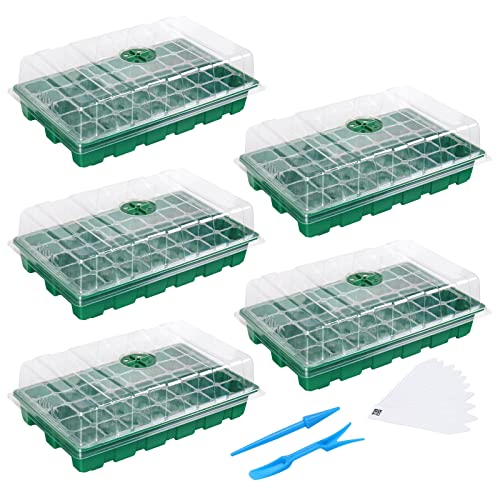
- Adjustable vents regulate humidity and temperature
- Transparent domes make seedlings easy to monitor
- Includes five trays, tools, and plant labels
Best For: Starting small seeds indoors with humidity control
Best Reusable Open Tray
Mr. Pen 5-Pack Seed Starter Trays

- Durable plastic supports repeated use
- Raised edges contain soil, fertilizer, and water
- Compatible with heat mats and hydroponic systems
Best For: Flexible indoor growing, microgreens, and potting tasks
Best for Hydroponic Growing

- Ten durable, reusable plastic trays
- No-drain design suits hydroponics and drip trays
- Fits compatible 20-by-10-inch grow pads
Best For: Indoor microgreens, wheatgrass, seedlings, and hydroponics
Best Adjustable-Dome Pick
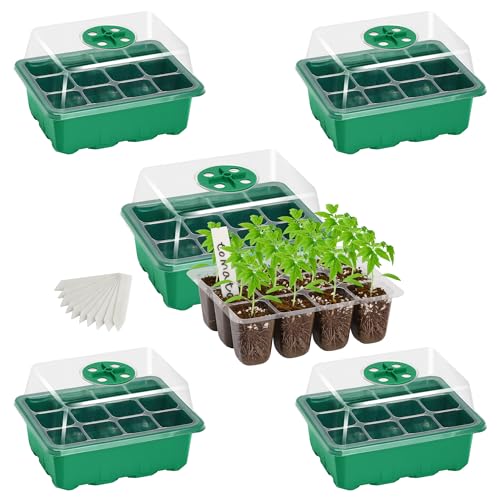
- Clear trays for easy seedling observation
- Adjustable vents regulate humidity and airflow
- Five trays with 60 total cells and labels
Best For: Indoor gardeners starting larger vegetable seeds
Best Integrated-Light Pick

- 12-LED full-spectrum light on every tray
- 60 cells with drainage holes and clear inserts
- USB-powered design for compact indoor spaces
Best For: Small-space growers needing supplemental seedling light
Best High-Capacity System

- 120 cells across two 60-cell trays
- Capillary mats support consistent moisture
- 56-bead lights with adjustable brightness and timer
Best For: Larger indoor seed-starting projects and varied plantings
Best Reusable Pick – Burpee SuperSeed 36-Cell Tray
For gardeners comparing seed starting trays for indoor gardening, the Burpee SuperSeed stands out for its reusable silicone cells and easy transplanting design. Its 36 labeled cells, drainage features, and included Plant-o-Gram help organize a variety of vegetable, flower, and herb seedlings.
Best For: Indoor gardeners who want a reusable tray with flexible cells for gentler transplanting.
Pros:
- 36 flexible silicone cells pop out for easier transplanting.
- Alphanumeric rows and a Plant-o-Gram help identify seedlings.
- Molded drainage slots and watering-tray channels help manage excess water.
- Top-shelf dishwasher safe and designed for reuse.
Cons:
- Provides fewer cells than the larger 10-pack kits.
- Does not include a humidity dome.
This is a strong choice when transplant convenience and repeat use matter more than maximum capacity. The flexible food-grade silicone cells are its main advantage for reducing root disturbance.
Best Bulk Catch-Tray Set – 17-Inch No-Hole Growing Trays
These 10-pack trays offer a simple, spacious option for seed starting trays for indoor gardening. Their solid no-hole bases catch drainage from pots and seedlings, while the open design also works for microgreens, wheatgrass, potting, and soil preparation.
Best For: Growers who need multiple catch trays for shelves, tables, greenhouse benches, or potting projects.
Pros:
- Includes 10 large 17-by-11-inch trays.
- No-hole bases help contain drainage water and reduce surface mess.
- Useful for seedlings, microgreens, wheatgrass, bonsai, and cat grass.
- Lightweight, stackable, reusable, and easy to clean.
Cons:
- No drainage holes, so seedlings need pots or inserts with drainage.
- Does not include cells, humidity domes, or plant labels.
This set is best viewed as a flexible tray-and-catch system rather than a complete propagation kit. Its quantity and roomy footprint make it practical for organizing several indoor growing tasks at once.
Best Complete Starter Kit – MIXC 120-Cell Tray Kit
For a more controlled setup among seed starting trays for indoor gardening, the MIXC kit combines 10 seed trays, watertight base trays, humidity domes, and plant labels. Adjustable vents let you regulate the mini-greenhouse environment, while bottom drainage holes help move excess water away from seedlings.
Best For: Gardeners starting many seedlings who want individual humidity covers and included accessories.
Pros:
- Includes 10 trays, 10 base trays, 10 humidity domes, and 10 labels.
- Adjustable vents provide control over humidity and temperature.
- Drainage holes help reduce excess moisture around roots.
- Lightweight plastic trays are reusable and portable.
Cons:
- The supplied size information lists both 12-cell packs and a 120-cell total, so verify the exact configuration.
- Plastic cells may be less flexible for transplanting than silicone cells.
This is the most feature-rich option in the group for creating separate mini-greenhouses. It is particularly useful when consistent humidity management and a larger number of seedlings are priorities.
Best Simple Stackable Set – Gardzen Reusable Seed Trays
The Gardzen 10-pack keeps seed starting trays for indoor gardening straightforward: each reusable plastic tray has a no-hole base for holding drip water. The shallow, stackable design suits seed germination, microgreens, hydroponics, wheatgrass, and nursery organization.
Best For: Indoor growers who want compact, reusable trays for messy or water-based growing projects.
Pros:
- Includes 10 reusable plastic trays.
- No-hole construction helps keep tabletops and shelves cleaner.
- At 14.5 by 9 by 1.85 inches, the trays fit many growing setups.
- Lightweight, stackable, and easy to clean.
Cons:
- No drainage holes, cells, domes, or labels are included.
- The shallow 1.85-inch height may limit use with taller starter pots.
Choose this set for a low-fuss tray surface and water-catching solution rather than an all-in-one seed-starting system. Its stackability and broad use range make it useful across multiple indoor growing projects.
Best Controlled-Environment Kit – MIXC 200-Cell Seed Starter Tray Set
For gardeners who want close control over germination, this MIXC kit combines five trays with bottom trays and adjustable humidity domes. Its transparent plastic makes it easy to monitor seedlings, making it a versatile choice among seed starting trays for indoor gardening.
Best For: Starting small seeds indoors while monitoring humidity and temperature.
Pros:
- Adjustable dome vents help regulate humidity and temperature.
- Transparent trays and domes allow easy plant observation.
- Includes five complete tray setups, tools, and plant labels.
- Bottom trays can be stacked to save storage space before germination.
Cons:
- The 1.5-by-1.5-by-2-inch cells are intended for small seeds.
- The included domes may be limiting for taller seedlings, with a 2.75-inch height.
This is the most feature-rich option of the three for gardeners who want a mini propagator setup rather than simple open trays. Its compact cells and domes are particularly suited to early-stage seedlings.
Best Reusable Open Tray – Mr. Pen 5-Pack Seed Starter Trays
The Mr. Pen five-pack offers straightforward, reusable trays for growing vegetables, flowers, sprouts, and microgreens. At 17 by 10 by 2.4 inches, these seed starting trays for indoor gardening provide a broad, open surface for flexible planting and growing setups.
Best For: Beginners and experienced gardeners who need durable trays for indoor propagation, microgreens, or soil mixing.
Pros:
- Sturdy plastic construction is designed for repeated use.
- Raised edges help contain soil, fertilizer, and water.
- Lightweight, one-piece design is easy to clean.
- Works with heat mats, humidity domes, and hydroponic systems.
Cons:
- These are open trays rather than divided cell trays.
- The notes specify indoor use, so outdoor use is not listed.
Choose this set when simplicity and flexibility matter more than built-in cell organization. It is also a practical work tray for potting and mixing soil, not just seed germination.
Best for Hydroponic Growing – 10-Pack No-Drain Seed Trays
These ten durable plastic trays are designed without drain holes, making them useful as drip trays, hydroponic containers, or broad seed-starting surfaces. Their approximately 20-by-10-inch base fits compatible 20-by-10-inch hydroponic grow pads and micro-mats.
Best For: Indoor gardeners growing microgreens, wheatgrass, seedlings, or hydroponic crops that need a no-drain tray.
Pros:
- Ten reusable trays provide ample capacity for repeated growing cycles.
- No-drain-hole design suits hydroponic growing and drip-tray use.
- Fits 20-by-10-inch Sure to Grow pads and micro-mats.
- Works for seedlings, microgreens, wheatgrass, and greenhouse projects.
Cons:
- No drain holes require careful water management.
- These are broad open trays without individual planting cells.
This set is a strong fit for gardeners prioritizing quantity and hydroponic versatility. The lack of drainage is an advantage for contained systems, but it makes the trays less suitable for growers who prefer conventional free-draining soil propagation.
Best Adjustable-Dome Pick – Large-Seed 12-Cell Trays
If you want seed starting trays for indoor gardening that make it easy to monitor seedlings, this five-pack offers clear cell inserts, humidity domes, and adjustable vents. The 1.5-inch cells are sized for larger seeds, while the included bases support controlled watering.
Best For: Indoor gardeners starting larger vegetable seeds such as tomatoes, peppers, potatoes, and eggplants.
Pros:
- Clear plastic lets you observe seedlings and moisture without disturbing them.
- Adjustable vents help regulate humidity and airflow.
- Heat-mat compatible and designed with drainage holes.
- Includes five trays, five watertight bases, five domes, and 10 labels.
Cons:
- Each tray has only 12 cells, so the setup is less suited to very large batches.
- The larger cells may be less practical for tiny seeds.
This is a straightforward choice for gardeners who value visibility and humidity control. Its five-tray, 60-cell capacity works well for a modest indoor planting project, especially when starting larger seeds.
Best Integrated-Light Pick – 12-LED Indoor Seed Trays
These seed starting trays for indoor gardening add a 12-LED full-spectrum light to each of the five trays. Clear inserts, vented domes, drainage holes, and a USB connection make the kit a compact option for windowsills, grow tents, and other small indoor spaces.
Best For: Indoor gardeners who need supplemental light for herbs, vegetables, or flowers in compact spaces.
Pros:
- Each tray includes a 12-LED full-spectrum grow light.
- Vented elevated domes help retain moisture while allowing airflow adjustments.
- Provides 60 cells with drainage holes and clear root-viewing inserts.
- Includes a five-way USB cable and 10 plant labels.
Cons:
- A power adapter is not included; the system requires a 5V/2A adapter.
- The 12-cell trays provide less room per tray than larger-capacity systems.
The built-in lighting is the main advantage here, eliminating the need to position every tray near a strong window. It is a practical starter kit for small indoor growing areas, provided you already have a compatible USB power adapter.
Best High-Capacity System – 120-Cell Self-Watering Kit
For larger indoor projects, this seed starting trays for indoor gardening kit combines 120 cells with self-watering capillary mats, adjustable humidity vents, and a four-strip LED grow-light system. The two 60-cell trays are designed to support consistent moisture from germination through transplanting.
Best For: Gardeners starting a large variety of herbs, flowers, or other seedlings indoors.
Pros:
- Provides 120 cells across two 60-cell trays for larger planting projects.
- Self-watering design uses capillary mats to help maintain consistent moisture.
- Each tray has 56-bead LED lighting with adjustable brightness and timer functions.
- Includes domes, vents, stands, labels, tools, controller, and detachable adapter.
Cons:
- The 16.6-by-11-inch setup requires more space than compact tray kits.
- Its larger system may be more equipment than needed for a small batch of seedlings.
This is the most comprehensive option for scaling up indoor propagation. The combination of high capacity, self-watering support, adjustable ventilation, and configurable lighting makes it well suited to gardeners managing many seedlings at once.
How We Picked the Best Seed Starting Trays for Indoor Gardening
We compared these trays by looking at the features that matter most during germination and early growth: cell capacity, tray dimensions, drainage design, material durability, humidity control, watering convenience, and included accessories. We also considered whether each option suits beginners, high-volume growers, or gardeners working with limited indoor space.
Because seed-starting needs vary, this list includes both basic no-drain-hole trays and more complete propagation kits. A simple tray may be enough when you already own a grow light and carefully control watering, while a dome or self-watering system can simplify routine care.
Quick Comparison
- Best for a straightforward reusable setup: Burpee SuperSeed 36-Cell Reusable Seed Starting Tray.
- Best for growing many seedlings: The MIXC 120-cell and 200-cell starter kits.
- Best for bulk value: The 10-pack growing tray options from the listed brands.
- Best for humidity control: Kits that include clear humidity domes.
- Best for compact all-in-one growing: Seed-starting kits with integrated LED grow lights.
- Best for watering convenience: The 120-cell self-watering tray with grow light.
Key Buying Factors for Seed Starting Trays for Indoor Gardening
Cell Size and Capacity
Small cells maximize seedling count but dry out faster and leave less room for roots. Larger cells are more forgiving and work well for plants that remain indoors longer before transplanting. Match the tray to the number and type of plants you plan to grow.
Drainage and Water Management
Drainage holes help prevent saturated soil and root problems, but no-drain trays require careful watering and a separate inner container or controlled moisture method. If you are new to seed starting, prioritize a design that makes excess water easy to manage.
Humidity Domes and Airflow
Humidity domes help maintain moisture during germination, especially in dry homes. Once seedlings emerge, ventilation and gradual dome removal become important so plants do not remain overly damp or develop weak growth.
Durability, Lighting, and Space
Reusable plastic trays can reduce replacement costs, but thin trays may flex when lifted. Check dimensions against your shelf or windowsill, and remember that grow-light kits are convenient only if their light output and height adjustment suit the seedlings you are raising.
Who Should Buy Which Seed Starting Trays for Indoor Gardening?
Choose a basic multi-pack if you need inexpensive trays for seasonal vegetables, herbs, or flowers and already have pots, lights, and watering supplies. Pick a 36-cell reusable tray when durability and easier handling matter more than maximum capacity.
High-volume growers should consider 120- or 200-cell kits, provided they can monitor moisture consistently. Beginners may prefer a humidity-dome kit because it creates a more controlled germination environment. If indoor light is limited, an integrated grow-light model can reduce setup complexity, while the self-watering option is useful for gardeners who want a larger reservoir and fewer daily watering tasks.